UNESCO World Heritage · 3 Cirques · The Heart of Reunion Island
The 3 Cirques of Reunion Island: Cilaos, Mafate, Salazie
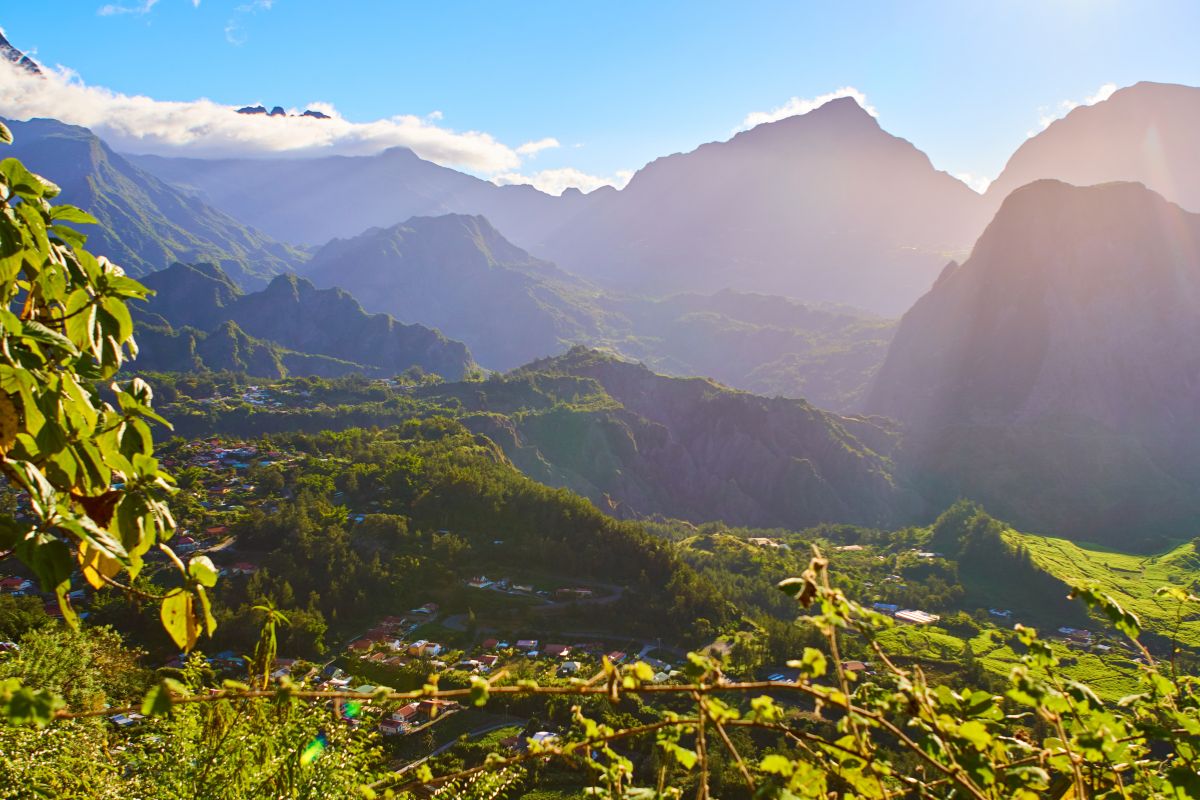
Three vast volcanic amphitheatres around Piton des Neiges, each with a completely different feel. Cilaos at the end of the 400-bend road, roadless Mafate with its 700 residents, and Salazie, the wettest and greenest. Here's how to get there, what to see, the best hikes and 12 partner activities to help you plan.
3 cirques1 shared summit (3,070 m)UNESCO since 201040% of the island under national park
At a glance
The 3 cirques in 8 figures
Most accessible cirque
Salazie, road open 24/7
Cirque with no road
Mafate, on foot or by helicopter
Thermal spa cirque
Cilaos, the 400-bend road
Shared summit
Piton des Neiges, 3,070 m
UNESCO listing
Natural site since 2010
Cilaos population
About 5,500 residents
Mafate population
About 700 residents, 9 hamlets
Salazie population
About 7,300 residents
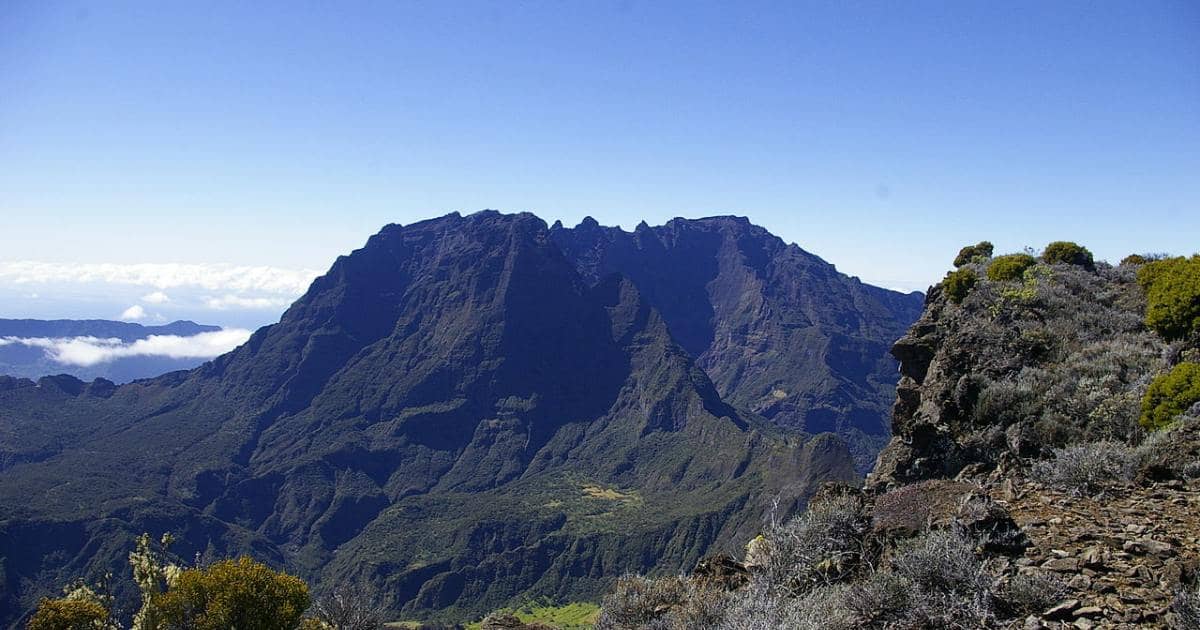
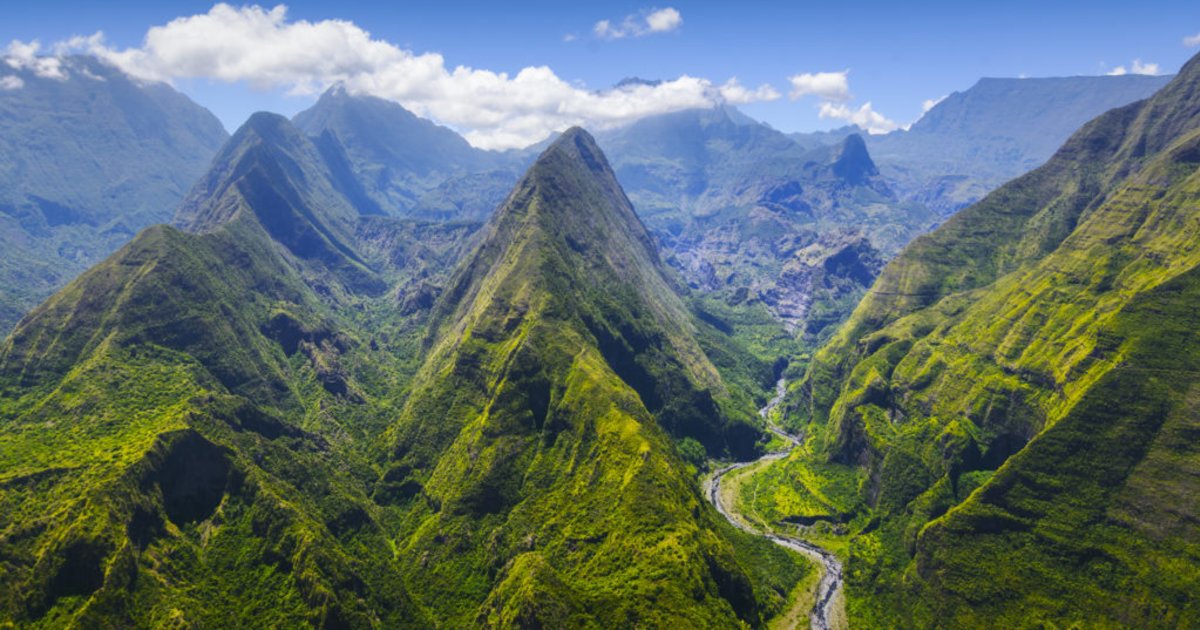
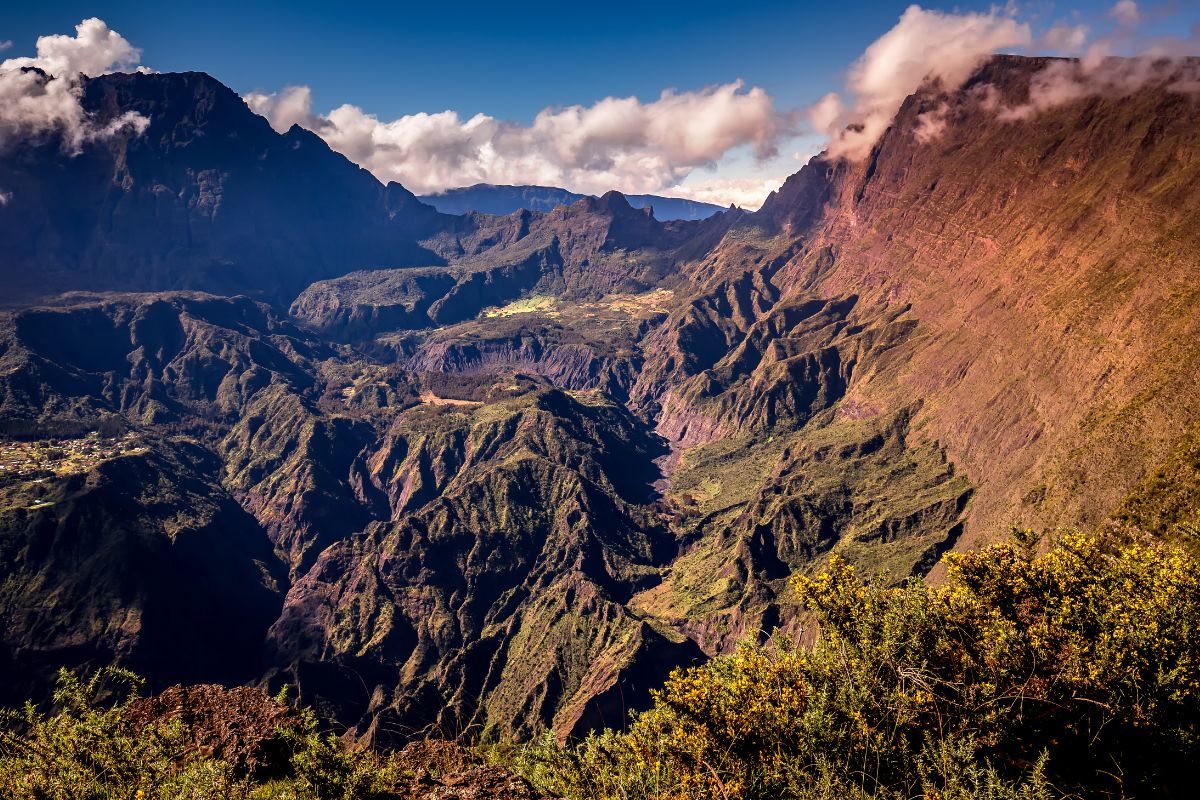
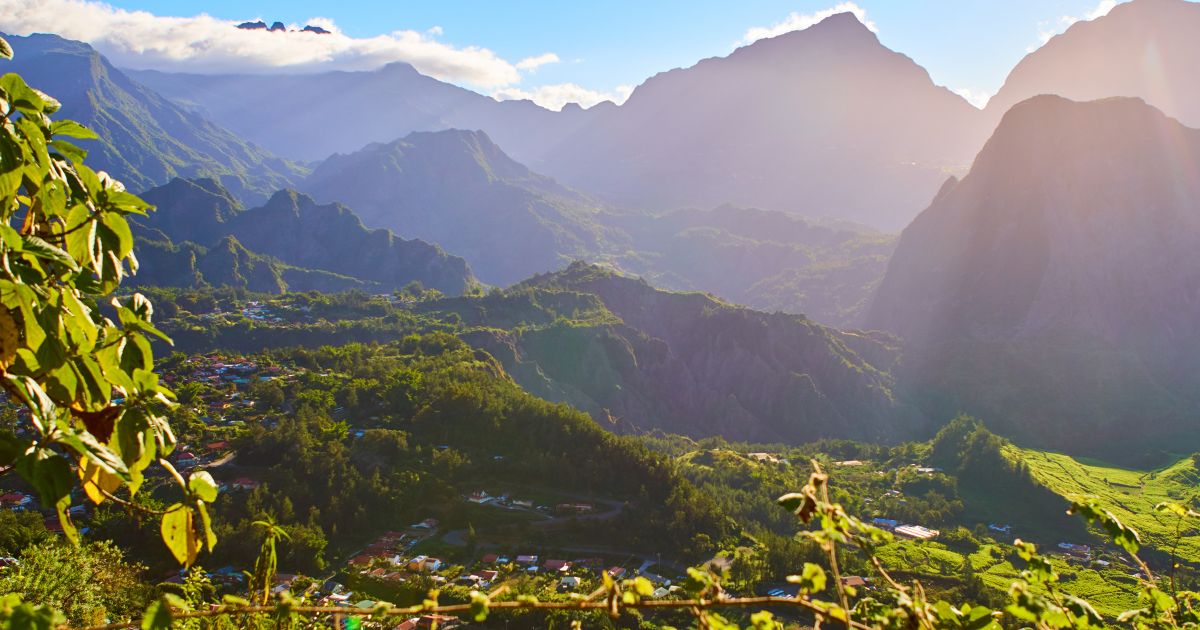
Reunion Island's three cirques are huge natural amphitheatres carved by erosion around Piton des Neiges, an old shield volcano that has been dormant for 12,000 years. Over two million years, water and gravity have hollowed out three basins, 1,500 to 2,500 metres deep, separated by sheer cliffs. The result: three areas with strikingly different climates and cultures, despite being so close together. This guide covers each cirque in detail, the kind of traveller each one suits, places to stay, activities and practical tips.
The 3 cirques in detail
Cilaos, Mafate, Salazie: three very different places
Each cirque has its own culture, its own way in and its own climate. The details below will help you choose, depending on how you travel and what you want to do.
Cirque 1
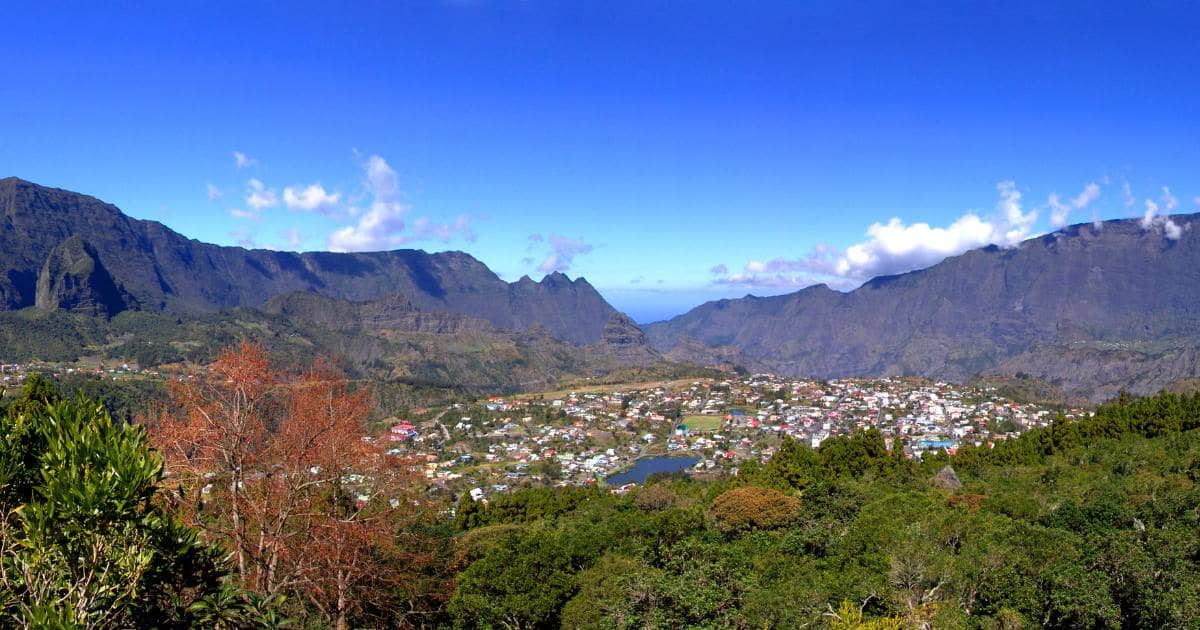
Cilaos, the thermal spa cirque reachable by car
Access: The 400-bend road, open 24/7Journey: 1.5 hours from Saint-Pierre on the N5Signature: Thermal springs, wine, embroidery, the Piton des Neiges ascent
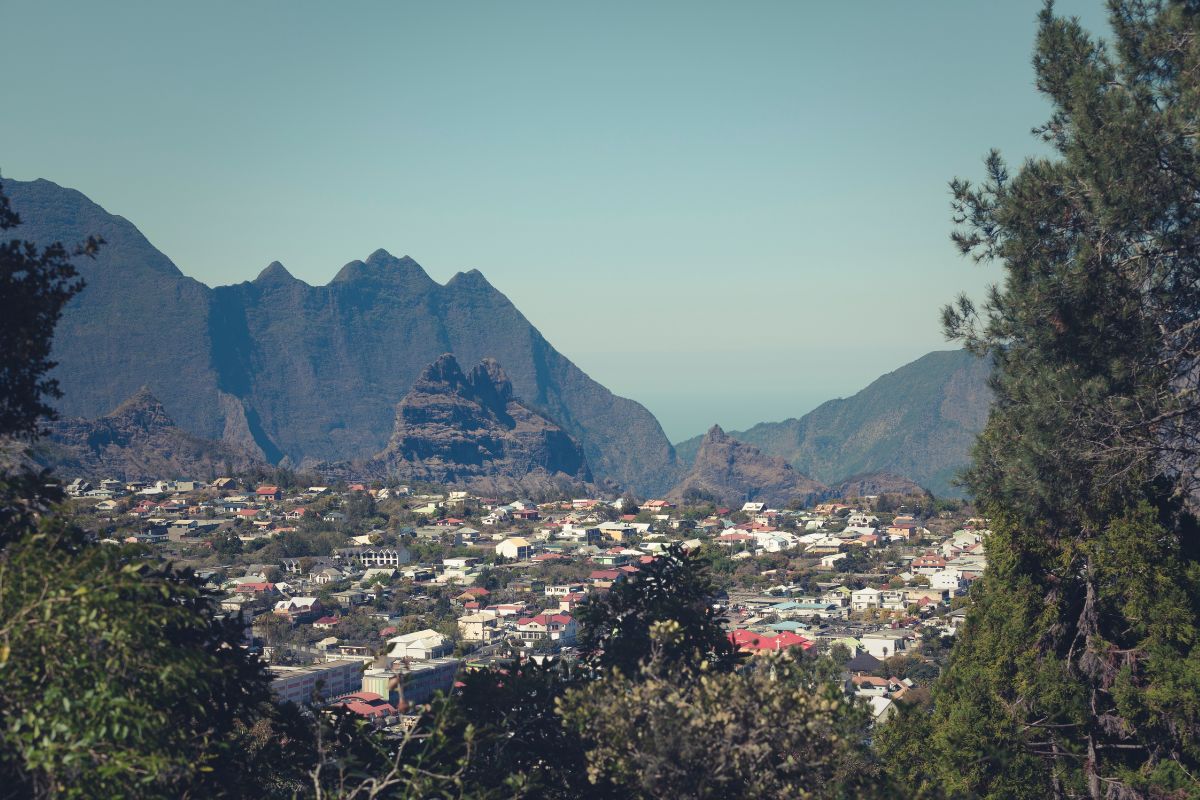
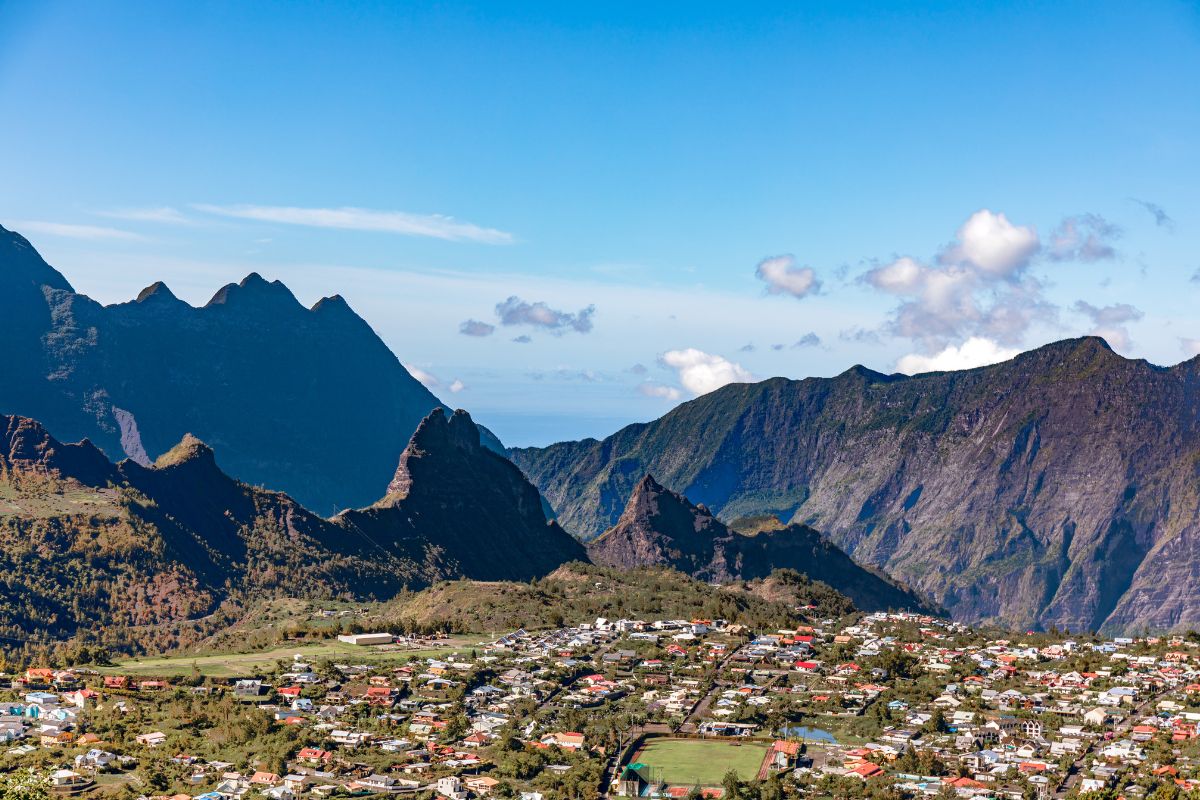
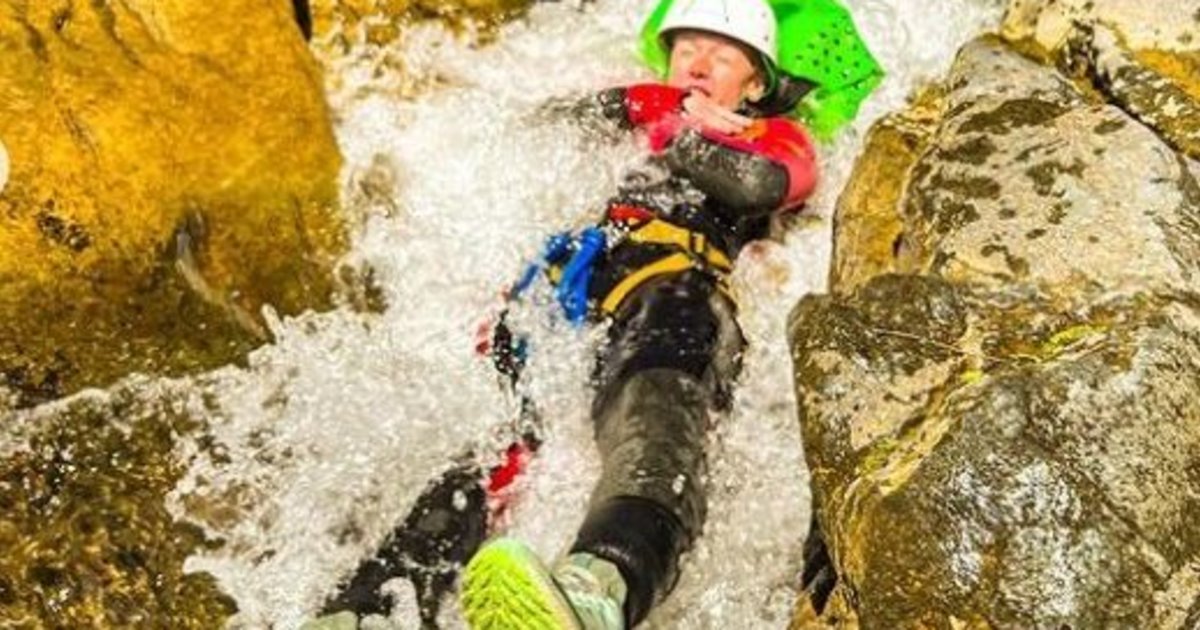
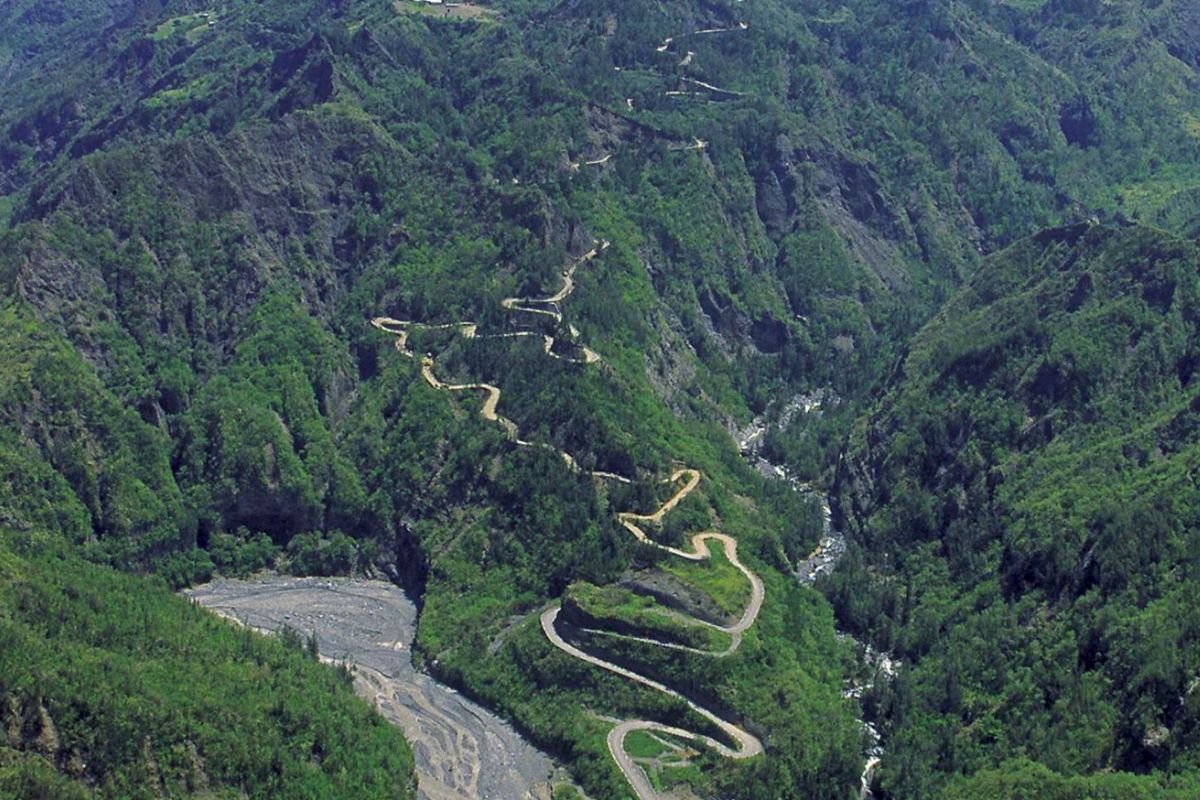
The only cirque with a proper road into it, which winds for 35 km up from Saint-Louis through some 400 bends (hence its nickname, the 400-bend road). At 1,200 m, the village has a temperate climate, much cooler than the coast, with nights around 10°C during the austral winter. Its thermal springs, known since 1819, now feed a modern spa. Cilaos wine, produced in France's only tropical vineyard. Traditional embroidery taught at the Notre-Dame school. The village remains the classic starting point for the Piton des Neiges ascent and for several iconic canyons (Bras Rouge, Fleur Jaune).
Who it's for: The most practical cirque for anyone travelling by car
Mafate, the cirque with no road, reachable on foot or by helicopter
Access: Hiking trails or helicopter onlyJourney: 3 to 5 hours of walking from the Col des Bœufs or Le MaïdoSignature: 9 inhabited hamlets, a history of escaped slaves, half-board mountain gîtes
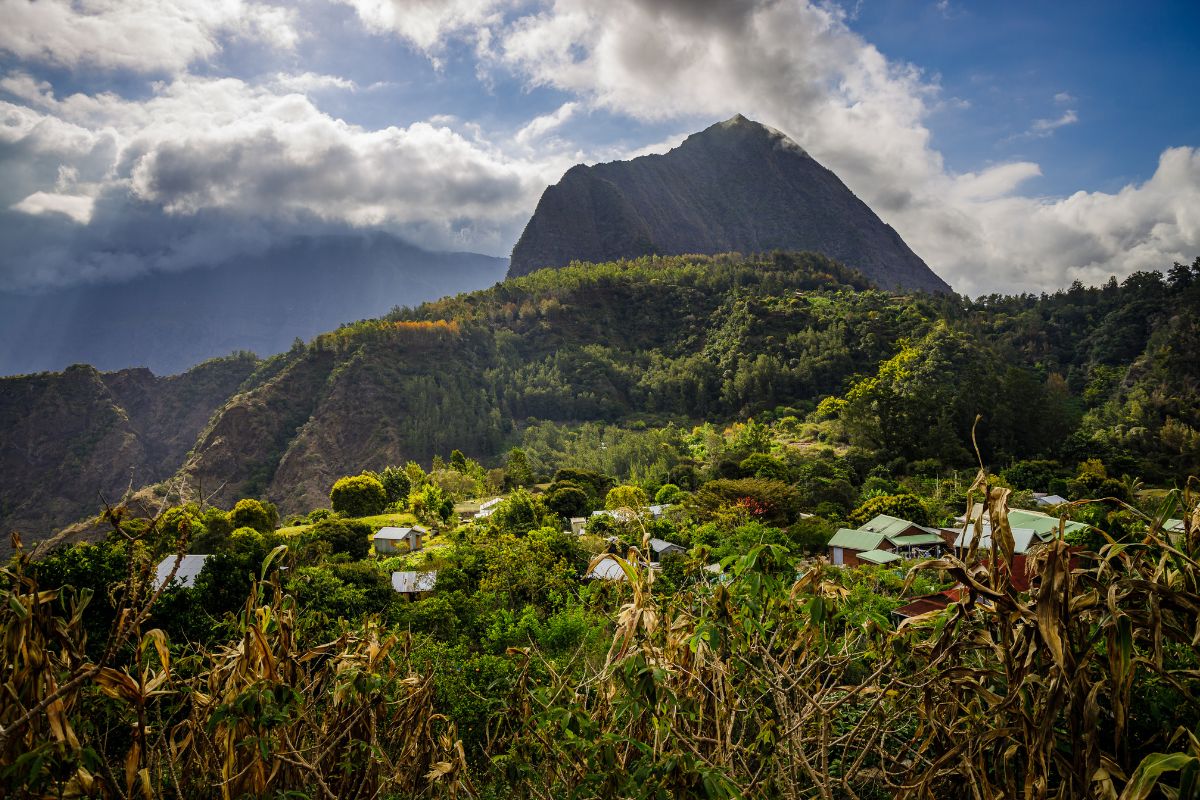
The most isolated inhabited area anywhere in France, overseas territories included. No road reaches it; the only way in is on trails from Cilaos, Salazie, Le Maïdo, Sans Soucis or the Col des Bœufs. Supplies are flown in by helicopter. 9 inhabited hamlets (La Nouvelle, Marla, Roche Plate, Aurère, Îlet à Malheur, Grand Place, Cayenne, Îlet à Bourse, Lataniers) are home to about 700 residents, many of them descendants of escaped slaves (known locally as marrons) who took refuge there in the 18th century. You sleep in family-run gîtes (simple mountain guesthouses) on a half-board basis, with shared Creole meals. This is the place to truly switch off: no phone signal, no cars, sometimes no mains electricity.
Who it's for: The cirque for anyone who wants to switch off completely for a few days
Access: Road open 24/7, direct access from the eastJourney: 45 minutes from Saint-André via the D48Signature: Waterfalls, chayote, Hell-Bourg, the Voile de la Mariée
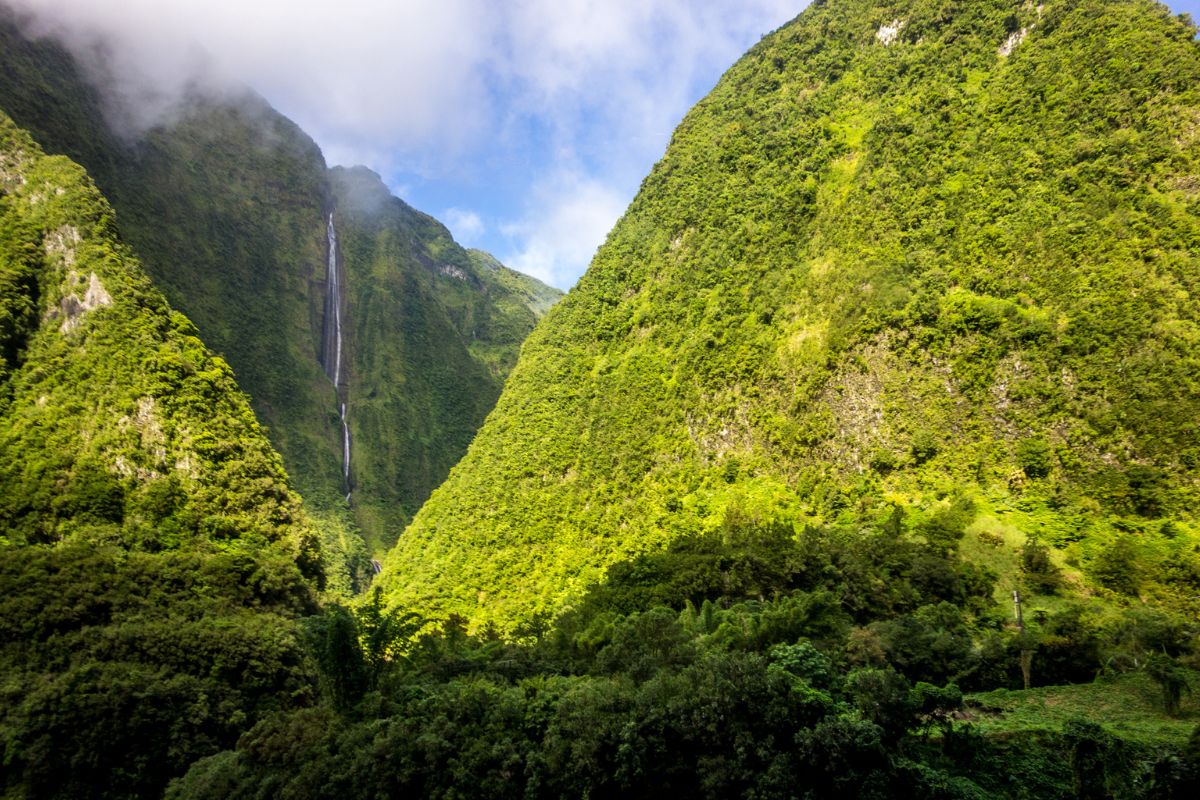
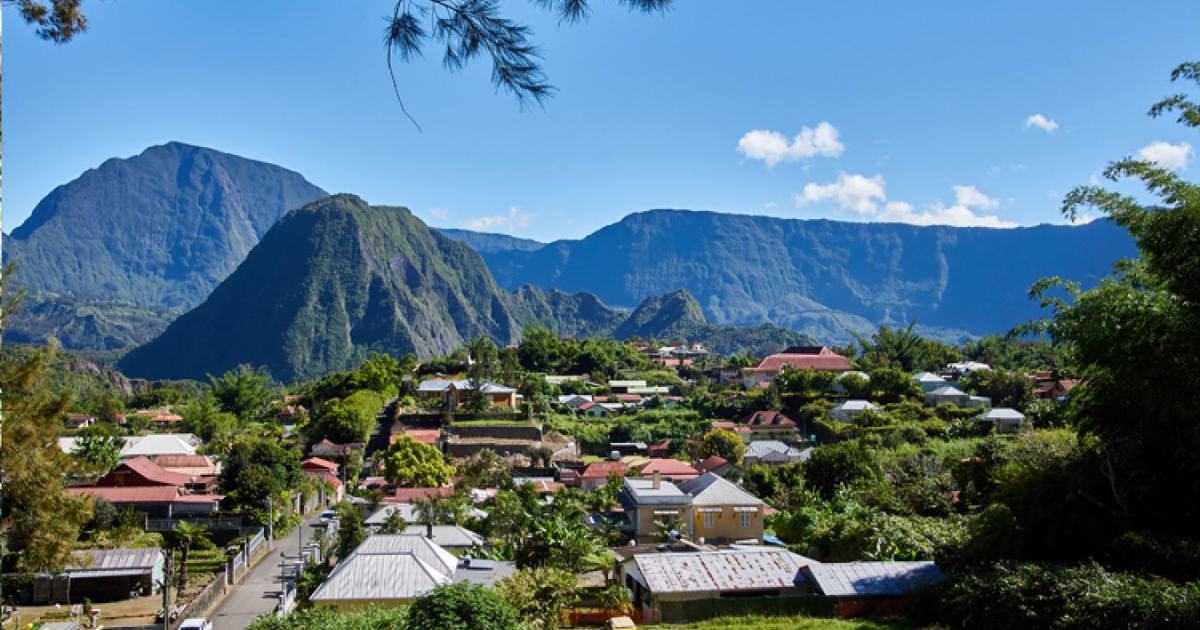
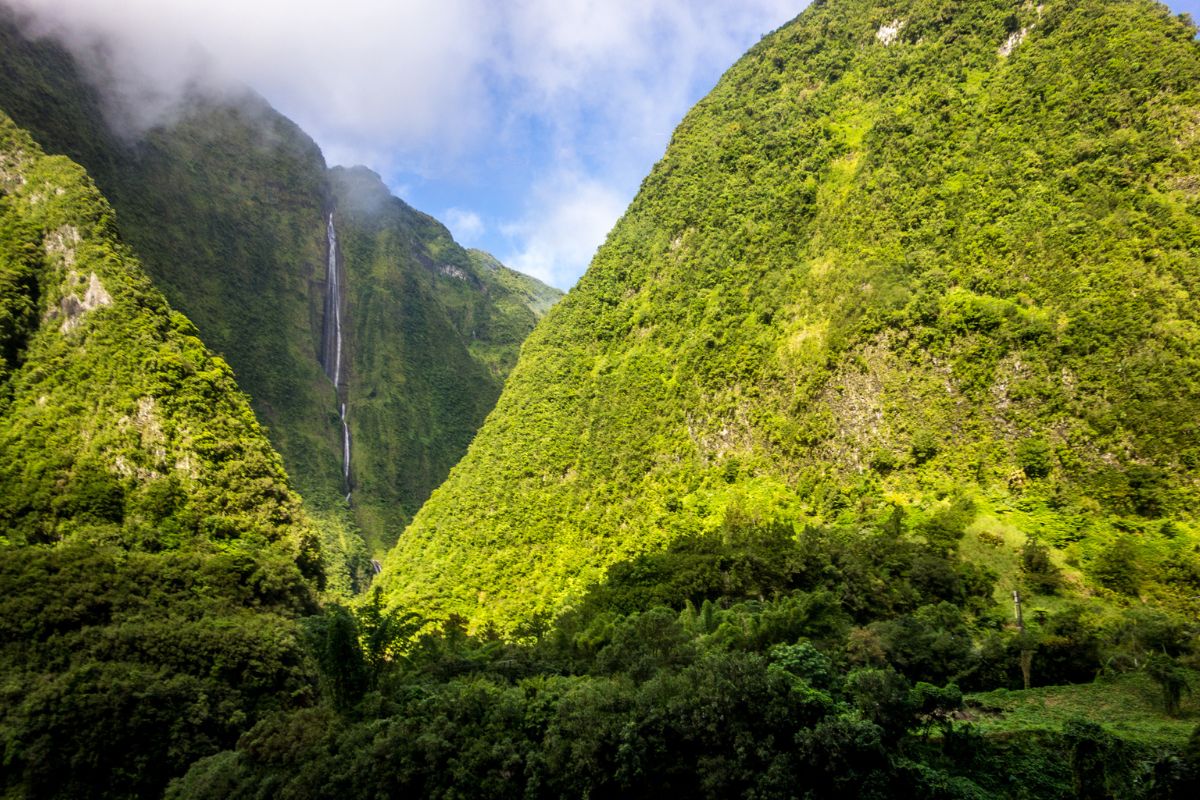
The easiest of the three cirques to reach from the east coast, on an ordinary road 45 minutes from Saint-André. Salazie holds the rainfall record for an inhabited area in Reunion Island (over 8 metres of water a year on some rain gauges), which makes it the greenest cirque and the one with the most waterfalls. The Voile de la Mariée (Bridal Veil Falls), a long, thin cascade dropping some 800 m in total, can be seen from the main road. Hell-Bourg, the best-preserved Creole village, is listed among the Most Beautiful Villages of France. Its signature crop is chayote (chouchou), cooked as a gratin, a stew or a confit. Mare à Poule d'Eau, a small natural pond, gives the cirque's most photographed mirror-like reflection.
Who it's for: The cirque for anyone wanting the greenest scenery with minimal travel effort
Four types of traveller, four recommendations. The right cirque depends as much on your hiking ability as on the time you have, how you get around and the kind of experience you're after.
Cilaos or Salazie
Travellers with a car, no hiking experience
Cilaos or Salazie, both directly reachable by road. Cilaos for the wine, the spa and the mountain village. Salazie for the waterfalls, Hell-Bourg and the Voile de la Mariée from the road. Mafate is not an option without some preparation.
Mafate or high-altitude Cilaos
Trained hikers, several days on foot
Mafate over 2 to 5 days with nights in gîtes, the most immersive format and the only way to discover the roadless cirque. For high mountains, combine Cilaos with the Piton des Neiges ascent.
Salazie or Cilaos
Families with young children, half a day maximum
Salazie for the viewpoints and waterfalls accessible by car. Cilaos for the village, the embroidery workshops and a short loop to the Roche Merveilleuse. Hell-Bourg makes an easy village stroll.
Cilaos, Salazie or Mafate by helicopter
Short-stay visitors, 1 day to see a cirque
Cilaos as a there-and-back trip from Saint-Pierre for anyone staying in the south. Salazie as a there-and-back trip from Saint-Denis or the east coast. Mafate from a helicopter out of Pierrefonds or Saint-Gilles, if you want to see the most extraordinary cirque without the trek.
See all 3 cirques in a single flight
Helicopter: the only way to link Cilaos, Mafate and Salazie in one go
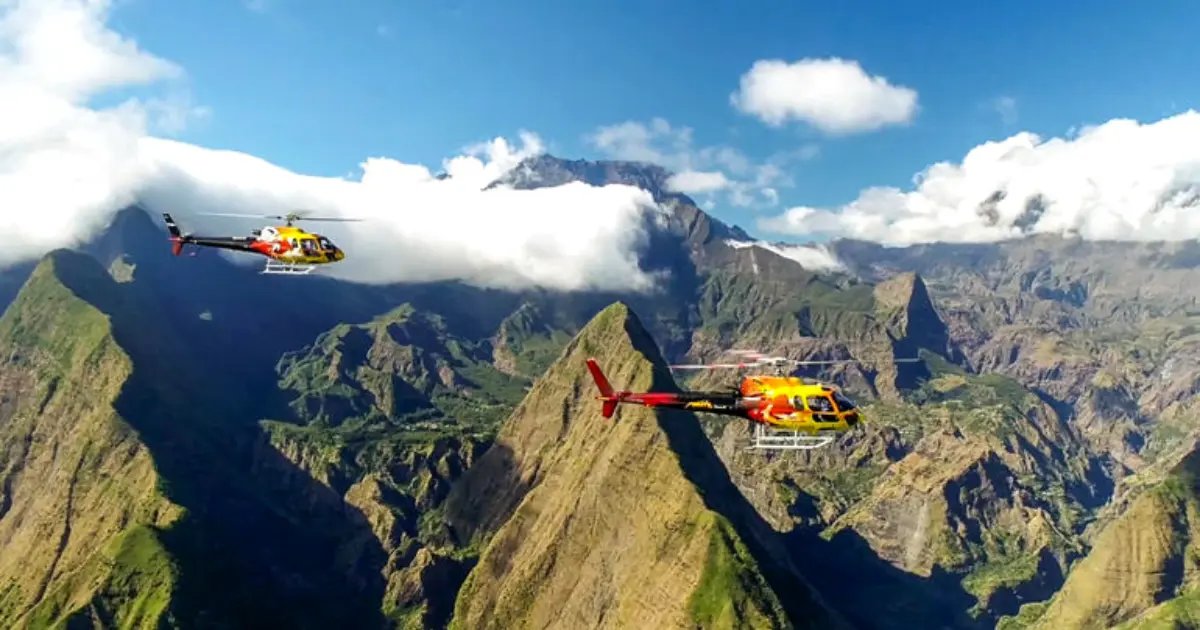
A helicopter is the only way to see all three cirques in one go, without spending several days on the trails. The full island tour lasts 55 minutes, from Pierrefonds or Saint-Gilles, flying over Cilaos, dropping into Mafate right over the hamlets, crossing Salazie past the Voile de la Mariée, then pushing on to Piton de la Fournaise. 4 companies operate in Reunion Island, with 6 packages from €190 per person.
Six things to check before hitting the road or the trails: transport, weather, gear, accommodation, phone signal, and combining all three cirques on one trip. Driving to Cilaos and Salazie yourself, by van or by car? If you still need wheels, look through rental car deals while you plan, then check the state of the N5 and the D48 on the morning you set off.
Transport and access
Cilaos: the N5 from Saint-Louis, 35 km, about 1.5 hours of driving and 400 tight bends. If you get car sick, bring travel sickness tablets. Salazie: the D48 from Saint-André, 22 km, 45 minutes, a wider, more direct road. Mafate: no road, set off on foot from the Col des Bœufs (Salazie), Le Maïdo, Sans Soucis or Cilaos. Allow 3 to 6 hours to reach the first hamlets.
Weather by season
Dry season, May to October: the clearest skies across all three cirques, late-morning haze rolling in around 10am. Wet season, November to April: heavy rainfall especially in Salazie, frequent fog from 8am, watch for cyclone alerts. Mafate's trails remain passable in the wet season provided you avoid the ravines. Always check the Météo-France forecast (the French national weather service) the day before.
Gear for hiking
Broken-in, high-ankle hiking boots are essential across all three cirques. Always carry a light waterproof jacket, as fog can roll in suddenly at altitude. Take a fleece and beanie to Cilaos in the austral winter, when nights are cold. Walking poles are useful for Mafate's long descents. A minimum of 2 litres of water per person per day of walking, and you can top up in the inhabited hamlets.
Accommodation and food
Cilaos: rural gîtes, Creole guesthouses, small family-run hotels and tables d'hôtes (homes serving set home-cooked meals). Mafate: half-board gîtes in the hamlets; book weeks ahead in high season, and expect to pay in cash. Salazie: Hell-Bourg and its surroundings offer rural gîtes and guesthouses, plus a few charming hotels in old Creole homes. There are no hotel chains: it's family-run hospitality throughout.
Phone signal and services
Cilaos and Salazie: decent 4G mobile signal in the villages, dropping off on the trails. Mafate: very patchy signal, some hamlets with no coverage at all (Marla, Grand Place), so tell someone your plans before you set off. There's no bank or cash machine in Mafate, so take out cash beforehand. Cilaos and Salazie have pharmacies, Mafate doesn't, so bring a full first-aid kit. A paper or offline map is strongly recommended in Mafate.
Combining all three cirques on one trip
Over 7 to 10 days, the classic sequence: 1 to 2 nights in Cilaos to acclimatise and climb Piton des Neiges, 3 to 4 days in Mafate (gîte to gîte), 2 days in Salazie to finish. A less strenuous variant: Cilaos then Salazie without Mafate, with a helicopter flyover to see Mafate. A whistle-stop version: one cirque a day (Cilaos on Monday, Salazie on Tuesday, Mafate by helicopter on Wednesday), but it's an exhausting pace.
For hikers
The 3-cirque traverse on foot
Five to seven days of walking linking Cilaos, Mafate and Salazie in one big trek, with overnight stops in gîtes and a lot of climbing: demanding, but it rewards you with panoramic views of all three basins one after another. The full story of the trek and its possible variations is in a separate article.
Sleeping in a van at the foot of the accessible cirques
For Cilaos and Salazie, a campervan is a practical option: overnight parking is tolerated at several forest car parks, flexible timing lets you chase sunrises, and you can move between the two cirques without changing accommodation. Yescapa connects local owners with travellers, from classic VW campers to fully converted vans.
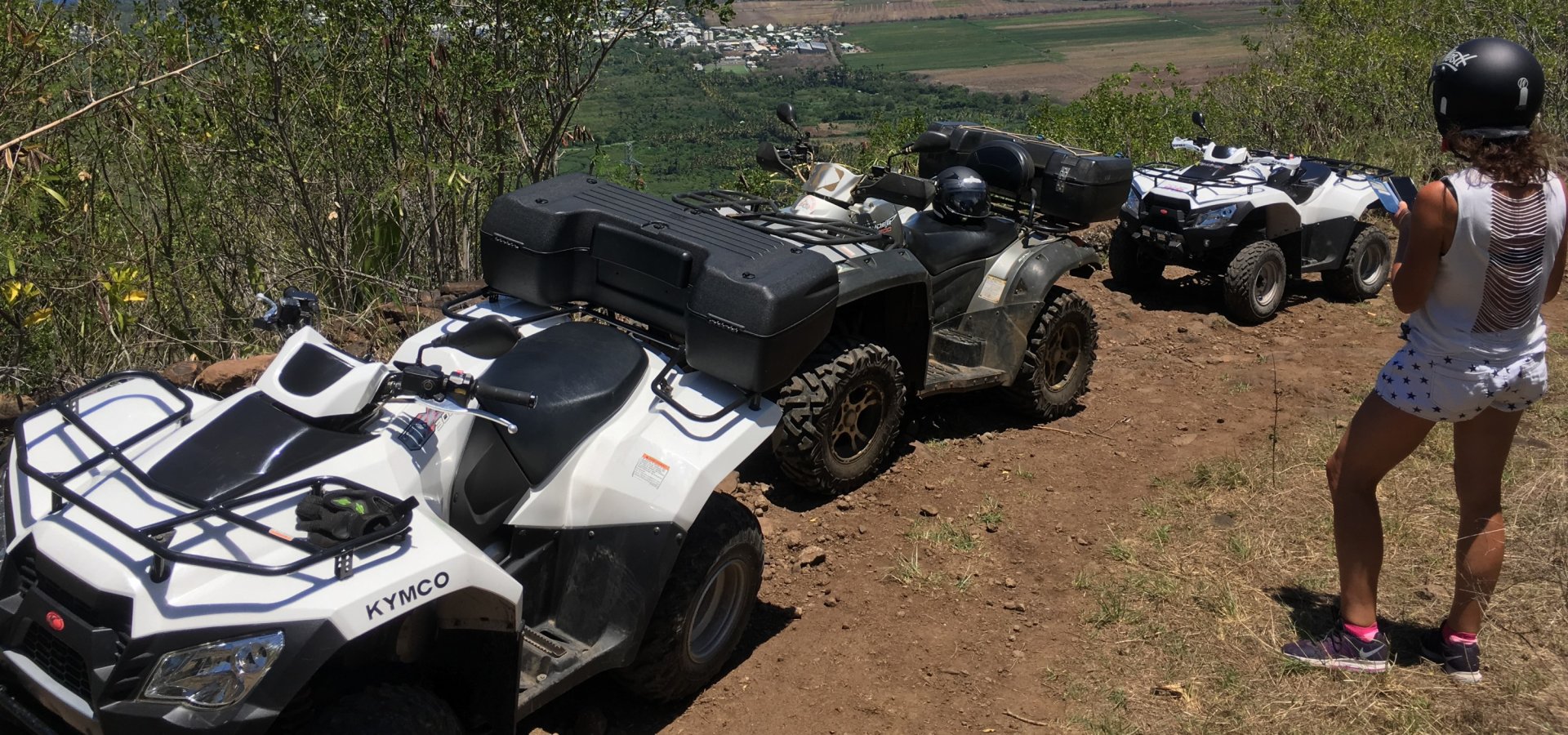
Six in Cilaos (the Piton des Neiges ascent, Bras Rouge and Fleur Jaune canyoning, the Chapelle hike, a tour with a driver, Dimitile quad biking), two in Mafate (a guided hike from Îlet Cayenne, the Maïdo-Mafate excursion) and three in Salazie (the Hell-Bourg tour, the vanilla farm excursion, the Trou Blanc canyon), plus the helicopter to fly over all three.
Reunion Island has three major cirques: Cilaos in the south, Mafate in the north-west and Salazie in the north-east. All three formed through collapse and erosion around Piton des Neiges, the central summit standing at 3,070 metres. They have been listed as a UNESCO World Heritage natural site since 2010, as part of the 'Pitons, cirques and remparts of Reunion Island' property.
Which is the most beautiful cirque in Reunion Island?
A subjective question that depends on how you're travelling. Mafate wins for anyone seeking isolation and authenticity (700 residents, no road). Cilaos wins for ease of access and the range of activities (spas, wine, the Piton des Neiges ascent, canyoning). Salazie wins for the vegetation, the waterfalls and Hell-Bourg village, listed among the Most Beautiful Villages of France. Seeing all three on one trip is the best option of all.
How do you get to the Cirque de Mafate?
Mafate is only reachable on foot or by helicopter; no road leads there. The main hiking starting points are the Col des Bœufs from Salazie, Le Maïdo from Saint-Paul, Sans Soucis from Saint-Paul, and Cilaos for the crossing via the Col du Taïbit. Allow 3 to 6 hours of walking to reach the first hamlets. The other option is a helicopter, either a sightseeing flight or a drop-off, from Pierrefonds or Saint-Gilles.
What's the best time to visit the cirques?
Dry season, May to October: the clearest skies, late-morning haze arriving later, dry, passable trails across all three cirques. This is the best time for hiking. Wet season, November to April: heavy rainfall especially in Salazie, frequent fog, possible cyclone alerts. Salazie stays lush year-round, Cilaos keeps its temperate climate, and Mafate stays drier on the Maïdo side during the wet season.
How much time do you need to see all three cirques?
The classic 7-to-10-day sequence combines 1 to 2 nights in Cilaos, 3 to 4 days in Mafate with nights in gîtes, and 2 days in Salazie to finish. For those with less time, seeing Cilaos and Salazie as there-and-back trips over 3 days, with a helicopter flyover of Mafate, still works well. With a single day, pick one cirque or take a helicopter flight over all three.
Which is the wettest cirque in Reunion Island?
Salazie holds the rainfall record for an inhabited area in Reunion Island, with over 8 metres of water a year on some rain gauges. This rainfall explains the cirque's lush vegetation and its density of waterfalls, including the Voile de la Mariée. Cilaos remains more temperate, while Mafate sees variations depending on the altitude and orientation of its hamlets.
Can you visit Mafate without hiking for several days?
Yes, several options exist. A helicopter flight from Pierrefonds or Saint-Gilles gives you an overview of the cirque in 25 to 55 minutes depending on the package. A day hike from the Col des Bœufs lets you reach the hamlet of La Nouvelle in 2.5 hours and head back down the same day. And the Maïdo viewpoint gives you the classic bird's-eye view without any walking at all.
Are the cirques UNESCO-listed?
Yes, all three cirques are included in the natural site of the pitons, cirques and remparts of Reunion Island, listed as a UNESCO World Heritage natural site since 2010. The perimeter covers Cilaos, Mafate, Salazie, Piton des Neiges, Piton de la Fournaise and the high-altitude forest massifs. Nearly 40% of the island's territory falls under the protection of the Réunion National Park.
What culinary specialities should you try in the cirques?
Cilaos: lentils cooked as a main dish, Cilaos wine in white, rosé or red, smoked highland charcuterie. Salazie: chayote gratin (chouchou), pork stew, passion fruit jam. Mafate: Creole cooking as part of half-board stays in the hamlets, rougail sausages, chicken curry, local rhum arrangé. Across all three cirques: Bourbon Pointu coffee, highland honey and seasonal fruit (strawberry guavas, tamarinds).
What's the altitude of the cirques?
The floor of the Cirque de Cilaos sits between 1,100 and 1,300 m altitude, with the village itself at 1,200 m. The floor of the Cirque de Salazie drops to 500 m towards Salazie itself and rises to 950 m at Hell-Bourg. The Cirque de Mafate ranges from 400 m (Lataniers) to 1,600 m (Roche Plate). The surrounding cliffs often exceed 2,500 m, up to 3,070 m at the summit of Piton des Neiges.
Where can you see the Voile de la Mariée?
The Voile de la Mariée is visible directly from the D48 road leading to Salazie, just past the hamlet of Mare à Citrons. There are several roadside viewpoints where you can stop. The waterfall drops nearly 800 metres in total, fed by the cirque's heavy rainfall. Its flow stays impressive year-round.
Which cirque is best for stargazing?
All three cirques offer relatively dark skies compared to the coast, but Mafate wins because its hamlets have no street lighting. A bivouac at the summit of Piton des Neiges from Cilaos remains the most extreme option for seeing the Milky Way with the naked eye. Cilaos and Salazie offer decent stargazing from the viewpoints; a head torch is essential for the way back.