Trou de Fer Waterfall: How to See Reunion Island's 725m Giant
Water plunging 725 metres into a hidden gorge on the edge of the Salazie cirque, deep in the UNESCO-listed Bélouve rainforest. Here are the 2 ways to see it (the Bélouve trail or a helicopter tour), practical tips for the hike, and 5 places to stay nearby.
725m drop305m single drop2h30 hike25 min by helicopter
Quick facts
Trou de Fer at a Glance
Total height
725m drop
Tallest single leap
305m in one go
Depth of the chasm
About 300m
Bélouve trail
2h30 to 3h return
Helicopter flyover
25 min from Pierrefonds
Hike starting altitude
About 1,500m
Protection
National park, UNESCO since 2010
Location
Salazie cirque / Bélouve
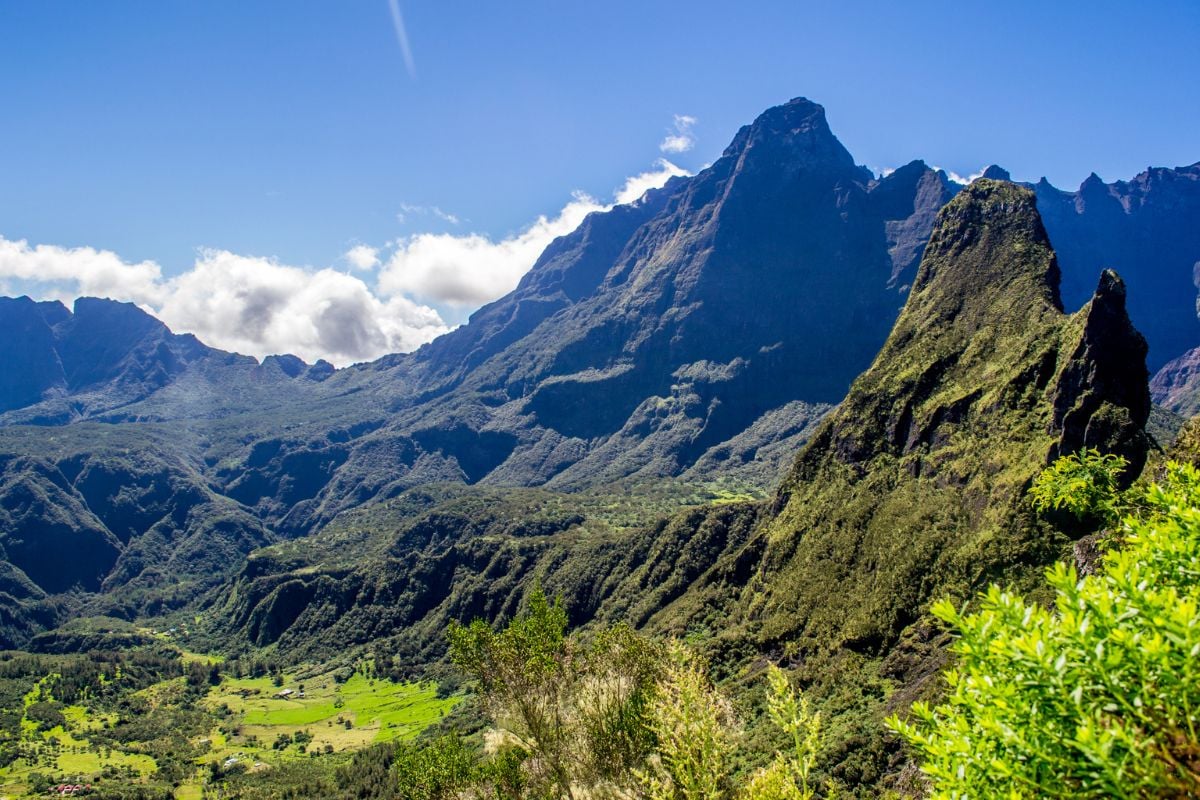
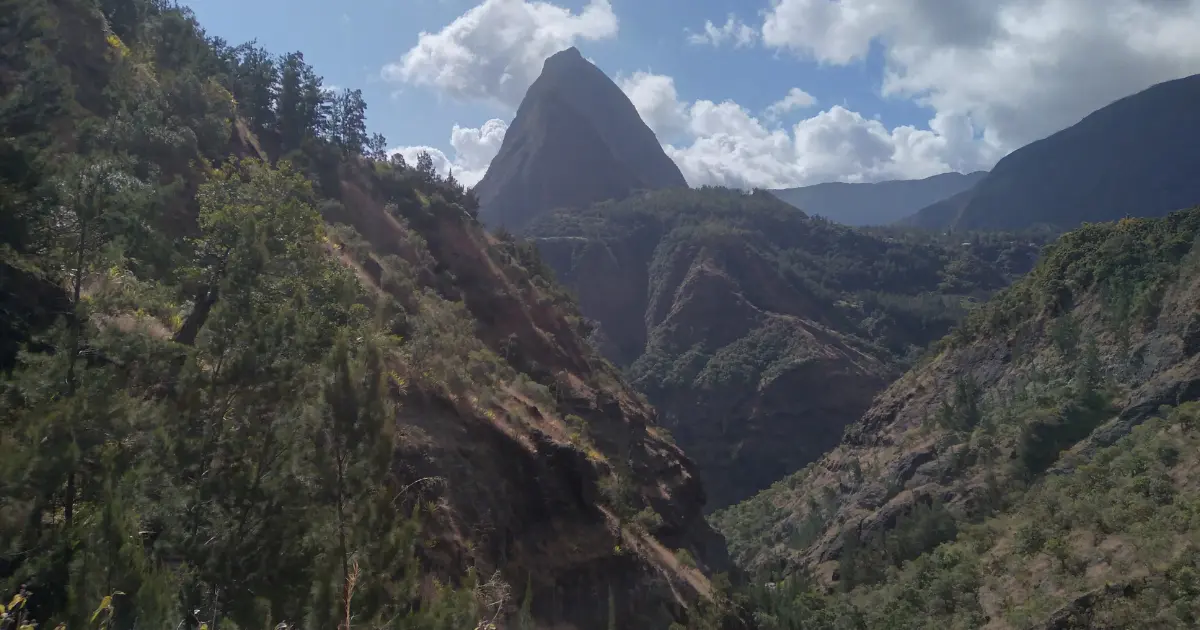
Trou de Fer (literally “iron hole”) is a vast natural gorge inside the Bélouve primary forest, on the edge of the Salazie cirque. The main waterfall drops 725 metres in several tiers, including a single drop of 305 metres, making it the tallest free-falling waterfall anywhere in France. It lies within the area UNESCO listed in 2010 as the “Pitons, cirques and remparts” of Reunion Island. This page covers the 2 ways to see it (on foot or by helicopter), the forest you walk through and where to stay nearby.
A record-breaking waterfall
Just How Big Is Trou de Fer?
Reunion Island is part of France, and no waterfall in mainland France comes close to Trou de Fer's 725 metres: the tallest there, the Cascade de Niagara in the French Alps, reaches around 200 metres. Even the Cascade de la Fare, Trou de Fer's 300-metre neighbour, would beat it. Trou de Fer's longest single drop, 305 metres, is also the biggest free fall anywhere in France.
Worldwide, it's still well short of Angel Falls (979m, Venezuela) or Tugela Falls (948m, South Africa). But it ranks among the world's 30 tallest waterfalls, remarkable for an island of just 2,512km². The reason is geological: as the old Piton des Neiges volcano collapsed and eroded, it left sheer cliffs hundreds of metres high, down which the water plunges.
Comparison
How Trou de Fer Compares
Five well-known waterfalls in Reunion Island and mainland France, by height. Trou de Fer's total drop is more than 400 metres greater than the tallest in mainland France.
Waterfall
Height
Detail
Trou de Fer (Reunion Island)
725m
France's tallest waterfall, with a single drop of 305m
Cascade de la Fare (Salazie, Reunion Island)
300m
A waterfall next to Trou de Fer, fed by the same catchment
Cascade de Niagara (Hautes-Alpes, mainland France)
200m
Cited as mainland France's tallest free-falling waterfall (not the North American Niagara)
Voile de la Mariée (Salazie, Reunion Island)
120m visible
An iconic waterfall you can see from the Salazie road
Cascade Langevin (Saint-Joseph, Reunion Island)
30m
A waterfall and pool in the wild south, where you can swim
On foot or by air
The 2 Ways to See Trou de Fer in Reunion Island
The Bélouve trail takes you through the primary forest; a helicopter gives you the view straight down into the gorge. Two different experiences and budgets: here are the practical details, fitness needed and prices.
Option 1
The Bélouve trail, on foot from the highlands
Duration: 2h30 to 3h returnLevel: Regular walkers, moderate climbingPrice: Free on your own, €50 with a guideAge: From age 8 on a guided family outing
The classic starting point is the Bélouve gîte car park, reached by car from Plaine des Palmistes on the forest road run by the ONF (France's national forestry office). The trail crosses the Bélouve primary forest, partly on a wooden boardwalk, to several viewpoints overlooking the gorge. You have to be quick: the cloud rolls in fast after 10am. The walk itself is easy, with no real technical difficulty, but ankle-high hiking boots are a good idea for the muddy way back. The guided option includes transport from Saint-Denis or Saint-Pierre, a local naturalist to explain the forest, and a packed lunch.
Worth remembering: The most authentic way to see it, with morning mist and the primary forest up close
Duration: 25 min flightLevel: Open to all, no fitness neededPrice: From €190 per personAge: All ages, recommended from age 4
If you want to see the whole of Trou de Fer, nothing beats a helicopter. Flights take off from Pierrefonds (Saint-Pierre) or Saint-Gilles and cross the three cirques before the gorge opens up in front of you. Looking straight down, you see what the trail never shows: every tier of the falls, the bottom of the gorge and the smaller streams feeding the main fall. Local operators (Corail, Mafate, Hélilagon, Pacific Hélicoptères) run 25 to 55-minute flights that combine Trou de Fer with Piton de la Fournaise or Mafate. Mornings have the most settled weather, before the trade winds bring cloud over the cirques.
Worth remembering: The only way to see the full 725m drop; fly in the morning for the best weather
The Bélouve trail stops at a viewpoint on the edge of the gorge. To see the whole thing (the bottom of the gorge, the lower tiers, the smaller falls alongside), nothing beats a helicopter: 4 companies, 6 flights from €190 per person, lasting 25 to 55 minutes from Pierrefonds or Saint-Gilles. There's a detailed comparison, with Manawa traveller reviews, on my helicopter page.
The hike isn't just about the final viewpoint. The UNESCO-listed primary forest is as memorable as the waterfall: centuries-old tamarind trees, tree ferns and the endemic tuit-tuit bird. Six things to know about what you'll see.
A UNESCO-listed primary forest
The Bélouve forest is part of the 'Pitons, cirques and remparts of Reunion Island', a UNESCO natural World Heritage Site since 2010. Primary means it has never been logged: original tree cover, dense undergrowth and intact biodiversity. It's one of the last forests of its kind in the Indian Ocean.
Highland tamarind trees and tree ferns
The trail runs through a green cathedral of highland tamarinds (Acacia heterophylla), twisted endemic trees, some over a thousand years old. Below them grow tree ferns (Cyathea), bois de couleur shrubs and heather. The damp keeps the trunks covered in moss and lichen, a sign of exceptionally clean air for the tropics.
Discreet endemic wildlife
Early in the morning you may hear the tuit-tuit (the Réunion cuckooshrike) and the Réunion stonechat. Panther chameleons and Bourbon green geckos live in the undergrowth. There are no native land mammals; the island has never had any. Birds and reptiles are what you'll mostly see, so bring binoculars and keep quiet.
The forest's climate and microclimate
The forest sits at 1,400-1,600m and gets over 4 metres of rain a year, among the highest totals in France. It's humid all year, and fog often rolls in from around 9.30-10am. Setting off early (ideally 7am) gives you the best chance of a clear view of the waterfall. Bring a waterproof jacket: rain comes without warning.
The boardwalk protecting the ground
Much of the Bélouve trail is a raised wooden boardwalk that protects the fragile forest floor. Walkers trampling the ground would destroy it within a few years, and it takes a long time to recover. Stay on the marked path, don't cut corners and don't take anything.
The Bélouve gîte, a historic base
The Bélouve gîte, a former forestry refuge converted for walkers, is where the trail starts and ends. It has limited capacity and can be booked online. Staying overnight lets you do the Trou de Fer hike first thing the next morning and watch the sun rise over the misty forest.
Planning your hike
Practical Tips for the Trou de Fer Hike
Six things to check before you drive up the forest road: the best time to go, getting there, what to bring, safety, going with a guide or not, and what else to see around the Salazie cirque.
When to go
The dry season, April to November, brings more settled weather and less fog. Start at sunrise (6.30-7.30am depending on the time of year) for a clear view of the waterfall. From around 9.30-10am, cloud rises from the bottom of the gorge and often hides it. Avoid cyclone alerts (December to March), when the forestry office closes the forest roads in heavy rain.
Getting to the start
From Saint-Benoît, take the RN3 to Plaine des Palmistes, then the Bébour-Bélouve forest road for 12km of tarmac. An ordinary car is fine in dry weather; take care in the rain, as some stretches get slippery. Parking at the Bélouve gîte is free but limited, so arrive before 8am in peak season. There's no public transport, so you'll need a hire car.
Equipment to bring
Ankle-high hiking boots with good grip (the mud is thick after rain), quick-dry trousers, a light waterproof jacket and a fleece in case you linger at the viewpoint (the wind is cold up there). Bring 1.5L of water, a snack and a head torch if you set off before dawn. Walking poles help on wet sections.
Safety and markers
The trail is waymarked all the way, and the viewpoints have handrails or barriers. Never climb over them: the edge of the gorge is unstable, and there have been several accidents in recent years. Don't follow unmarked paths heading down towards the waterfall: they lead nowhere and can be deadly.
On your own or with a guide
You can easily go it alone if you can read a topographic map and use a hiking app (Visorando, IGN Rando). A guide adds real value as a naturalist: explaining the endemic plants, telling the geological story and reading the weather as it changes. Three guided options from €50, including transport, a qualified guide and a packed lunch.
Combining Trou de Fer with other sites
In a single day you can do the Bélouve trail in the morning and visit Hell-Bourg (Salazie cirque) in the afternoon, driving from Plaine des Palmistes to Salazie via Saint-Benoît. If you're staying in Hell-Bourg, it's easy to combine Trou de Fer with the Voile de la Mariée waterfall and Maison Folio without rushing. Allow 2 days to make the most of the cirque.
As the tips above point out, hiking independently means driving yourself up the forest road from Plaine des Palmistes. That leaves two ways to do it: reserve a rental car and set off at dawn, or book the guided hike below, with transport included.
Recommended guided hike
Trou de Fer Hike With a Naturalist Guide
3 options from €50 per person with a state-qualified guide, transport from Saint-Pierre or Saint-Denis, an introduction to the endemic plants and an eye on the weather. The family option welcomes children from age 8, at a gentler pace. Rated 4.85/5 from 25 Manawa reviews.
5 Places to Stay in Salazie and Plaine des Palmistes
From a €97 family guesthouse to a €253 spa hotel: 5 places on Agoda in Salazie, Hell-Bourg and Plaine des Palmistes, all rated 8/10 or above by 49 to 290 guests.
Salazie9/10 (49 reviews)
Sarana Hôtel & Spa
4 stars · spa and restaurant
An upmarket hotel in the heart of the Salazie cirque, 30 minutes from the Bélouve forest road via Saint-Benoît. A spa, a fine-dining restaurant and views of the cirque's cliffs. Ideal if you want a morning hike followed by an afternoon of pure comfort.
A charming hotel 15 minutes' drive from the Bébour-Bélouve forest road, the closest to the start of the hike. Wood-and-stone rooms, a Creole restaurant and garden. Perfectly placed for a dawn start to Trou de Fer.
The go-to Creole guesthouse in Hell-Bourg, one of the 'Most Beautiful Villages of France'. 290 Agoda reviews at 8.8/10, the best value in the cirque. Creole breakfast, a warm welcome from the owners and parking. A good base for Trou de Fer, Voile de la Mariée and Mare à Poule d'Eau.
A family-run Creole guesthouse in Salazie village, rated 8.5/10 from 102 reviews. Home cooking (evening meals on request), a tropical garden and simple but well-kept rooms. The budget choice for 2-3 nights of hiking and nature in the cirque.
A guesthouse at €97 a night, rated 8.9/10 from 83 reviews. The best-rated budget option in the cirque, with a warm welcome and views of the cliffs. Well suited to a short hiking stay.
Trou de Fer in the morning, Hell-Bourg in the afternoon, the 400-bend road towards Cilaos the next morning: a campervan lets you string together sites in the Salazie cirque and move on to Cilaos without depending on hotel check-in times. Yescapa connects local owners with travellers, with everything from kitted-out vans to classic camper conversions.
8 partner activities: the guided Bélouve-Trou de Fer hike, helicopter tours, other guided hikes in the neighbouring cirques and other ways to take in the views (microlight flights, an island tour).
Yes. With a total drop of 725 metres over several tiers, Trou de Fer far outstrips any waterfall in mainland France; the Cascade de Niagara in the French Alps (Hautes-Alpes) reaches around 200 metres. Trou de Fer's biggest single drop is 305 metres, which also puts it at the top in Europe for a free-falling waterfall.
How do you get to Trou de Fer?
There are two main ways. On foot, on the Bélouve trail: 2h30 to 3h return from the Bélouve gîte, which you reach by car on the Bébour-Bélouve forest road from Plaine des Palmistes. Or by helicopter: 25 to 55-minute flights from Pierrefonds (Saint-Pierre) or Saint-Gilles that fly over the whole gorge. No road goes to the waterfall itself, which is hidden deep in the primary forest.
What's the best time to see the waterfall?
The dry season, April to November, offers the best balance of settled weather and a decent flow of water. July-August, the cool peak season, has the most pleasant temperatures, but the flow can be lower. January to March brings the biggest flow thanks to the cyclone season, but roads are sometimes closed and fog is frequent. Whatever the month, early morning (6.30-8am) gives you the best chance of a clear view.
Is the Trou de Fer hike difficult?
No, it's fine for regular walkers: little climbing, a trail largely on a wooden boardwalk and a moderate distance. The challenges are the damp (slippery ground), the fog (finding your way) and being on your feet for a few hours. Ankle-high boots are essential and poles are useful. Children from age 8 cope well on a guided family outing.
How much does a helicopter flyover of Trou de Fer cost?
Flights that include Trou de Fer start at €190 per person for a short 25-minute tour (Mafate and Trou de Fer). Longer 45-55 minute flights that also take in Piton de la Fournaise cost €320-380. Four companies operate in Reunion Island: Corail Hélicoptères, Mafate Hélicoptères, Hélilagon and Pacific Hélicoptères. Details and a comparison are on my helicopter tours page.
Can you swim in Trou de Fer?
No, it's strictly forbidden. No marked trail goes down into the gorge, and the few canyoning routes nearby don't reach the foot of the waterfall. The Bélouve viewpoints are for looking only. Never climb over the safety barriers: the edge is unstable, and there have been several fatal accidents in recent years.
Is Trou de Fer UNESCO-listed?
Yes. It lies within the 'Pitons, cirques and remparts of Reunion Island', a UNESCO natural World Heritage Site since 2010 for its biodiversity and unique volcanic landscapes. The listed area covers the three cirques, Piton des Neiges, Piton de la Fournaise and the surrounding primary forests, including Bélouve. Nearly 40% of the island is protected as a national park.
Where should you stay to visit Trou de Fer?
The most practical base is Plaine des Palmistes (Hotel Le Tuit Tuit), 15 minutes from the start of the forest road. Hell-Bourg in the Salazie cirque lets you combine Trou de Fer with Creole heritage (Relais des Gouverneurs, 290 reviews). For a premium stay with a spa, Sarana Hôtel & Spa in Salazie costs €253 a night. The five hotels recommended above range from €97 to €253 a night.
Is the Bélouve trail accessible all year round?
Almost, except during weather alerts. The forestry office (ONF) can close the Bébour-Bélouve forest road in heavy rain, a red cyclone alert or when there's a risk of landslides. Check the road's status on the ONF Réunion website or with your accommodation before you go. In the dry season (April to November), closures are rare.
Do you need a guide to do the hike?
Not if you can read a topographic map and use a hiking app: the trail is well marked, with several fenced viewpoints. A guide still adds real value, explaining the primary forest, identifying endemic plants, reading the weather and telling the geological story. Three guided options from €50, with transport from Saint-Pierre or Saint-Denis.
What's the difference between Trou de Fer and Cascade de la Fare?
They're two separate waterfalls next to each other. Trou de Fer is the main gorge, with a 725-metre drop over several tiers. Cascade de la Fare is one of the neighbouring falls, around 300 metres high, fed by the same catchment. From a helicopter you see both at once. From the Bélouve trail, the main viewpoint looks straight at Trou de Fer, with La Fare as a bonus.
Is the helicopter flyover worth it for Trou de Fer alone?
Yes, as long as you choose a flight that actually includes it. The short 25-minute tours cover Mafate and Trou de Fer and are the cheapest. Longer flights (45-55 min) add Piton de la Fournaise and the Bras de la Plaine waterfalls. Minute for minute, the longer flights are better value, but the 25-minute option at €190 per person is the most affordable way in.