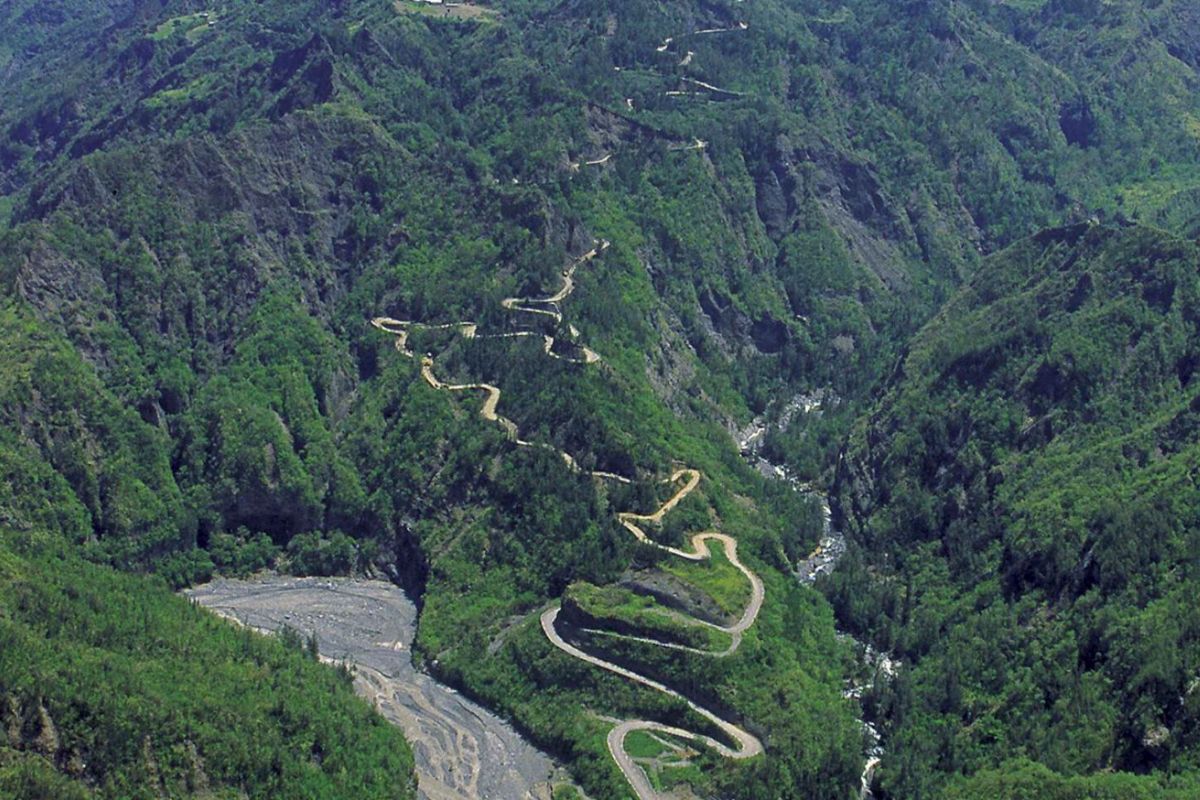
The road to Cilaos: 400 bends into the cirque
Reunion Island's only mountain town is reached on the RN5, with its 420 bends and single-lane tunnels. Altitude, journey time, weather, things to do and where to stay: everything you need to plan the drive and your stay.
The essentials on Cilaos at a glance
Why 400 bends?
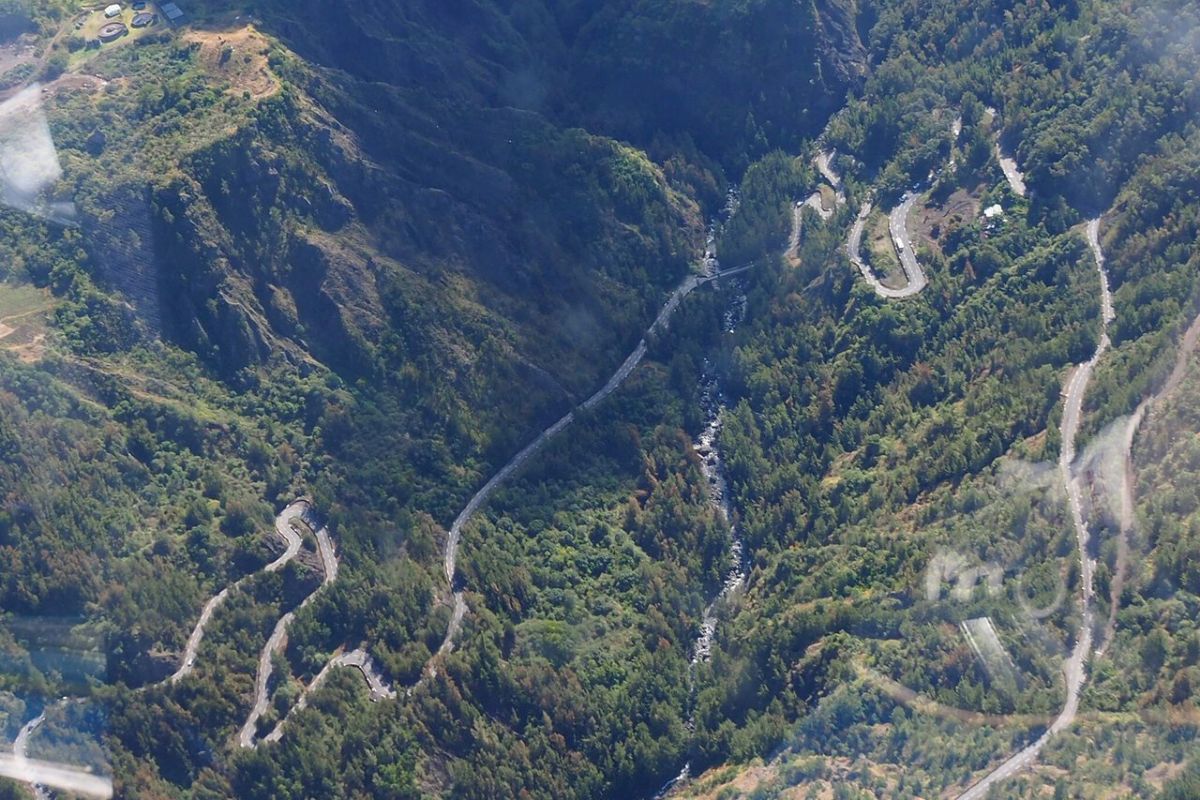
The RN5 starts in Saint-Louis (around 35 m above sea level) and climbs non-stop to Cilaos (1,200 m) over some 37 km. To hug the walls of the cirque, the road winds round every ravine and goes through several narrow tunnels, including a famous single-lane tunnel controlled by traffic lights.
The exact count depends on what you call a ‘bend’, but it comes to around 420 hairpins. That's more than the classic passes of the Pyrenees and the Alps over a similar distance. If you get car sick, take a tablet before you set off, or take the Car Jaune bus (line S1).
Weather and traffic: avoid heavy rain (risk of rockfalls) and weekend rush hours, when queues can stretch the journey to 2 hours. Before 8am is the best time to go.
Driving up yourself? There's no need for a 4x4: the RN5 is tarmac all the way, and a compact car copes far better when traffic has to squeeze past and in the tunnels. It's worth choosing with that in mind when you pick your rental car.
Cilaos, the easiest cirque to explore
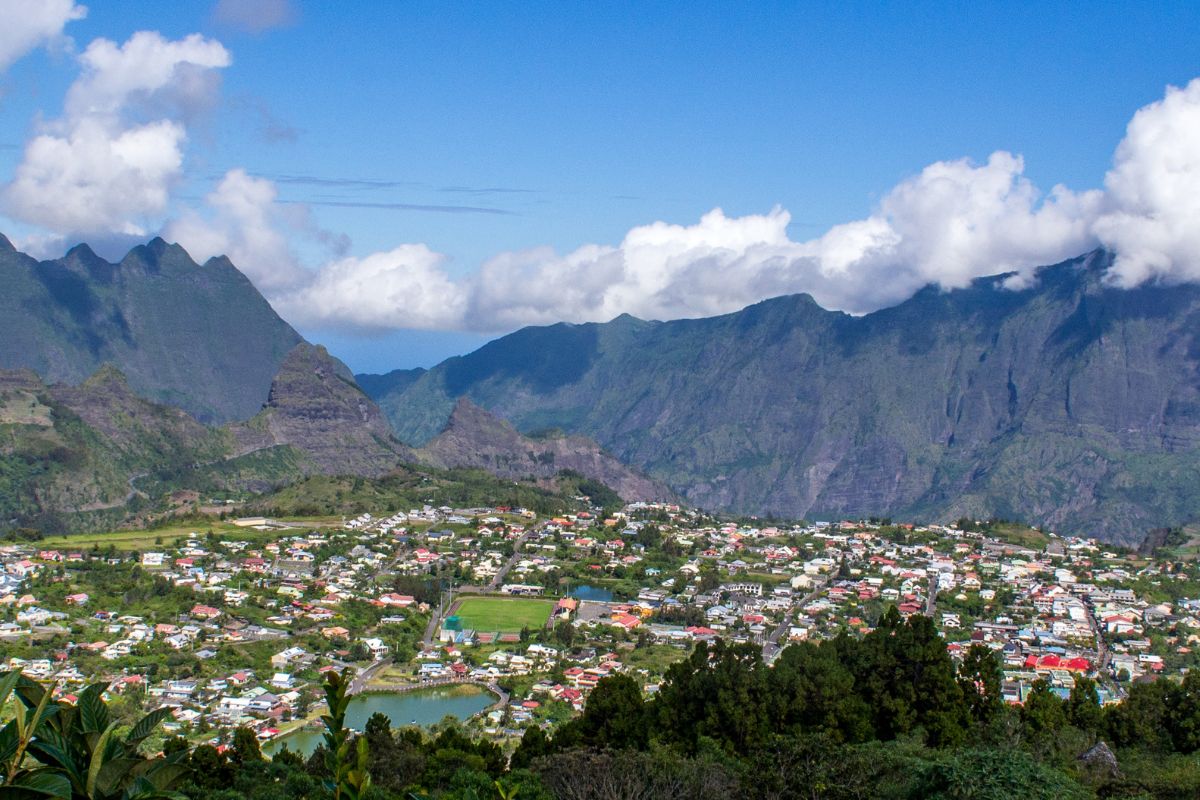
Cilaos is one of the three cirques (huge natural amphitheatres) formed by the collapse of Piton des Neiges, along with Mafate and Salazie. Its walls rise to 2,500 m around the village. With Salazie, it's one of the two cirques you can drive into, and it's the most practical base for hiking the island's highest peaks.
The village grew up in the 19th century around the hot springs discovered in 1819, and was long a holiday retreat for wealthy Creole families. Today it lives on tourism, mountain farming (AOC wine, Label Rouge lentils, fresh fruit) and crafts (Cilaos embroidery, listed as living heritage).
Things to do in Cilaos
From Piton des Neiges to the Bras Rouge canyon, via the hot springs and the vineyard: 6 things to fit into your stay.
Piton des Neiges hike
The highest point in the Indian Ocean at 3,070 m, via the Sentier des Sentinelles from Le Bloc (around 5 hours up, a night at the Caverne Dufour mountain hut, sunrise at the summit).
See Cilaos hikesBras Rouge canyoning
A half-day introduction in reddish water (iron oxide), with 4 abseils and 6 jumps. For beginners, from age 12.
Book Bras RougeFleur Jaune canyoning
The island's classic canyon: a full day, abseils of up to 30 m, volcanic scenery. For experienced canyoners only.
Book Fleur JauneThe thermal baths and Maison Maillard
The hot springs discovered in 1819, around which the village grew. Warm baths at the renovated spa, and a botanical trail nearby.
Cilaos wine and lentils
A tropical mountain vineyard (Cilaos wine has had protected designation (AOC) status since 2016) and prize-winning Label Rouge lentils grown on terraces. Visit the Chai winery and the Sunday market.
Cilaos wineCilaos embroidery
A craft handed down since 1900: 'jours de Cilaos' openwork embroidery, on show at the Maison de la Broderie, with live demonstrations and one-off pieces for sale.
Flying over Cilaos by helicopter
30 to 55 minutes from Saint-Pierre or L'Éperon (west), over all three cirques, Piton des Neiges and the 400-bend road. The most striking way to understand the island's geology.
See helicopter flightsCilaos and the 400-bend road: your questions answered
Why is it called the 400-bend road?
How long does it take to drive to Cilaos?
What altitude is Cilaos at?
Is the road dangerous?
Can I get to Cilaos without a car?
When is the best time to visit Cilaos?
What is there to do in Cilaos?
Where to stay in Cilaos
Continue reading
- → Things to do in Cilaos: 10 ideas.
- → The best hikes in Cilaos.
- → Bras Rouge waterfall: access and tips.
- → Cilaos wine: visiting the Chai winery at 1,200 m.
- → Bras Rouge canyoning (beginners).
- → Fleur Jaune canyoning (experienced).
Article updated on 19 September 2026.