Classic trek · Reunion Island

The Three Cirques trek, Reunion Island: a day-by-day itinerary

Cilaos, Mafate, Salazie: the island's great multi-day hike, 5 to 7 days with over 6,000m of ascent. Here's the day-by-day route, where to sleep, alternative routes, what to pack and how to get back to your car.

5-7 days≥ 6,000m total ascent
The legendary route

Three cirques, one epic hike

Crossing the three cirques (Cilaos, Mafate, Salazie) on foot is one of Reunion Island's great classic hikes. The cirques are huge natural amphitheatres at the island's volcanic heart, and you spend 5 to 7 days walking through them: Cilaos (1,200m, reachable by car, the usual starting point), Mafate (1,000-1,700m, reachable only on foot or by helicopter, the wild heart of the trek) and Salazie (500-1,500m, reachable by car at Hell-Bourg, a spectacular finish).

The total ascent is over 6,000m, with 5 to 8 hours of walking a day, so this is only for experienced hikers used to carrying a multi-day pack in the mountains. For all the details on the Three Cirques Traverse in Reunion Island with GPX tracks, a detailed elevation profile and hikers' reviews, see Randopitons.re, the island's go-to hiking website.

On this page: a day-by-day itinerary, the main gîtes (simple mountain lodges) with prices, four variations (shorter, with Piton des Neiges, or camping all the way), answers to nine common questions and how to get back to the start.

Detailed itinerary

Six day-by-day stages

The classic itinerary; adapt it to your pace and your group. Times are for an average hiker carrying a pack.

DayRouteDurationAscent/descentGîteNote
Day 1Cilaos → Col du Taïbit (2,081m) → Marla5-6 hrs+800 / −600mMarla (Mafate cirque)Climb to the Col du Taïbit (2,081m), cross the pass and descend to Marla, with views over both cirques.
Day 2Marla → La Nouvelle → Roche Plate5-7 hrs+600 / −800mRoche PlateInto the heart of Mafate through its inhabited îlets (tiny hamlets). The Plaine aux Sables plateau and views of Le Maïdo.
Day 3Roche Plate → Aurère or Grand Place6-8 hrs+700 / −900mAurère or Grand PlaceThe longest stage, via Cayenne or Îlet Lataniers. Rugged trails with fixed ropes and steps cut into the rock.
Day 4Leave Mafate via Sans-Souci or Col des Bœufs → Hell-Bourg4-5 hrsDepends on your exitCirque de Salazie (Hell-Bourg)Out of Mafate. If you arrive late, you can take a road transfer to Hell-Bourg.
Day 5Hell-Bourg → Bélouve → Trou de Fer5-6 hrs+600 / −200mGîte de Bélouve (1,500m)Through the Bélouve forest, an easy climb to the gîte and a there-and-back walk to the Trou de Fer viewpoint.
Day 6Bélouve → Plaine des Palmistes or back to Hell-BourgVariableDepending on routeEnd of the trekFinish via the Plaine des Palmistes (a long descent) or head back to Hell-Bourg to collect your car.
Accommodation

The trek's main gîtes

Beds are limited, so book 1-2 months ahead in July-August, during French school holidays and in October (Grand Raid race).

GîteCirquePrice
MarlaMafate€20-25/night, meals €18-22
La NouvelleMafate€20-25/night, meals €18-22
Roche PlateMafate€20-25/night, meals €18-22
AurèreMafate€20-25/night, meals €18-22
Grand PlaceMafate€20-25/night, meals €18-22
Hell-Bourg (hotels and B&Bs)Salazie€60-150/night double
Cilaos (hotels and B&Bs)Cilaos€60-180/night double
Gîte de BélouvePlaine des Palmistes / Salazie€20-30/night, meals €18-22
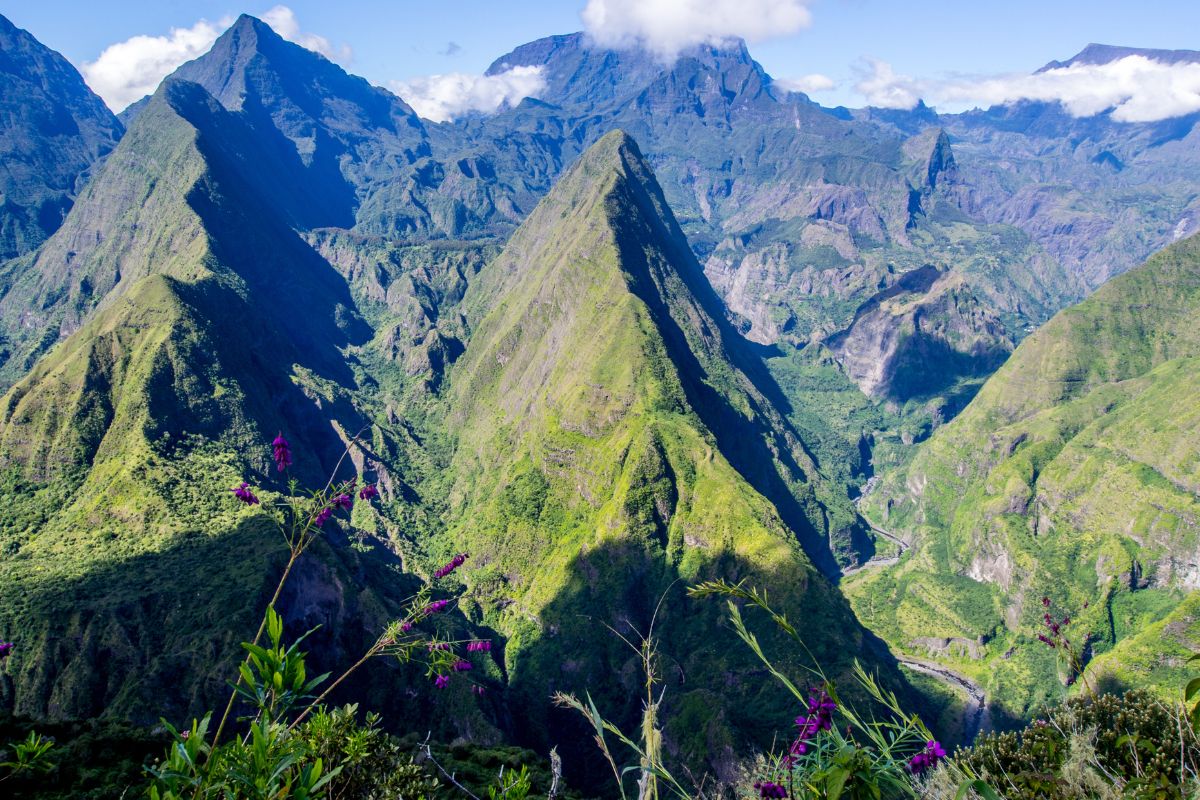
Dramatic green peaks and ridges in the heart of Reunion Island's cirques
Variants

Four ways to do it

Adapt the trek to the time you have, your fitness and how wild you want it to be (gîtes or camping).

01

The classic 5-7 day version

The itinerary above: Cilaos → Mafate (3-4 days) → Salazie. For experienced hikers, with over 6,000m of total ascent.
02

Adding Piton des Neiges (8-9 days)

Add the ascent of Piton des Neiges (3,070m, the Indian Ocean's highest peak) at the start or end of the trek. One night at the Caverne Dufour gîte and a 3am start to reach the summit for sunrise. Adds 1-2 days of hard effort.

03

The shortened 4-day version

For strong hikers only: Cilaos → Marla → La Nouvelle → Aurère → finish via Cap Noir. Longer stages (7-9 hours) with a lot of climbing each day. Only for experienced hikers in excellent shape.

04

The wild-camping version (fully self-sufficient)

No gîtes: you camp in authorised areas (Plaine des Sables, Marla, some spots in Mafate). A heavier pack (12-15kg with tent, stove and food) makes it tougher, but even more immersive. National Park rules must be strictly followed.

Frequently asked questions

Your questions answered

How many days does it take to cross the three cirques in Reunion Island?
Allow 5 to 7 days, depending on your pace and route. The classic trek links Cilaos (starting over the Col du Taïbit, 2,081m), Mafate (3 to 4 days, depending on which îlets you visit) and Salazie (1 to 2 days, finishing at Hell-Bourg or Bélouve). Some hikers squeeze it into 4 days with more direct routes; others stretch it to 8-9 days by adding Piton des Neiges (3,070m, the highest peak in the Indian Ocean). Randopitons has full route details.
How fit do you need to be for the three cirques trek?
You need to be an experienced hiker. The total ascent is over 6,000m (up to 8,000m with Piton des Neiges), with 5 to 8 hours of walking a day and some technical sections (fixed ropes, steps cut into the basalt, steep descents). You should be fit, used to carrying an 8-12kg pack and have done multi-day mountain hikes before. Beginners should build up over a season: regular day hikes, then a one-night camping trip, then two nights, before attempting the trek.
What's the best season for the traverse?
The southern winter, from May to October: dry trails, usually clear skies in the mountains before 11am, and cool but pleasant temperatures (5-18°C at night, 15-25°C by day). Avoid the cyclone season from December to March, when trails are often closed by official order and you face heavy rain, navigation-wrecking fog and the risk of tropical cyclones. It's busiest in July-August (French school holidays) and October (the Grand Raid, the island's famous ultra-trail race), so book gîtes 2-3 months ahead.
Do you need to book the gîtes ahead?
Yes, it's essential, especially in high season (July-August, French school holidays and the Grand Raid in October). The gîtes in Mafate (Marla, La Nouvelle, Roche Plate, Aurère, Grand Place) are small (20-50 beds each) and fill up fast. Book directly with each gîte by phone (numbers on the Reunion Island Tourism Board website or Randopitons). Expect €20-25 a night and €18-22 for meals. Hotels in Cilaos and Salazie are more flexible, but it's still wise to book 1-2 months ahead in high season.
What should you pack for the traverse?
For 5-7 days staying in gîtes: a sleeping bag with a 5°C comfort rating (gîtes only provide a sheet), waterproofs, a fleece and a light down jacket, a head torch and batteries, a first-aid kit, a 2-litre water bottle, snacks and a few light spare clothes. Aim for 8-10kg including water. If you're camping, add a 2-person tent (2-3kg), a sleeping mat, a stove and gas, and freeze-dried food for the days without a gîte (1-2kg a day), for a total of 12-15kg. Full details in my Reunion Island hiking gear guide.
How do you get back to the start?
There are four options. 1: leave your car in Cilaos (the start) and take a taxi back from the finish (Hell-Bourg or Plaine des Palmistes) at the end of the trek (€60-100 for 2 people, depending on distance). 2: get someone to drop you in Cilaos and pick you up at the end. 3: walk a loop, for example Cilaos → Mafate → back to Cilaos over the Col du Taïbit, though you'll miss Salazie. 4: take the Cars Jaunes, the island's intercity buses (cheap but slow, with few services on the mountain roads).
Can you do the traverse alone?
Yes, if you have solid mountain-hiking experience. Always leave your day-by-day route with someone, and carry a whistle (compulsory in the National Park), a survival blanket and a charged phone with a power bank. Use an offline GPS app (IGN Cartes, Visorando) with the tracks downloaded, as there's no mobile signal in Mafate. You'll meet dozens of other hikers every day, so you won't be truly alone.
Do you need a guide?
Not if you have the experience. But a qualified mountain leader (AMM in French) adds a lot: local knowledge, safety, insight into the culture and nature, handling the logistics (bookings, meals) and adapting stages to the conditions. Guides charge €80-150 a day for a group of 4-8 (so €15-30 each). Several guides specialise in the cirques; look them up in mountain-guide directories or ask locally. It's worth checking whether they speak English.
Is the trail well marked along the whole traverse?
Broadly, yes: the main trails have red-and-white waymarks (maintained by the ONF, the forestry office) and signposts at major junctions. But thick fog, very common in the mountains in the afternoon, can make the markers hard to see, so an offline IGN Cartes app is a useful backup. Some technical sections (fixed ropes, cut steps) need care. In Mafate, paths branch off to different îlets, so check your bearings at every junction. A 1:25,000 IGN paper map is still worth carrying.
Going further

Keep reading