UNESCO World Heritage · Hauts de Saint-Paul · 2,190 m
Piton Maïdo, Reunion Island: sunrise over the Mafate cirque
Perched 2,190 metres above the west coast, this is Reunion Island's most visited viewpoint. Watch the sun rise over the whole Mafate cirque, camp at the summit, hike to Grand Bénare (2,898m), or paraglide, mountain bike and ride down. Here are 4 ways to enjoy it and 5 west-coast Agoda hotels for the night before.
2,190 m altitude2,898 m at Grand Bénare45 min from Saint-Paul250 days clear / year
Quick facts
Piton Maïdo in 8 numbers
Viewpoint altitude
2,190 m
Neighbouring Grand Bénare
2,898 m
Distance from Saint-Paul
30 km, 45 min by car
Distance from Saint-Gilles
35 km, 1h by car
Sunrise
Between 5am and 7am depending on season
Wild camping tolerated
At the edge of the viewpoint
Summit activities
Hiking, paragliding, MTB, horse riding
Ideal period
May to October, clear skies
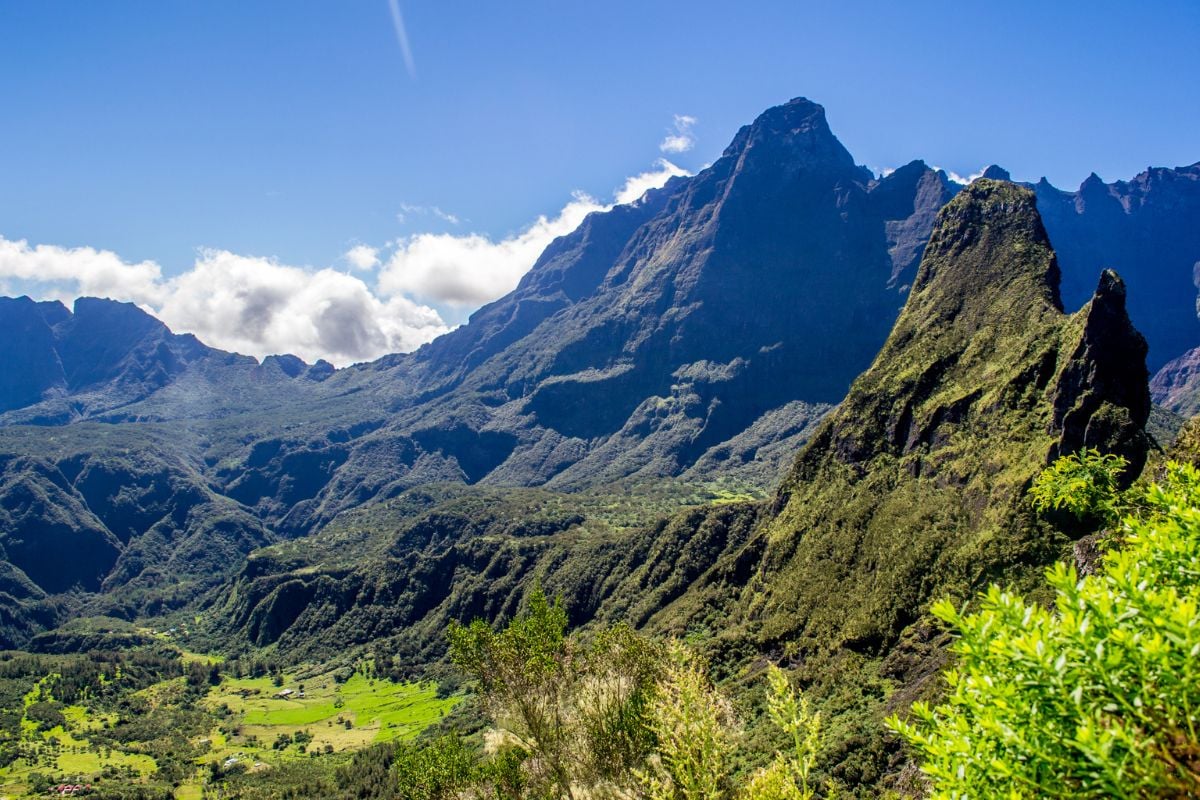
Piton Maïdo is a natural viewpoint set on the lip of the Mafate cirque, at 2,190 metres altitude. The forest road from Petite-France climbs all the way to a summit car park, making it the island's only high-altitude panorama reachable by car. That's why the Maïdo is one of Reunion Island's most visited sites, especially at sunrise. This page covers 4 ways to enjoy it, sunrise times by season, activities at the top and on the way down, and 5 west-coast Agoda hotels. Car Jaune buses stop at Petite-France and go no higher: to reach the top, join an island tour with a driver or reserve a hire car along with the rest of your trip.
The signature moment
Why sunrise at the Maïdo is so special
It's all about the layout: the viewpoint faces due east, straight into the heart of the Mafate cirque. When the sun emerges behind the Piton des Neiges ramparts, the light pours directly into the cirque as into an open bowl. The shift from violet to gold, over the peaks and îlets, takes about 40 minutes. No other viewpoint on the island offers such a favourable orientation at that hour.
The nights are cold (2 to 8°C depending on the season) and the wind bites, but the sky at this altitude is exceptionally clear. In winter you can see the Milky Way with the naked eye, trains of Starlink satellites and planets low on the horizon. So the Maïdo gives you two shows back to back: a starry sky until 4am, then the sunrise.
4 approaches
4 ways to enjoy Piton Maïdo
A quick sunrise from the car park, a night camping at the top, a hike to Grand Bénare or a tandem paragliding flight: four different experiences, budgets and paces.
Option 1
Sunrise from the viewpoint
Duration: 2h on site, departure 1h before official sunriseLevel: Easy: you can drive right up to the summit car parkPrice: Free, self-guidedAge: All ages, adult supervision required
The Maïdo's signature experience. Drive up the forest road from Petite-France (open 24/7) to the car park, then walk 5 minutes along a paved path with a wooden handrail to the viewpoint. The whole Mafate cirque spreads out below as the light shifts from deep violet to pink, then gold. Arrive 45 minutes before sunrise to see the full show. Bring a fleece and a woolly hat: it drops below 5°C in the southern winter, and feels colder in the wind.
Key takeaway: Reunion Island's most famous view, easy for everyone from the summit car park
Option 2
A night camping at the summit
Duration: 1 night, driving up in the late afternoonLevel: Self-sufficient camping, bring all your own gearPrice: Free, bring your own gearAge: From age 8 with an adult, rustic conditions
No early-morning drive up the forest road. Wild camping is tolerated at the edge of the viewpoint, but there are no facilities: no water, no toilets, no lighting. You'll need a three-season tent to cope with the wind and cold. The reward: sunrise straight from your sleeping bag, with the whole panorama in front of you and coffee on the camping stove. Head down mid-morning towards the Hauts de Saint-Paul or on to a booked activity (paragliding, mountain biking).
Key takeaway: More of a commitment, and not one for the wet season
Duration: 5-6h round trip from the Maïdo car parkLevel: For fit hikers, with a steep climb near the endPrice: Free on your own, from €75 with a guideAge: From age 12, high-mountain conditions
The GR R2 trail leaves from the Maïdo car park, runs along the cirque's ramparts for 6km before reaching the summit of Grand Bénare at 2,898m, Reunion Island's second-highest peak after Piton des Neiges. In clear weather you get a 360° view over the three cirques and the ocean. The climb is moderate (700m in total), but the altitude slows you down. Start at 6am to beat the late-morning fog. With a guide, you get someone to explain the landscape and keep an eye on the weather.
Key takeaway: The high-mountain follow-up once you've seen the sunrise
Duration: 20-30 min flight, 2h on site with a briefingLevel: None, tandem flight with an instructorPrice: From €110 per personAge: From age 5, no upper limit
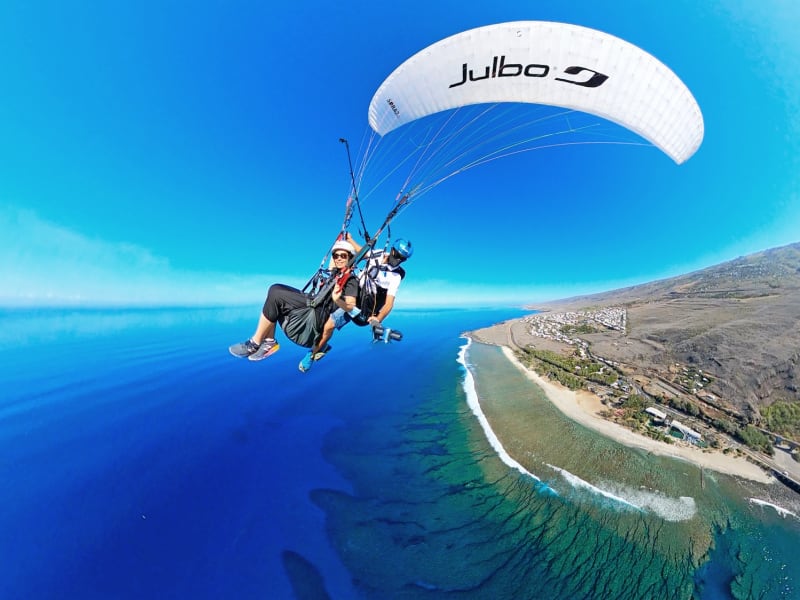
The Maïdo is one of the Indian Ocean's most iconic paragliding spots. You take off from the official ramp, fly over the Mafate cirque and glide down towards Saint-Leu or Saint-Paul depending on the wind. Flights usually run between 10am and 2pm, when the thermals are strongest. You fly tandem with an instructor, and no particular fitness is needed. It's the closest you can get to the cirque, seeing the ramparts from the inside.
Key takeaway: Flying inside the cirque: the one angle the viewpoint can't give you
Six things to check before driving up through Petite-France: access, weather, gear, sunrise times, camping and how to combine it with the west coast.
Getting there from Saint-Paul or Saint-Gilles
From Saint-Paul, take the Route de la Tamarinaie then the Maïdo road via Petite-France (D9). Expect 30km and 45 minutes in dry weather. From Saint-Gilles, add 15 more minutes. The road is paved all the way to the summit car park, so any car will do. There's no toll and no barrier. Parking is free, with about 60 spaces that are full by 5am in high season.
When to go up and the weather
Dry season, May to October: the clearest skies, with the haze rolling in later (around 10am-10.30am). Wet season, November to April: fog possible from 8am, and watch for cyclone alerts. Winter nights (July-August) are the coldest, at -2 to 5°C at sunrise. The summit is clear about 250 days a year according to Météo-France.
Gear for the sunrise
A warm fleece, a woolly hat, thin gloves and a light waterproof jacket (the damp wind bites). Walking shoes for the viewpoint and around. A head torch or a charged phone for the drive in the dark (there's decent signal at the car park). A flask of hot coffee or tea and a snack. A tripod if you have one, for long-exposure shots.
Sunrise times by season
Southern summer (December-March): sunrise around 5.15am-5.45am, so arrive by 4.30am-5am. Southern winter (June-August): sunrise around 6.30am-7am, so arrive at 6am. March-April and September-October: around 5.45am-6.15am. Check the exact time the day before, bearing in mind the sun rises earlier at altitude than on the coast.
Camping at the summit
Tolerated at the edge of the viewpoint, with no facilities: no water, no toilets, no lighting. You need a three-season tent, a -5°C sleeping bag and an insulating mat (the ground is cold). No fires and no collecting wood. Take all your rubbish home, without exception. It gets busy in high season, with tents side by side, but people are respectful. There's a risk of rockfall off the plateau, so don't stray from it.
Making a day (or more) of it
In a morning: sunrise at 6am, head down around 8am, a vanilla workshop in Saint-Paul at 10am and Boucan Canot beach by 1pm. Over two days: camp at the summit, come down by mountain bike or paraglider, spend the afternoon at La Saline and the second night by the sea. Over three days: add the Grand Bénare hike or the trail down into Mafate via Roche Plate.
The cirque from above
Seeing Mafate from a bird's-eye view by helicopter
The Maïdo gives you a sweeping view, but from only one angle. A helicopter circles the îlets, drops into the bowl and links Mafate with Trou de Fer and Piton de la Fournaise in a single flight. Four companies offer 6 packages from €190 per person, with 25-55 minute flights from Pierrefonds or Saint-Gilles.
The way down from the Maïdo offers 4 classic activities: enduro mountain biking to the coast, horse riding through the tamarind forest, quad biking on the forest tracks and silent electric motorbikes. Perfect after sunrise.
Sport
Maïdo downhill mountain biking
The island's most iconic mountain bike descent. 27km of single track from the Maïdo car park down to the west coast, 1,900m of elevation loss. With an instructor, an enduro bike and the return shuttle included. There are routes for different levels, from intermediate (wide tracks) to expert (technical single track).
A half-day or full-day horse ride through the tamarind forest of the Hauts de Saint-Paul. Local horses used to the altitude, from age 7 on the family ride and 14 on the sporty one. Views over the Mafate cirque from several high points along the route.
A quad bike ride on the forest tracks around the viewpoint. With an instructor, helmet and overalls provided. A 2-3 hour circuit with views over Mafate and the west coast. Drivers must be 18+ with a driving licence.
An introduction to electric off-road motorbiking on the tracks of the Hauts: silent, wildlife-friendly and suitable for beginners. Instructor, helmet and safety briefing included. A half-day taking in several viewpoints with no noise or emissions.
Exact locations, gear (a three-season tent, a -5°C sleeping bag, an insulating mat), weather by month, car park access and national park rules: everything you need for a night at the summit with no nasty surprises.
From a €50 guesthouse in La Saline to a €286 4-star hotel in Boucan Canot: five Agoda hotels 35 to 45 minutes from the Maïdo road, all rated 8/10 or above with 51 to 353 traveller reviews.
La Saline-les-Bains9.5/10 (51 reviews)
Le temps d'une île
Guesthouse · the area's top rating
A budget guesthouse rated 9.5/10 from 51 Agoda reviews, 35 minutes' drive from the Maïdo via Petite-France. Breakfast is included and the owners give a personal welcome. Ideal if you want to sleep by the lagoon and set off early for the viewpoint without any fuss.
A 3-star aparthotel 10 minutes' walk from the beach, 40 minutes by car from the Maïdo. Studios and 1-bedroom apartments with kitchens, ideal for a 3-4 night stay with an early drive to the viewpoint. Outdoor pool, parking and flexible check-in.
A 4-star hotel set right on L'Hermitage lagoon. 45 minutes by car from the Maïdo. A private beach, free paddleboards, snorkelling from the pontoon and a restaurant on the sand. An upmarket base for the Maïdo, the lagoon and whale watching in season.
A 4-star hotel facing Boucan Canot bay, 297 Agoda reviews at 8.1/10. A spa, an infinity pool, a fine-dining restaurant and direct access to the black-sand beach. The upmarket choice for the Maïdo in the morning and a swim at Boucan Canot in the afternoon.
A 5-star resort right on L'Hermitage lagoon. 3 pools, a spa, 4 restaurants, an in-house diving school. The west coast's top luxury choice for combining the Maïdo and the lagoon, 45 minutes' drive from the viewpoint.
The summit car park stays open 24/7 and overnight parking there is tolerated. Sleeping in your van a few metres from the viewpoint saves pitching a tent in the dark and keeps your plans flexible. Yescapa connects local owners with travellers, from fully equipped motorhomes to pop-top vans. For anyone travelling in a standard car, the KP19 PRO and ST09 PRO roof tents turn an estate car into a compact bed for two, ideal on the summit plateau.
8 hand-picked partner listings: Maïdo paragliding, downhill mountain biking, horse riding, quad biking, electric motorbikes, the Grand Bénare hike, a helicopter flight and a microlight flight from Saint-Paul.
The Maïdo viewpoint sits at 2,190 metres, in the Hauts de Saint-Paul. The geographic summit of Piton Maïdo rises slightly higher, at 2,205 metres. The hike to the neighbouring Grand Bénare reaches 2,898 metres, the island's second-highest peak after Piton des Neiges (3,070m).
What time does the sun rise at the Maïdo?
The window varies by season. In the southern summer (December to March), the sun rises between 5.15am and 5.45am; in winter (June to August), between 6.30am and 7am. In the shoulder seasons, expect 5.45am to 6.15am. Altitude brings sunrise forward by about 15-20 minutes compared to the coast. Arrive 45 minutes before sunrise to see the colours change.
How do you get to the Maïdo by car?
From Saint-Paul, take the Route de la Tamarinaie then the Maïdo forest road via Petite-France (D9). It's a 30km, 45-minute drive in dry weather; add 15 minutes from Saint-Gilles or L'Hermitage. The road is paved all the way to the summit car park, open 24/7 with no barrier. Any car will do, but take care on the last tight bends in the rain.
Can you camp at the Maïdo summit?
Yes, wild camping is tolerated at the edge of the viewpoint, but there are no facilities: no water, no toilets, no lighting. You need a three-season tent, plus a -5°C sleeping bag and an insulating mat for the cold nights. No fires, no picking plants, and take all your rubbish home. The dedicated camping page covers exact locations and logistics.
What's the best time of year to go up to the Maïdo?
The dry season, May to October, has the clearest skies, with fog arriving later in the day (around 10am-10.30am). In the wet season, November to April, cyclone alerts are possible and fog often rolls in from 8am, so go early. The summit is clear about 250 days a year according to Météo-France. June-August nights are the coldest, regularly dropping below zero.
What can you see from the Maïdo viewpoint?
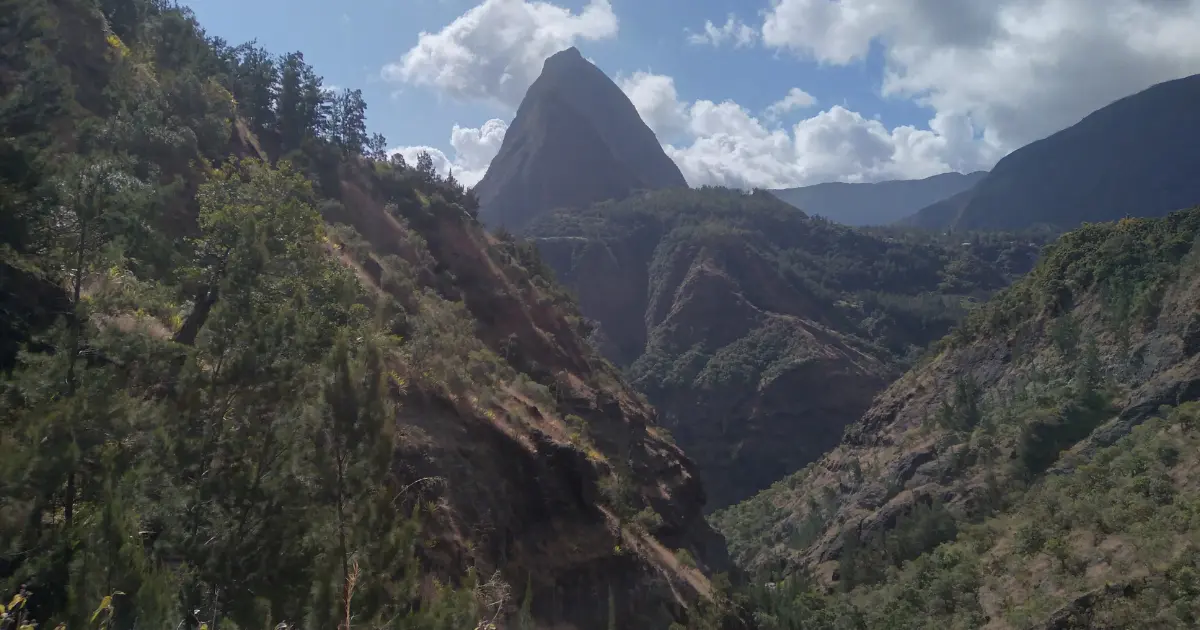
The entire Mafate cirque, from Grand Bénare in the south-east to Cap Noir in the north. On a clear day you can see the inhabited îlets (hamlets) of La Nouvelle, Marla and Roche Plate with the naked eye. Further out, the west coast from Saint-Paul to Cap La Houssaye, and in exceptional visibility, Piton des Neiges to the south-east. You can come for sunset too, though sunrise draws the bigger crowds.
Can you paraglide from the Maïdo?
Yes, the Maïdo is one of the Indian Ocean's most iconic paragliding spots. You take off from the official ramp on a tandem flight with a certified instructor and land in Saint-Leu or Saint-Paul depending on conditions. Prices start at €110 per person for a 20-30 minute flight. Flights run between 10am and 2pm, when thermals are strongest. No particular fitness is needed, and children can fly tandem from age 5.
How long does it take to climb Grand Bénare from the Maïdo?
Allow 5 to 6 hours for the 12km round trip and 700 metres of climbing. The GR R2 trail follows the edge of the Mafate cirque, with views of the ramparts all the way. Start at 6am to avoid the late-morning fog. You need to be a fit hiker, as the altitude slows you down. Guided packages from €75 per person with state-certified supervision.
Where should you stay to enjoy sunrise at the Maïdo?
You have three options. Camp at the summit so you don't have to drive up in the dark (free). A west-coast hotel for comfort, leaving at 4.30am (Saint-Paul, Saint-Gilles, La Saline or Boucan Canot, from €50 to €286 a night). A highland gîte in Petite-France to cut the morning drive to 15 minutes. The five Agoda hotels above cover everything from budget to luxury.
Is the Maïdo accessible by public transport?
No. There's no regular bus to the summit car park: the Car Jaune network goes as far as Petite-France but no higher. You'll need a hire car or a private driver. If you're travelling without a car, several island tours with a driver include the Maïdo.
What animals can you see at the Maïdo?
The Reunion cuckooshrike (tuit-tuit), found only on these wooded slopes, the Reunion harrier (papangue) soaring over the cirque, and white-tailed tropicbirds seen from the viewpoint in clear weather. There are no native land mammals: the island has never had any. Feral goats are sometimes seen at sunrise. Be quiet and patient, and bring binoculars.
Is the Maïdo a UNESCO site?
Yes, it's part of the Pitons, cirques and remparts of Reunion Island, a UNESCO World Heritage Site since 2010. The zone covers the three cirques (Mafate, Cilaos, Salazie), Piton des Neiges, Piton de la Fournaise and the high-altitude forest massifs including the Maïdo. Nearly 40% of the island's territory is under the protection of Reunion Island's national park.