Things to do in Saint-Joseph, gateway to the wild south
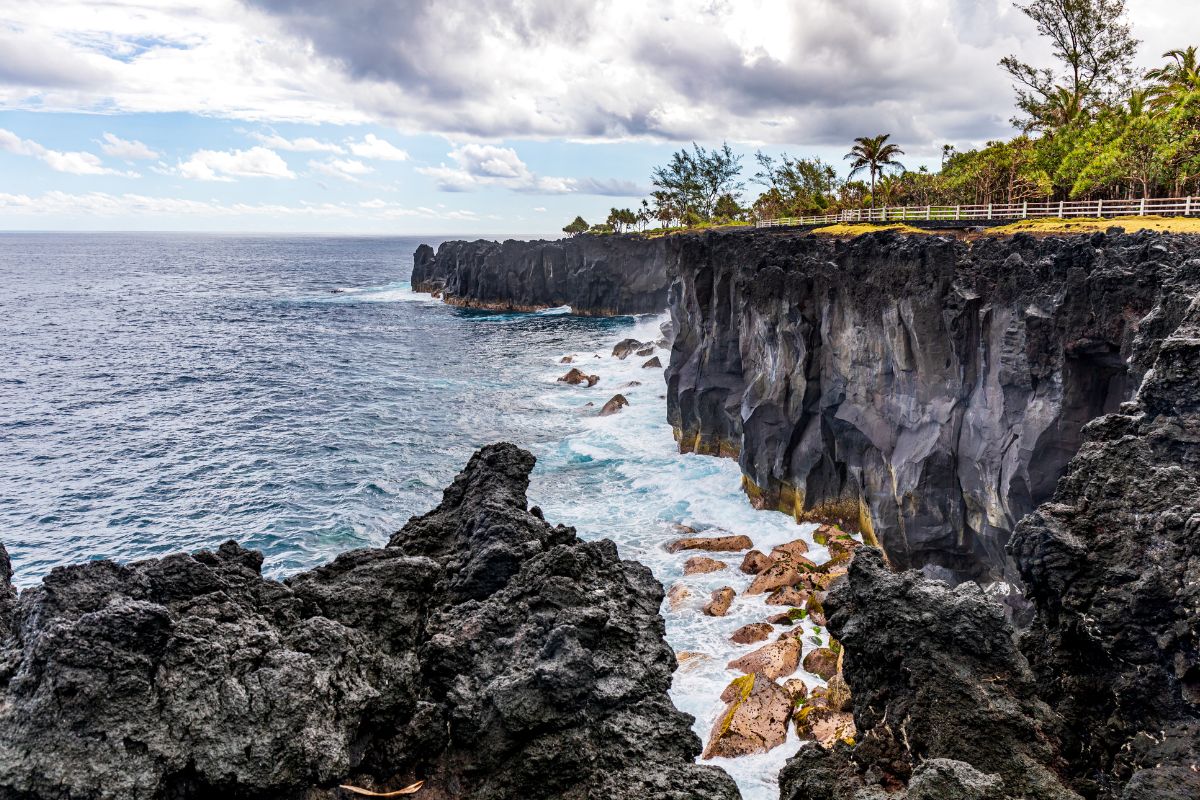
The last big town before the island's far south, Saint-Joseph is the base for exploring the wild south: the Grand-Galet waterfall, Manapany's natural pool, the ochre cliffs of Cap Jaune, canyoning and tubing on the Langevin river and genuine Creole produce. 4 sites, 10 bookable activities, farms to visit and places to eat.
Saint-Joseph is the opposite of Saint-Gilles. Instead of a touristy lagoon and 5-star hotels, you get basalt cliffs, waterfalls tumbling from 2,200m, fishing villages clinging to the rocks and a wetter climate that paints everything deep green. This is the real wild south.
As the last big town before the far south (Saint-Philippe), Saint-Joseph is the ideal basefor Grand-Galet, Manapany and Cap Jaune. It's also where you go canyoning and tubing on the Langevin river, and the starting point for the highlands (Grand Coude, the forest road).
4 major sites
The wild south's must-sees
Grand-Galet for the waterfall, Manapany for family swimming, Cap Jaune for its unusual geology and Vincendo for a coastal stroll.
The must-see
Langevin / Grand-Galet Waterfall
The most photogenic waterfall in the wild south. Rising at 2,200m, the Langevin river tumbles through a string of falls and pools down to Grand-Galet: a basalt wall over 30m high, laced with ribbons of water, in a tropical amphitheatre. Free to visit from the Langevin road (20 min from Saint-Joseph), with parking 200m away and an easy walk down. It's sometimes closed after heavy rain (risk of falling rocks).
A village perched on the cliffs, with genuine Creole architecture and an old-world feel. The highlight is its natural pool in the lava rock, where a basalt barrier keeps you safe while the ocean crashes just metres away. Ideal for families, with Creole restaurants nearby and a Sunday morning market.
Unusual
Cap Jaune
A geological curiosity: an ochre, sulphur-yellow cliff in stark contrast with the black basalt around it. You reach it on a coastal path from Langevin harbour (30-40 min there and back), and it feels like the end of the world. Go when the sea is calm (the exposed side gets spray). A favourite with photographers at sunset.
Vincendo and the coastline
A quiet, rural fishing district between Manapany and Saint-Joseph, with a black-sand beach, a coastal path for walking and wildlife spotting and a sea pool for swimming (take care outside the sheltered areas). Traditional Creole houses and small family-run restaurants.
Bookable activities
Canyoning, tubing, quad biking and excursions
Outdoor activities in Saint-Joseph and the south, plus a few 25-30 min away in Saint-Pierre, Étang-Salé and Cilaos.
Saint-Joseph is one of the island's great food-producing areas: turmeric, vanilla, honey, homemade syrups and Grand Coude tea.
Saint-Joseph Turmeric
Saint-Joseph is the home of turmeric in Reunion Island. It's grown on small plots, then dried and ground locally, and tastes far more intense than supermarket versions. Buy it from the growers or at the market.
Homemade Syrups and Arrowroot Sweets
Fruit syrups (tamarind, rose geranium, pink peppercorn) made the old-fashioned way, and traditional bonbons la rouroute, sweets made from arrowroot (Maranta arundinacea). Perfect souvenirs.
Tropical Forest Honey
Honey from the humid mountain forests of the southern highlands, with a distinctive woody taste. Several beekeepers at Plaine des Grègues sell direct.
Vanilla from the South
Several vanilla growers in Saint-Philippe and the hills above Saint-Joseph offer tours of their drying sheds and sell quality black pods. Combine it with a visit to the Jardin des Parfums et des Épices.
Farms and gardens to visit
3 family days out in the southern highlands
Ferme du Grand Coude
A plateau at 1,100m above Saint-Joseph where tea and medicinal plants are grown. Guided tour, tasting and meals made with farm produce, in the cool mountain air.
≈€10-15 per person with tasting
Labyrinthe En-Champ-Thé
At Grand Coude: a fun maze through the tea plantation with a trail explaining how tea is grown, tasting included. Ideal for families with children aged 6 and over.
≈€8-12 per person
Jardin des Parfums et des Épices (Saint-Philippe)
30 min to the east: a former clove plantation turned botanical trail, with spices (vanilla, cinnamon, pepper), medicinal plants and local wildlife. Shop on site.
≈€8 per person, guided or self-guided
Pierrefonds Airport · 25 km
Helicopter over the wild south and the volcano
Pierrefonds is 25km from Saint-Joseph and the closest helicopter base to the volcano. Fly over the Sainte-Rose lava flows, Piton de la Fournaise, Cap Méchant and the Rivière des Remparts in 30 to 55 minutes.
Genuine Creole restaurants in Manapany, fishermen's restaurants in Vincendo and farm restaurants in the highlands (chicken cari, sausage rougail, sweet potato cake). The fine-dining restaurant at the Manapany Hôtel & Spais listed in the Gault & Millau guide.
My pick of places to stay in the wild south, from Manapany to the Grand Coude highlands, with a direct link to listings on the site or partner booking.
Six outings, 25 minutes to an hour and a half away by road, where your own vehicle, van or car, really pays off. Pierrefonds airport is only 30 minutes from Saint-Joseph: search rental cars on Discover Cars and set Pierrefonds as your pick-up point.
The south-east has fewer hotels than the west. A campervan from Yescapa lets you sleep near Grand-Galet, Manapany and Cap Méchant and catch the sunrise over the lava road. Several converted vans are available in Reunion Island.
What is there to do in Saint-Joseph, Reunion Island?
Saint-Joseph is the gateway to the wild south. See the Grand-Galet waterfall at Langevin (20 min, free), the natural pool at Manapany-les-Bains, Cap Jaune (an ochre cliff) and Vincendo. Go canyoning or tubing on the Langevin river, or quad biking in the Rivière des Remparts. In the highlands, visit the Ferme du Grand Coude (tea) and the Labyrinthe En-Champ-Thé, and try the local produce (Saint-Joseph turmeric, homemade syrups, forest honey).
How do you get to the Langevin waterfall from Saint-Joseph?
It's 20 minutes by car: take the Langevin road from the town centre and follow the signs. There's parking 200m from the waterfall (charged in high season) and an easy walk down. The site is sometimes closed after heavy rain (falling rocks and flash floods), so check the weather and any local closures. See my full Grand-Galet guide.
Can you swim in Saint-Joseph?
Yes, in the natural pool at Manapany-les-Bains (a basalt pool sheltered from the open sea, safe for families) and in the pools of the Langevin river above the waterfall (watch children, as there are currents). Swimming is banned directly beneath the Grand-Galet waterfall. Elsewhere, the open sea has no lifeguards and strong currents, so take great care.
Is canyoning on the Langevin river suitable for beginners?
Yes, there are several levels: a beginner trip from age 12 (optional jumps and slides, with a qualified instructor) and an intermediate route for those with experience. Expect ≈€75-85 for a half-day, with all gear provided (wetsuit, helmet, harness). Pair it with Grand-Galet in the afternoon.
What is tubing on the Langevin river?
Floating down the Langevin river on an inflatable ring: thrills and fun guaranteed. There are several levels, and you must go with an instructor. The dry season (May-November) has the most reliable conditions. Budget ≈€40-70 per person for 2-3 hours.
How long should you stay in Saint-Joseph?
2-3 days to discover the wild south (the waterfall, Manapany, Cap Jaune, canyoning or tubing). 4-5 days if you use the south as a base for day trips (the volcano road, Saint-Philippe in the far south, Cilaos via the Plaines, Étang-Salé). Ideal if you'd rather skip touristy Saint-Gilles for a rural Creole atmosphere.
Where can you stay in Saint-Joseph?
The Manapany Hôtel & Spa (4 stars, the south's best-known hotel), several charming guesthouses in Manapany and rural gîtes (holiday cottages) in the highlands. Budget ≈€60-130 a night for a guesthouse and €170-300 a night at the Manapany. Cheaper than Saint-Gilles.
How far is Saint-Joseph from the volcano?
≈75km, or 1h30-1h45 via Plaine des Cafres and the volcano road. It's an easy day trip from Saint-Joseph: leave early for Pas de Bellecombe and be back by late afternoon. Check the road is open first (it closes during eruptions).
What local produce should you bring back from Saint-Joseph?
Saint-Joseph turmeric (intensely flavoured, buy from growers or at the market), homemade syrups (tamarind, rose geranium, pink peppercorn), forest honey from Grand Coude, Bourbon vanilla from neighbouring Saint-Philippe, bonbons la rouroute (arrowroot sweets) and tea from the Ferme du Grand Coude. Check your home country's customs rules on bringing food back.
Are there any sandy beaches in Saint-Joseph?
Not many, and they're mostly black volcanic sand: Vincendo beach and the coves between Manapany and Saint-Philippe. The natural pool at Manapany is the best option for safe family swimming. For white sand and a lagoon, head to Saint-Pierre (25 min) or Étang-Salé (40 min).
How do you get to Saint-Joseph?
From Saint-Pierre: 25 min via the N2. From Saint-Denis (Roland Garros airport): 1h40 via the N1 down the west coast, then the N2. From Pierrefonds airport: 30 min. You'll need a car to explore the area, though Car Jaune bus line 04 (Saint-Pierre to Saint-Philippe) does serve Saint-Joseph.
 The must-see