Where to eat · Reunion Island

Best gourmet and Creole restaurants in Reunion Island

Chef-driven tables in the west, Creole cooking in the Hauts, restaurants with lagoon views and upscale hotel dining. The complete picture for eating well on the island, by area and by budget.

0 official Michelin stars€60-130 gourmet menuCreole a blend of cultures

Reunion Island has no official Michelin-starred restaurant: the guide doesn't cover France's overseas departments. That hasn't stopped the island from building, over the past twenty years, a serious, richly blended food scene rooted in its own terroir: high-altitude market produce, Bourbon vanilla, Cilaos wine, local fishing, livestock farming in the Hauts.

Here's a map of the best tables, sorted by type of cuisine and by area, with real 2026 price ranges.

6 categories

What type of restaurant should you choose?

Gourmet tables

≈€60-130 / person (tasting menu)
Saint-Denis, the west (Saint-Gilles, La Saline), the south (Saint-Pierre, Le Tampon)

Chef-driven cooking, careful plating, wine pairings, often open for dinner service only and closed Sunday-Monday. Book 1-2 weeks ahead.

Authentic Creole tables

≈€18-35 / person (main course + dessert)
Across the island, especially in the Hauts (Cilaos, Salazie, Plaine des Cafres)

Caris (Creole curries), rougails (spicy tomato-based stews), achards (pickled vegetables), chayote gratin, rice and beans. The real everyday cooking, generous and meant to share. Often a single daily set menu.

Lagoon-view restaurants

≈€30-70 / person
West coast: Saint-Gilles-les-Bains, La Saline, L'Ermitage, Boucan-Canot

Feet in the sand or a panoramic terrace over the lagoon. Fusion cooking, fresh fish, tartares and carpaccios. Ideal at sunset.

Upscale hotel dining

≈€50-120 / person
Lux* Saint-Gilles, Iloha Seaview, Akoya, Le Saint Alexis and other 4-5 star hotels

A polished setting, signature cooking (often from a well-known chef), open to non-residents. The go-to Sunday brunch on the west coast.

World cuisines

≈€20-50 / person
Saint-Denis (Indian, Chinese), Saint-Pierre, Saint-Gilles (Italian, Japanese, fusion)

The island's blended heritage brings very good Indian restaurants (massalé, a local spice-rich curry, and biryani), Chinese (fried noodles, dumplings), Tamil and modern Creole cooking.

Street food and everyday spots

≈€8-18 / person
Every town, street markets and roadside stalls

Snack stands, weekend food trucks (in Saint-Paul, Étang-Salé, Saint-Pierre), Chinese dumplings for €5 apiece. The belly of the island.

Spotlights

Four addresses worth knowing

An editorial selection (not exhaustive) with verified photos: a chef-driven bistro in Saint-Gilles, an authentic Creole spot in Saint-Denis, a lagoon-view table and an upscale hotel restaurant.
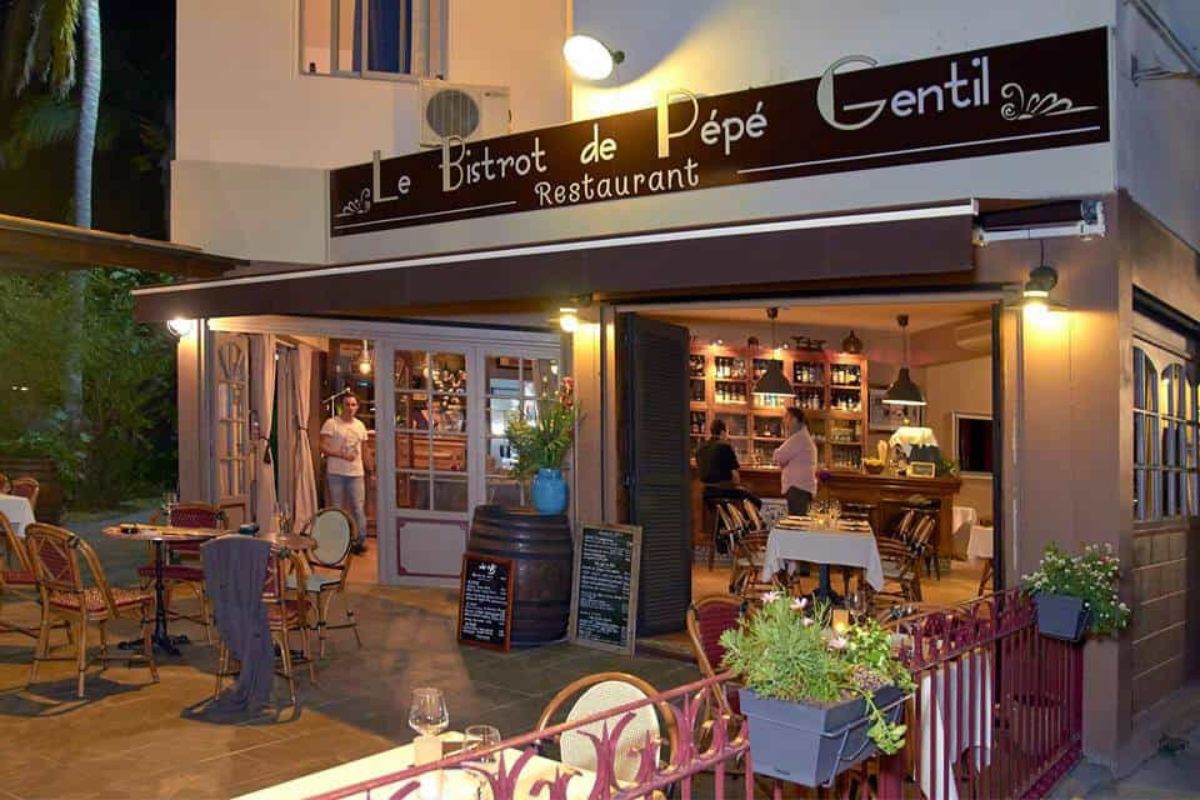
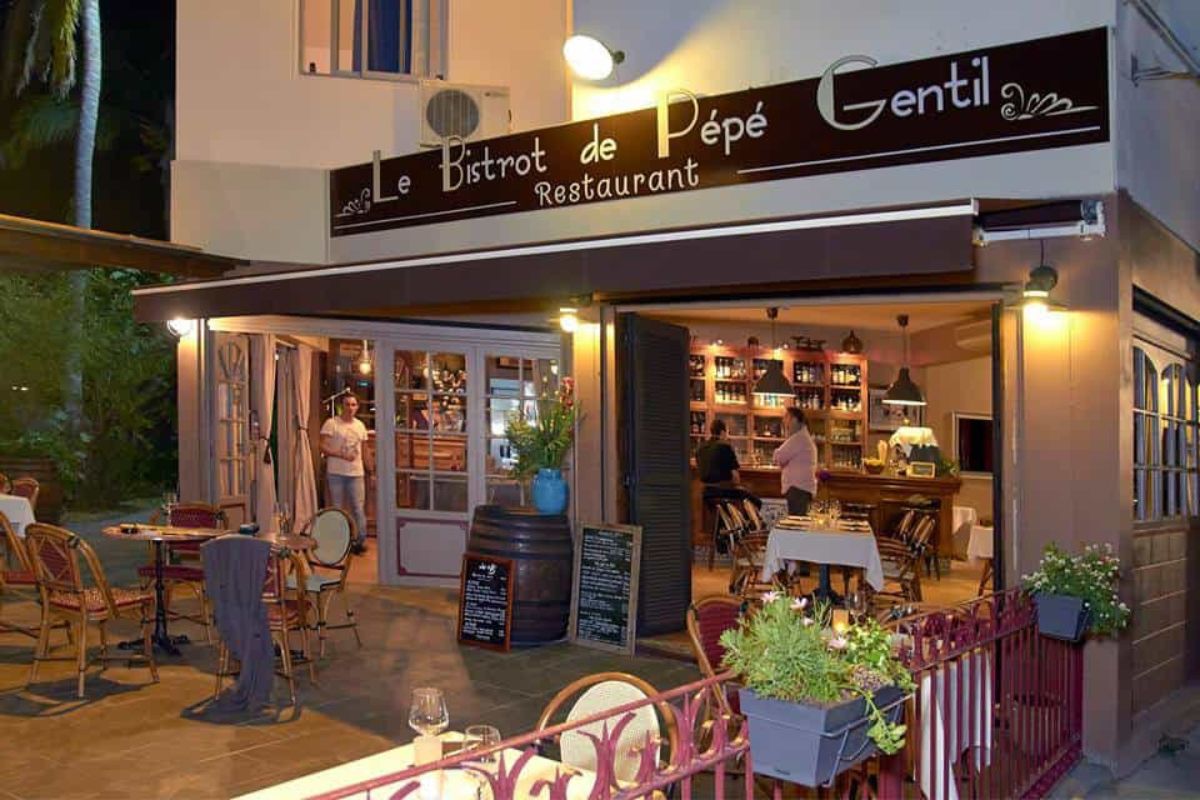
The illuminated façade of Le Bistrot de Pépé Gentil at night, a wooden terrace, its Creole frontage and wine bar
Creole bistronomy
Saint-Gilles-les-Bains

Le Bistrot de Pépé Gentil

An intimate setting under Creole verandas, a well-regarded wine cellar, dishes built around local produce. Booking essential at weekends.
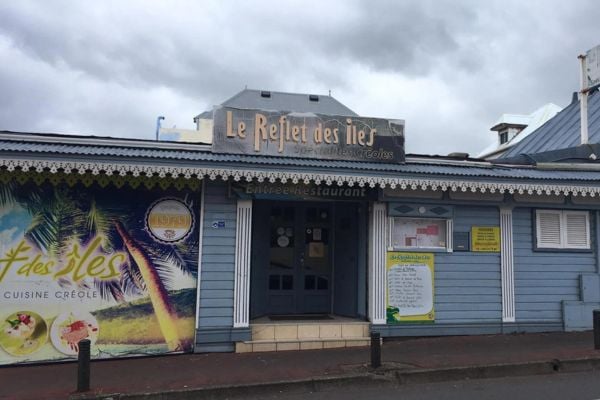
The blue wooden façade of Le Reflet des Îles restaurant, a Creole cuisine sign with daily menus posted outside
Traditional Creole cooking
Saint-Denis

Le Reflet des Îles

A historic address in the island's capital, caris, massalés and rougails served in a family-table spirit. A short menu, generous portions.
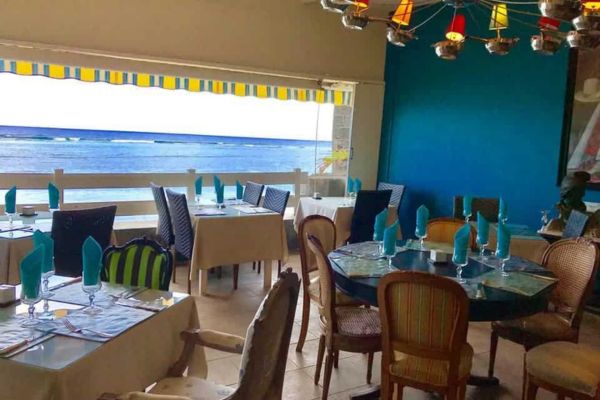
A restaurant dining room open to the lagoon, turquoise-blue décor, tables set with yellow and blue napkins
Feet in the sand
L'Ermitage / La Saline-les-Bains

Lagoon-view tables

Several addresses along the lagoon's coastal path. Fresh fish, tuna tartare, wood-fired pizza, a sunset atmosphere. Booking recommended for the best terraces.
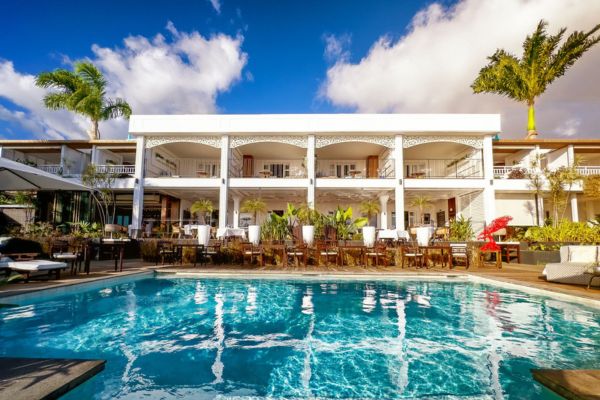
An upscale Creole hotel restaurant with a pool in the foreground, a white façade and palm trees
Gourmet hotel dining
Saint-Gilles, Boucan-Canot

Grand hotel tables

Lux* Saint-Gilles, Le Saint Alexis, Iloha, Akoya. Chef-driven cooking with ingredients sourced on the island, a well-regarded Sunday brunch, open to non-residents.

Practical tip

Book ahead, especially in the west

During high season (July-August, school holidays, November-December), every good table in Saint-Gilles, La Saline and Saint-Pierre fills up. For the best lagoon-view terraces, aim to book 1-2 weeks ahead, more if you're in a group or set on a sunset time slot.

On the gourmet side, some chef-driven tables close Sunday-Monday: check the website or call ahead before planning a visit. Most accept bookings via TheFork, OpenTable, or directly.

Frequently asked questions

Eating well in Reunion Island, in practice

Is there a Michelin-starred restaurant in Reunion Island?
No. The Michelin Guide doesn't cover Reunion Island (or any of France's other overseas departments). No Reunion Island establishment therefore carries an official star. That doesn't mean fine dining is absent: several chef-driven tables (Saint-Denis, Saint-Gilles, Saint-Pierre) hold their own against a Bib Gourmand, or even a starred mainland French restaurant. The local benchmarks are more the Gault & Millau guide and specialist guides (Reuni des Tables, Pétillon).
What's the best gourmet restaurant in Reunion Island?
There's no single answer: the 'best' table depends on the style (chef-driven Creole, fusion, classic French). The addresses that keep coming up in guides and reviews: Le Bistrot de Pépé Gentil (Saint-Gilles), La Villa des Brindilles (Saint-Gilles), Iceberg (Saint-Gilles), L'Atelier de Ben (Saint-Pierre), Café Caché (Saint-Pierre), Le Manapany (Saint-Joseph), Diana Dea Lodge (Sainte-Anne). Each has its own signature, so choose based on area and budget.
How much does a gourmet meal cost in Reunion Island?
Budget ≈€60-130 per person for a 4-6 course tasting menu excluding drinks, roughly what fine dining costs in provincial France. Wine lists (usually French and local: Cilaos wines, South African wines) start at €35-80 a bottle. Upscale hotel tables can climb to €150 with wine pairings.
Where can you eat an authentic cari?
In the Hauts, first and foremost. Cilaos (guinea fowl massalé cari with lentils, at a Bras Sec gîte), Salazie (table d'hôte with a local family), Plaine des Cafres (cari of tenrec, a small hedgehog-like mammal, at the farm-inns). In town: weekend street markets (Saint-Paul, Saint-Pierre) with open restaurants or food trucks. And above all: getting invited by a Reunion Island friend is still the best option.
Do you need to book a restaurant in Reunion Island?
Yes, strongly recommended, for gourmet tables and all lagoon-view restaurants in high season (July-August, Reunion Island school holidays, November-December). On weekend evenings on the west coast, expect a wait without a reservation. Local street-food spots and neighbourhood Creole restaurants generally accept walk-ins, except for groups over 6.
What are typical restaurant hours in Reunion Island?
Lunch service runs between noon and 2pm, dinner between 7pm and 10pm (kitchens in the Hauts often close by 9.30pm). Locals tend to eat early, and many kitchens close around 9pm. Sunday brunch runs 11am-2pm at upscale hotels.
Are there vegetarian or vegan restaurants?
Yes, the options have grown a lot since 2020 on the west coast and in Saint-Denis. Organic cafés, healthy-eating restaurants, Ayurvedic cooking. Traditional Creole cuisine also offers plenty of vegetarian dishes (jackfruit cari, chayote gratin, Cilaos lentils, vegetable achards). Asking for the 'no meat' version at most street-food spots is usually possible too.
What food souvenirs should you bring home?
Bourbon vanilla (the world benchmark, ≈€6-12 a pod), rhum arrangé (rum infused with fruit and spices: flambéed banana, coffee-vanilla, red berries), pink peppercorn honey, Bourbon Pointu coffee (≈€60/kg, an exceptional coffee), Cilaos wine (AOC, ≈€12-30 a bottle), exotic fruit jams (Chinese guava, lychee, lime).
Go further

Keep reading

Page updated 11 October 2026.