Eco-Friendly Things to Do in Reunion Island: 6 low-impact activities
40% of the island is protected national park, UNESCO-listed since 2010. Here are six outdoor activities that respect it: lava tunnels, paragliding, surfing, hiking, horse riding and canyoning, with prices, certified operators and the rules to follow.
6 activities detailed40% protected3,500 marine speciesFrom €35 for a horse ride
Quick facts
Eco-tourism activities in 8 numbers
Protected territory
40% of the island, a national park
UNESCO status
World Heritage since 2010
Marine species recorded
Over 3,500 in the Reserve
Low-impact activities
6 covered in detail
Entry price
From €40 for a surf lesson
Supervision
State-certified instructors compulsory
Ideal dry season
May to October, clear skies
Sunscreen
Oxybenzone-free reef-safe sunscreen required in the lagoon
Reunion Island is a fragile, exceptional territory. The national park covers almost 40% of the land, and the UNESCO listing since 2010 protects the pitons, cirques and ramparts. On the west coast, the Marine Nature Reserve records over 3,500 marine species across 40km of coral reef. Keeping outdoor activities low-impact is a shared responsibility between operators and visitors. This page covers six outdoor activities that respect the island, their certified operators and the rules to follow.
6 low-impact activities
Six outdoor activities that tread lightly
Lava tunnels, paragliding, surfing, hiking, horse riding and canyoning: six different experiences, effort levels and budgets. Every one is led by a state-certified instructor and keeps its ecological footprint to a minimum.
Activity 1
Lava tunnel caving
Type: Caving, volcanic immersionDuration: 3 to 3h30 on sitePrice: From €50 per personLevel: Accessible to everyone, from age 8
Lava tunnels are underground galleries formed by Piton de la Fournaise's flows during successive eruptions. Inside, you'll find lava stalactites, coloured mineral deposits and basalt draperies. You must go with a certified caving guide, who explains how the tunnels formed and provides a helmet and headlamp. The ecological footprint is minimal: no noise, no permanent lighting and no changes to the environment. One of the most respectful activities in the national park.
Best for: The most impressive geology, with the lightest footprint
Type: Tandem two-seat flightDuration: 3h on site, a 20-45 min flightPrice: From €100 per personLevel: Accessible to everyone, from age 5
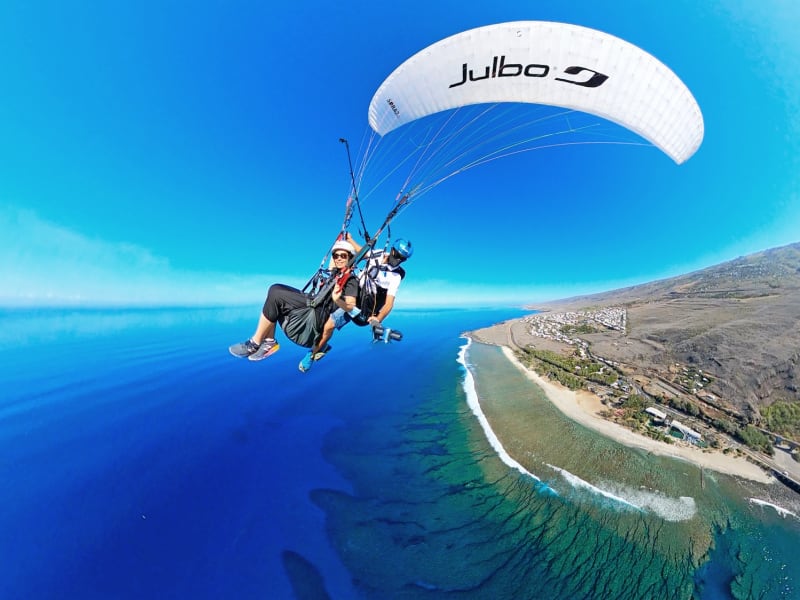
Saint-Leu is one of the most iconic paragliding spots in the Indian Ocean. You take off from a cliff and fly over the turquoise lagoon, sugar-cane fields and the forests of the Hauts (the highlands). It's a tandem flight with a state-certified instructor, a comfortable harness and a full briefing before take-off. Ecological impact: no engine emissions, no noise and no changes to the site. Paragliding is one of the gentlest ways to fly, unlike a motorised microlight.
Best for: The quietest aerial activity, a spectacular west-coast view
Type: Beginner and improver lessonsDuration: 1h30 per sessionPrice: From €40 per personLevel: Accessible to everyone, from age 6
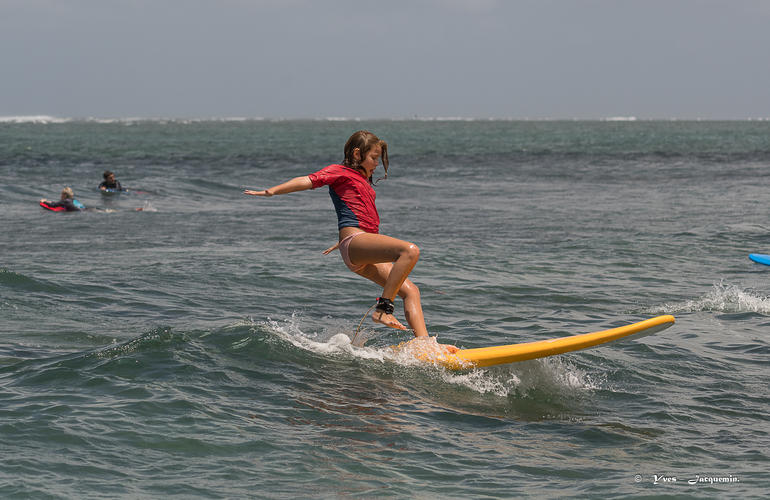
Saint-Leu bay is known as a world-class surf spot. École de Surf de la Réunion offers supervised lessons in a monitored zone, always with shark spotters. Foam boards for beginners, a leash and a wetsuit are provided. Good value from €40 a session, rated 4.9/5 from 27 Manawa reviews. Ecological impact: nothing motorised, plus lessons on how fragile the coral reef is and how to behave on the coast.
Best for: Lessons from €40, shark spotters every time, from age 6
Type: The park's waymarked trailsDuration: A half-day to several daysPrice: Free on your own, from €55 with a guideLevel: Depends on the route
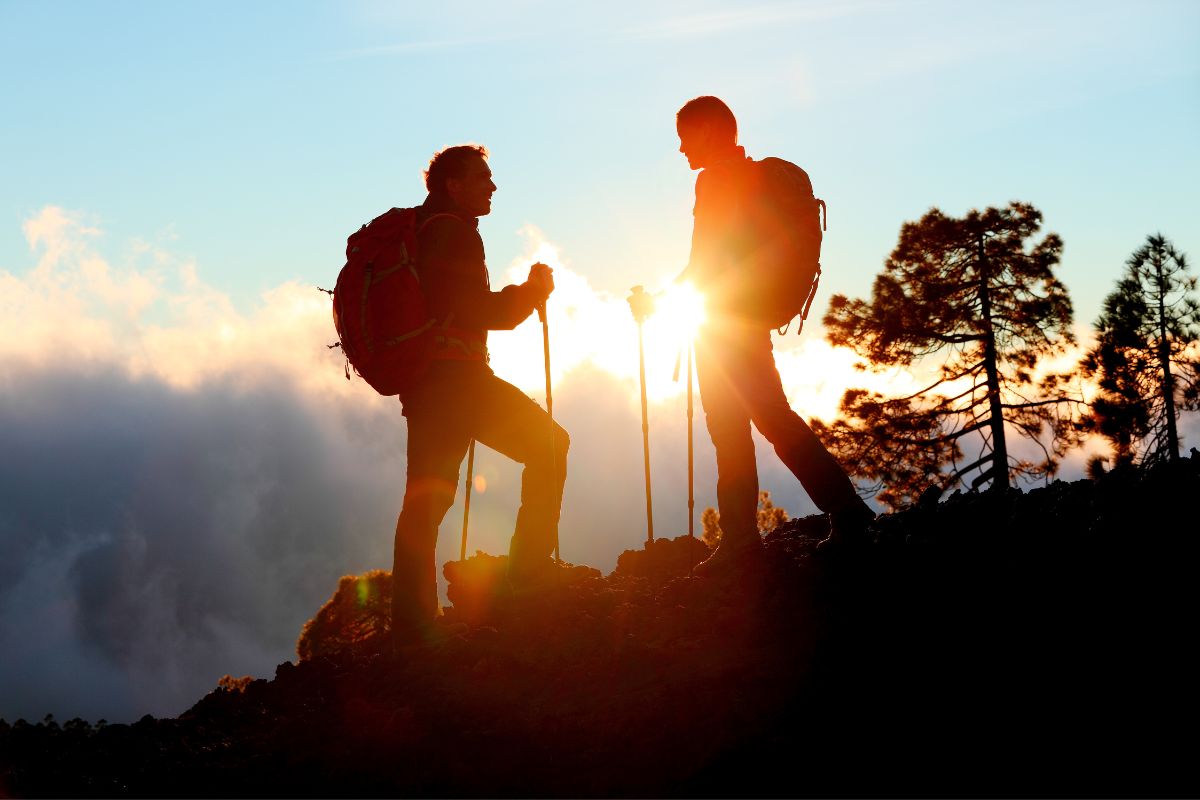
The national park's trails cover the whole of the island's high-altitude territory. From the coast to the cirques via the wooded Hauts, over 900km of waymarked trails are open to hikers. Stick to official trails and don't stray off them to protect endemic wildlife (the Reunion cuckooshrike, the Reunion harrier) and flora. With a local guide (from €55 per person), you get the stories behind the landscape and someone keeping an eye on the weather. Several certified operators run outings from Cilaos, Salazie and Saint-Leu.
Best for: Something for everyone, no special gear needed, any level
Type: An equestrian outing in natureDuration: 1h to 3 days depending on the packagePrice: From €35 per personLevel: Accessible to everyone, from age 6
Horse riding is one of the gentlest ways to discover the forest of the Hauts or the seafront. Several riding centres operate in Reunion Island: Grand-Étang in Saint-Benoît (a riding farm rated 4.6/5 from 61 reviews), the forests of the Maïdo, the trails of Le Dimitile. The horses are local and used to the terrain, and rides are led by certified instructors. Ecological impact: no engine noise, no carbon footprint, and all recognised centres respect animal welfare. Popular with families.
Best for: The gentlest family option, suitable from age 6
Type: A supervised water adventureDuration: 3 to 8h depending on the routePrice: From €60 per personLevel: Accessible to everyone, from age 12
Reunion Island has some of the finest canyons in the Indian Ocean: Bras Rouge in Cilaos, Fleur Jaune, Trou Blanc in Salazie, Langevin in the south. Expect a technical descent with jumps, natural slides and abseils; supervision by a state-certified instructor is compulsory. A wetsuit, helmet and harness are provided. Ecological impact: no permanent fixtures left behind, strict visitor rules, and no taking rocks or plants. Canyoning is open to anyone comfortable in water.
Best for: The most immersive water activity, no boat or engine
Waymarked trails, certified operators, reef-safe sunscreen, zero waste, saving resources and supporting the local economy: six ways to minimise your impact on the island during your stay.
Stick to waymarked trails
Reunion Island's national park has waymarked over 900km of official trails. Staying on marked routes limits erosion and protects endemic wildlife (the Reunion cuckooshrike, the Reunion harrier, the green gecko) and flora. Don't wander off to photograph flowers or cut corners. You risk a fine and damage the habitat. The IGN Rando app or paper maps are a useful backup to GPS, which can lose signal under tree cover.
Choose certified operators
For canyoning, paragliding, diving and surfing, insist on an instructor holding a Brevet d'État (BE) or Diplôme d'État (DE), with up-to-date public liability insurance. A professional card number must be displayed and is shown on Manawa, Ceetiz and Funbooker listings. Every operator in my selection is certified and follows the rules. Avoid suspiciously cheap offers with no professional supervision.
Reef-safe sunscreen for the lagoon
The west coast's coral reef is sensitive to chemicals in some sunscreens (oxybenzone, octinoxate, octocrylene), which bleach and kill coral. Choose certified reef-safe organic sunscreens, based on mineral filters (zinc and titanium). Several brands are available in pharmacies on the island. Apply 30 minutes before swimming, and don't snorkel within an hour of putting it on.
Take all your waste with you
There are no bins on the high-altitude trails or at the summit of Piton des Neiges. All waste must be carried out in full, including toilet paper. Keep a sealed bag in your backpack so you don't attract black rats (an introduced species that raids native birds' nests). Fruit scraps don't break down at altitude either, and they feed invasive species. Leave no trace.
Save water and electricity
Reunion Island has droughts in the dry season, and some reservoirs run low. Take short showers, turn the tap off while soaping, and reuse hotel towels for several days. Go easy on the air conditioning and open the windows in the cooler hours. The Hauts, such as Cilaos, don't need air conditioning. Several hotels labelled 'Clé Verte' or with the European Ecolabel guarantee resource-efficient practices.
Support the local economy
Favour local producers for purchases: the Saint-Paul or Saint-Pierre street market, Saint-Joseph vanilla direct from the co-operative, honey from the Hauts, artisanal rhum arrangé (rum infused with fruit and spices). Choose family-run Creole restaurants over international chains, and homestays or rural gîtes (self-catering cottages) over large resorts; the Gîtes de France label keeps the money local.
The island in 55 minutes
Flying over the territory by helicopter
A helicopter flight is the most fuel-hungry activity on this page, but it's also the quickest way to decide which parts of the national park to explore on foot. Weigh it up against your own priorities. Flights of up to 55 minutes leave from Pierrefonds or Saint-Gilles, with 4 companies and 6 packages from €190 per person. If you only fly once, the full island tour gives you the most for it.
To cut your trip's carbon footprint, a campervan combines transport, accommodation and cooking in one vehicle. Overnight parking is tolerated in a few forest areas, and you naturally use less water and energy. Yescapa connects local owners with travellers, from classic motorhomes to converted vans.
A lava tunnel, Saint-Leu paragliding, a surf lesson, a guided Mafate hike, a Grand-Étang horse ride, Bras Rouge canyoning, Cilaos climbing and guided snorkelling: the 8 most complete listings for planning a low-impact outdoor trip.
What are the most eco-friendly activities in Reunion Island?
Six low-impact activities stand out: lava tunnel caving, discovery paragliding in Saint-Leu, surf lessons in a monitored zone, a guided hike with a local guide, an eco-tourism horse ride and eco-responsible canyoning. All of them use little or no motorised gear, are supervised by a certified instructor, and strictly respect national park rules. Prices range from €35 to €100 depending on the activity.
What protection status does Reunion Island have?
Nearly 40% of the island's territory is protected by Reunion Island's national park, created in 2007. The 'pitons, cirques and remparts' natural site has been a UNESCO World Heritage Site since 2010. Since 2007, the Marine Nature Reserve has protected 40km of coral reef on the west coast, where over 3,500 marine species have been recorded. On land, endemic wildlife includes rare protected species such as the Reunion cuckooshrike and Barau's petrel.
Do you need a guide to go hiking in Reunion Island?
On waymarked trails you can go on your own if you prepare well: an IGN map, an offline GPS app, suitable gear and a check of the forecast. For a first ascent of Piton des Neiges, a Mafate crossing or multi-day hikes, a certified guide is still recommended. Rates from €55 per person for a half-day. Local guides bring landscape interpretation, weather safety and knowledge of park rules.
Can you surf in Reunion Island despite the shark risk?
Yes, in a monitored zone only. École de Surf de la Réunion runs lessons in Saint-Leu with shark spotters every time, from €40 a session. Lessons take place in the protected basin, away from the open-sea surf spots, which are strictly off-limits. The main operator is rated 4.9/5 from 27 Manawa reviews. Suitable for beginners and experienced surfers alike, from age 6.
How much does an eco-friendly activity cost in Reunion Island?
Rates vary by activity. Surf lesson: from €40 a session. Horse ride: from €35 an hour. Lava tunnel: from €50 for a half-day. Guided hike: from €55 for a half-day. Canyoning: from €60 for a half-day. Tandem paragliding: from €100 for a flight. All include gear and certified supervision. Book ahead in high season (July-August and the Reunion Island school holidays).
What rules should you follow in the national park?
There are five main rules. Stay on waymarked trails. Don't take anything (flowers, fruit, rocks, plants). Take all your waste with you, including toilet paper. No fires outside designated spots. Wild camping is only tolerated at certain official spots (Piton des Neiges, the Maïdo) and banned elsewhere. Breaking the rules can mean a fine of €135 to €1,500 depending on the offence. The national park employs eco-rangers who patrol regularly.
What sunscreen should you use for the lagoon?
Choose certified reef-safe organic sunscreens, based on mineral filters (zinc and titanium), free of oxybenzone, octinoxate and octocrylene. Several brands are available in pharmacies on the island. Apply 30 minutes before swimming, and don't snorkel within an hour of putting it on. A UV-protective rash guard or a long-sleeved T-shirt is the most coral-friendly option of all.
Is canyoning dangerous in Reunion Island?
Canyoning in Reunion Island is a risk sport, so supervision by a state-certified instructor (BE Canyon) is compulsory. A wetsuit, helmet and harness are provided. Risks: flash floods if it rains upstream, slipping on rock platforms, falls during jumps. Check the instructor's qualification, public liability insurance and the quality of the gear (recent ropes, standard-compliant helmets). Several reputable operators run outings from Cilaos and Salazie.
What's the best time of year for outdoor activities?
The dry season, May to October, brings the clearest skies, dry trails and colder water in the canyons: ideal for hiking, paragliding and surfing. The wet season, November to April, brings heavy rain and slippery trails, and you need to watch for cyclone alerts; it's best avoided for canyoning because of flash floods. The lava tunnel can be visited year-round since the weather outside doesn't affect it. Horse riding suits every season.
Are the activities suitable for children?
Most are, with varying minimum ages. Paragliding: from age 5 in tandem. Surfing: from age 6 with a school. Horse riding: from age 6 on a family ride. Lava tunnel: from age 8 with an adult. Guided hiking: depends on the route, with several easy options from age 6. Canyoning: from age 12 on an introductory route, if they're confident in water. All these activities offer family packages with suitable supervision and correctly sized gear.
Can you go rock climbing in Reunion Island?
Yes, the Cilaos cirque concentrates the island's main climbing routes. L'Envers du Décor / Alazard Romain offers two packages: an introduction from €55 per person, multi-pitch routes on Piton de Sucre at €285 for the group. Gear is provided and instructors are state-certified. The rock varies: volcanic sandstone on some routes, basalt on others, and several modern bolted routes complement the classic multi-pitch climbs.
How can you support the local economy during your stay?
Shop at street markets (Saint-Paul on Friday and Saturday, Saint-Pierre on Saturday morning, Hell-Bourg on Sunday). Eat at family-run Creole restaurants rather than international chains. Stay in homestays or rural gîtes rather than large resorts (the Gîtes de France label keeps the money local). Buy direct from producers (Saint-Joseph vanilla, honey from the Hauts, artisanal rhum arrangé), or take a Creole cooking class with a local host.