Cooking class · Sainte-Suzanne or Saint-Paul · From €62.50
Creole cooking class in Reunion Island: from the market to your plate
Learn to cook cari (Creole curry), rougail, samosas and chilli fritters with a local chef in Sainte-Suzanne or Saint-Paul: shop at the morning market, cook together in the chef's kitchen, then sit down to eat. From €62.50 per person with Far Far Kréole. Here's how a class works, what you'll cook and where to stay nearby.
€62.50 starting from4 dishes on the menuFrom age 8 with familyA shared meal included
At a glance
The class in 8 key facts
Price
From €62.50 per person (Far Far Kréole)
Duration
Half-day to full day, depending on the class
Where
Sainte-Suzanne or Saint-Paul, depending on the operator
Group size
4 people minimum, small groups
Included
The market, ingredients, meal and drinks
On the menu
Cari, rougail, samosas, achards
Influences
Indian, Malagasy, Chinese, French
Suitable for
All levels, children from age 8
Reunion Island's Creole food is the legacy of four cultures that met on the island: Indian, Malagasy, Chinese and French. Cari, rougail, samosas and chilli fritters are the signature dishes every visitor tries at least once. A cooking class lets you learn them from a local chef, in their own kitchen, with ingredients bought that morning at the market. Below: how a typical class runs, the 4 dishes you'll make and practical booking tips.
A typical run-through
Three stages: market, kitchen, shared meal
A morning with the chef comes in three parts: the market for the ingredients, the kitchen for hands-on cooking, and the table for the meal you've made together.
Stage 1
The morning market with the chef
Duration: 1h30 on site, departing 7-8am
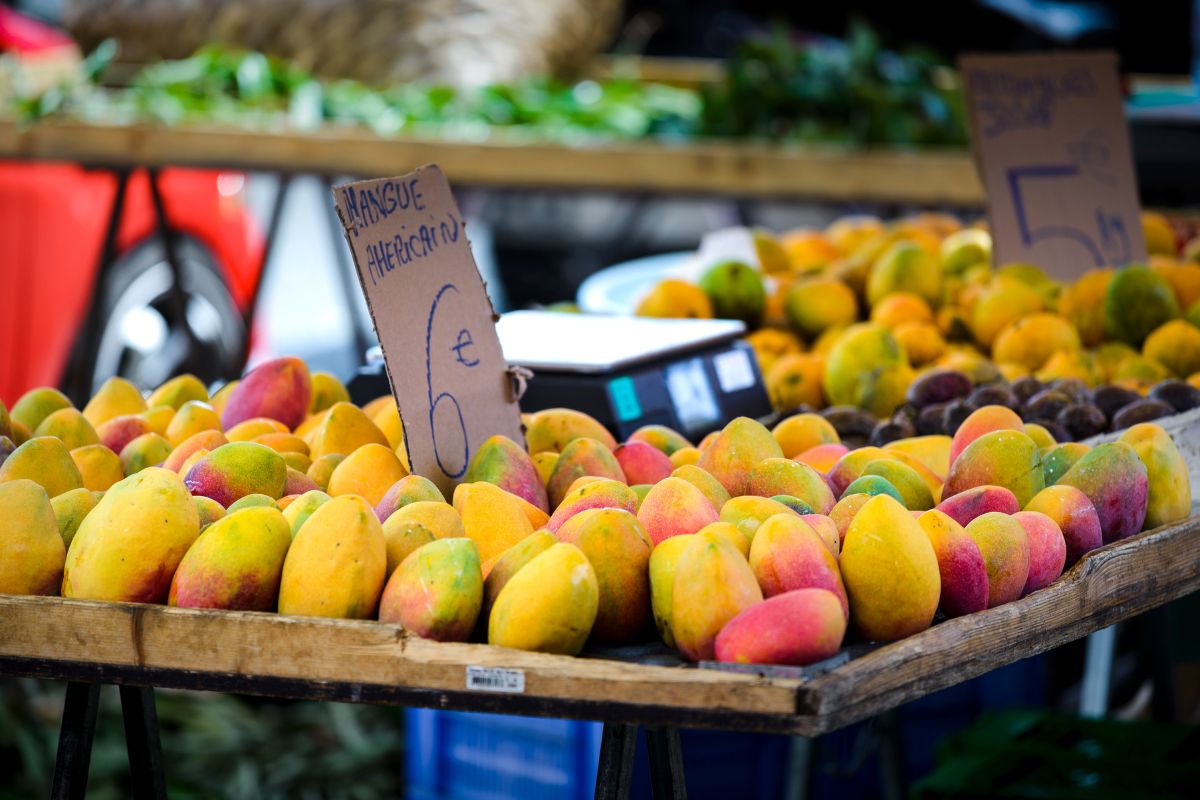
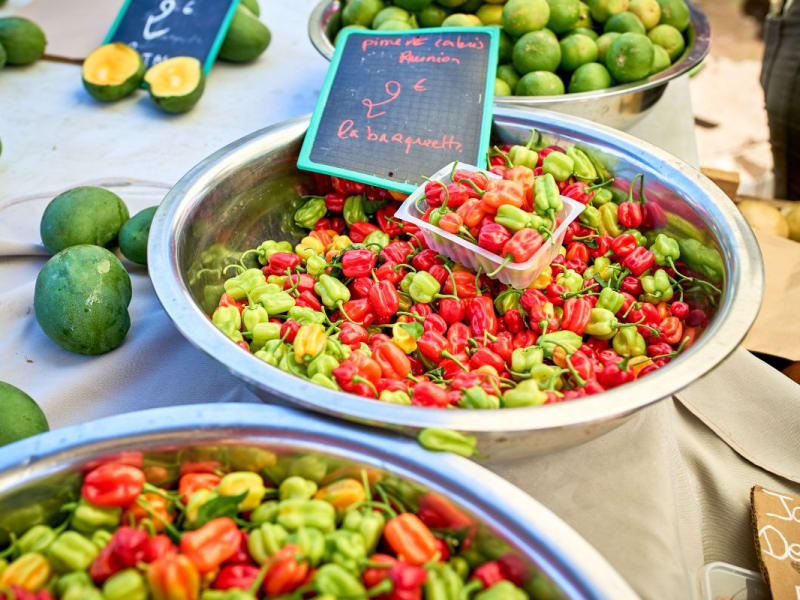
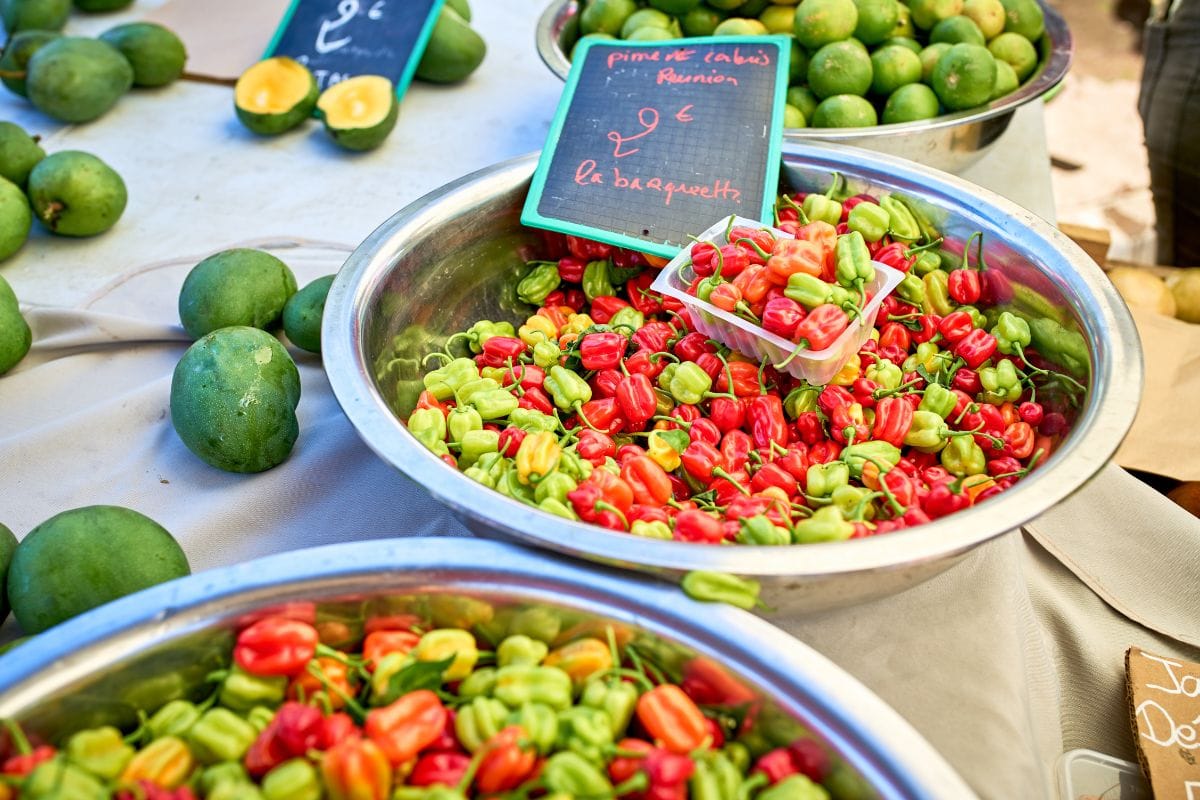
The day starts with a guided trip to the local market. In Sainte-Suzanne, chef Jacky from Far Far Kréole takes guests to the north-east market at 7am to buy the day's ingredients. In Saint-Paul, some operators do the shopping at the Friday or Saturday morning market. The chef explains where the produce comes from and how the spices are traditionally used, and tells the stories behind wild guavas, mafane leaves and cabri chillies. You buy the fruit, vegetables, meat and spices for the day's menu straight from the growers.
Worth knowing: A real taste of local life, buying straight from the growers
Stage 2
The workshop at the chef's home
Duration: 3 to 4 hours in the kitchen
Back in the kitchen after the market, the chef introduces the equipment (a Creole cooking pot, a pestle, saucepans), hands out jobs to the small group (4 to 8 people) and gets everything going at once: chopping vegetables, preparing massalé (Indian spice blends adapted to Creole cooking), cooking the rice, folding the samosas. The chef explains every step, why the order of cooking matters and how recipes vary from family to family. Questions are welcome and the mood is relaxed.
Worth knowing: You learn by doing, hands in the pot, rather than watching a demonstration
Stage 3
The shared meal at the end of the workshop
Duration: 1h30 to 2h around the table
The meal is served around a big shared table, at midday or late afternoon depending on the class. The group tucks into the dishes you've made together, with fresh fruit juice, rougails, achards and a glass of rhum arrangé (rum infused with fruit and spices). The chef talks you through the flavours, swaps recipes and suggests variations to try at home. It feels like a family meal, with a mix of languages if the guests are international, and captures the heart of Creole culture, where cooking together means friendship and sharing, just like the big Sunday family lunch in Reunion Island.
Worth knowing: The social highlight of the day, so don't rush it
4 dishes on the menu
Cari, rougail, samosas and achards
The four types of dish every Creole cooking class covers, with their ingredients, origins and why they matter, so you can make them again at home.
Main course, meat or fish
Cari, Reunion Island's signature dish
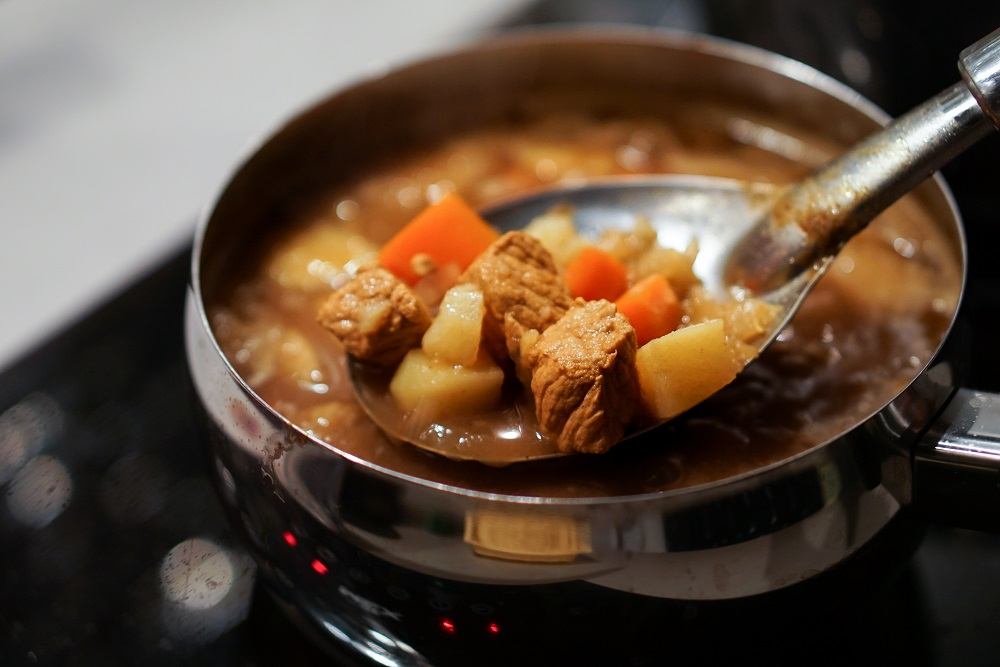
Cari, the Creole take on curry, is the emblematic dish of Reunion Island. The base is onion, garlic, tomato, ginger, turmeric and thyme, simmered with meat (chicken, duck, goat) or fish, and served with white rice, lentils or Cape peas (butter beans), plus a side of rougail. The variations are endless: chicken with massalé, smoked meat, prawns with kaffir lime, goat with massalé. Every family has its own recipe, proportions and cooking order. The class teaches the basic recipe, one you can master and recreate at home.
Why learn it: The staple, and no Creole meal is complete without it
A condiment or a main course
Rougail, the essential side
Rougail is both a raw relish (tomato, onion, chilli) and a main course (sausage rougail or salt cod rougail). As a relish, it's served with cari like a spicy salsa. As a main course, it's smoked sausages or soaked salt cod simmered in a punchy, spicy tomato sauce. The class covers both, along with variations (tomato, anchovy or aubergine rougail). It's the fresh, fiery partner to cari.
Why learn it: The perfect partner to cari, as a relish or a main
Savoury snacks, fried
Samosas and chilli fritters as an appetiser
Samosas (samoussas) are deep-fried triangular pastries filled with minced meat, chicken, tuna or prawns, Indian in origin and adapted to Creole tastes. Chilli fritters (bonbons piments) are split-pea fritters spiced with chilli and turmeric, a must with pre-dinner drinks in Reunion Island. The class shows you how to fold samosas into triangles by hand, make the fritter batter and fry them both. Perfect for drinks with friends back home, or for a picnic.
Why learn it: The savoury snacks to master for drinks and picnics
Pickled vegetables, side dishes
Achards and raw rougails
Achards are spiced vegetable pickles (carrot, cabbage, green beans, ginger) kept in jars in an oil and turmeric marinade. Raw rougails are relishes of tomato, onion, chilli and kaffir lime, served in small amounts with cari. Both take under 30 minutes to make in class and keep for several days in a jar, so they're handy to take away, or to make again at home after your trip.
Why learn it: Pickles to take home or make again after your trip
Booking
Book a Creole cooking class with Far Far Kréole
The island's best-known cooking class. Far Far Kréole runs half-day classes in Sainte-Suzanne, in the north-east, from €62.50 per person with the meal and drinks included (minimum 4 people). Depending on the slot, you start at the local market, then cook as a group in the chef's kitchen and finish with a shared meal. Book on the partner listing and you'll get confirmation by email.
Booking, formats, skill level, what to wear, what to pair it with and what to take home: six things to check before you pick a date.
Booking and availability
You need to book ahead, from a few days to a few weeks depending on the season. Far Far Kréole in Sainte-Suzanne offers the most complete class at €62.50 per person, with several slots a week. Other operators run classes in Saint-Paul or Saint-Pierre at certain times of year. Book on the partner listing or by phone. Free cancellation usually applies up to 48h before, but check each class's terms.
Class formats and length
Half-day: 4-5h, no market trip, straight to the chef's kitchen with the ingredients ready. Full day: 6-8h, starting at the market at 7 or 8am, then cooking, then a shared lunch. Evening: 3-4h from late afternoon, cooking then dinner. The full day gives you the whole market experience; the half-day suits families with young children or short trips better.
Skill level and dietary needs
No experience needed: classes suit beginners and keen cooks alike. Children aged 8 and over can take part with an adult, and family classes are available on request. Vegetarian menus are possible if you say so when booking (jackfruit cari, red bean cari, aubergine rougail), as are gluten-free and allergy-friendly adjustments. Creole cooking uses little dairy, so it's fine for mild lactose intolerance.
What to wear and bring
Wear comfortable clothes and closed shoes rather than flip-flops (hot oil can spit when frying the samosas). An apron is usually provided. Tie long hair back and keep jewellery to a minimum. Arrive hungry for the full-day class: the meal at the end makes up for it. Bring a notebook or your phone for the recipes, although the chef often gives out the quantities in writing at the end.
Combining the class with other activities
In Sainte-Suzanne: a morning class, then an afternoon at Niagara Waterfall 10 minutes away or a tour of the Savanna rum distillery. In Saint-Paul: a class with the Friday morning market, then an afternoon relaxing in the Hermitage lagoon. At the weekend: a class on Saturday and a hike on Sunday in the highlands or one of the easier cirques. Cooking makes a great cultural contrast to the island's outdoor adventures.
Souvenirs and cooking at home
To take home: Bourbon spices (vanilla, turmeric, pink peppercorns), jars of achards and artisan rhum arrangé. Most chefs sell these after the class. Back home, chicken cari and sausage rougail are easy to make anywhere with ingredients from a specialist grocer or online; chilli fritters and samosas need a deep-fryer or a suitable pan. The chef usually hands out the recipes in writing or sends them by text.
Stay near the workshop
5 nearby Agoda hotels, north and west
Three places in Saint-Denis (25-30 minutes from Sainte-Suzanne) and two on the west coast if you're combining a class with the lagoon. All rated at least 8/10 from 51 to 386 Agoda reviews.
Saint-Denis9.4/10 (134 reviews)
La villa du jardin
Guesthouse · best-rated in Saint-Denis
A charming guesthouse in Saint-Denis with 4 en-suite rooms and breakfast made to order, 8km from Roland Garros airport and a 25-minute drive from Sainte-Suzanne. Ideal if you're pairing a morning cooking class with your arrival in the north of the island.
A furnished apartment with a terrace in Saint-Denis, 674m from the town centre and 6km from the airport. Its fitted kitchen is handy for trying out the recipes from your class. 30 minutes from Sainte-Suzanne, rated 9.3/10 from 386 Agoda reviews: a popular choice for independent travellers on a budget.
A 4-star, 124-room seafront hotel in the capital, Saint-Denis, with the Sunset Lounge rooftop bar overlooking the Indian Ocean, an outdoor pool and a restaurant. A 30-minute drive from Sainte-Suzanne. An upmarket option if you're combining a cooking class with a business trip or exploring the capital.
A 2-room holiday home with a fitted kitchen, a sea-view terrace and private parking, a 1-hour drive from Sainte-Suzanne. A west-coast base for combining a cooking class with the lagoon. Rated 9.5/10 from 51 Agoda reviews, the best-rated budget option on the west coast.
A 5-star, 174-room resort in 7 hectares of tropical gardens, right on the beach at L'Hermitage, with Creole architecture and 3 restaurants. A 1-hour drive from Sainte-Suzanne. The luxury option if you're taking a class on the west coast.
Flying over sugar cane fields and vanilla plantations
The ingredients of Creole cooking grow right here: sugar cane for rum, vanilla in Saint-Joseph and Saint-Philippe, lychee orchards in the highlands. A helicopter flight shows you where it all comes from. 4 companies, 6 flights from €190 per person, from Pierrefonds or Saint-Gilles.
The class teaches you the recipes; a campervan lets you cook them as you travel, with a fitted kitchen, a gas stove and basic utensils. Overnight parking is tolerated in a few forest areas, perfect for a cari at sunset. Yescapa puts local owners in touch with travellers.
A Creole cooking class, a tasting tour, a rum distillery, a vanilla plantation, the Tamil temple in Saint-André and a helicopter flight: 6 ways to dig deeper into the island's culture and food.
How much does a Creole cooking class cost in Reunion Island?
Prices start at €62.50 per person for a half-day class with Far Far Kréole in Sainte-Suzanne, meal and drinks included. Full-day classes with a morning market trip cost €80-110 depending on the class and operator. Sessions usually need at least 4 people to go ahead. Free cancellation up to 48h before, but check each class's terms.
Where do the cooking classes take place?
Several operators run classes in Reunion Island. Far Far Kréole, the best known, is based in Sainte-Suzanne in the north-east. Others hold classes in Saint-Paul, Saint-Gilles or Saint-Pierre, depending on the operator and time of year. You shop at the local market (Sainte-Suzanne, Saint-Paul or Saint-Pierre) and cook in the chef's own kitchen.
What dishes do you learn to cook?
The classic menu has four dishes: cari (chicken, duck, goat or fish curry), rougail (sausage, salt cod or a raw relish), samosas and chilli fritters as starters, and vegetable achards or raw rougail on the side. Depending on the season and the chef, you might also make sweet potato cake, cassava cake or another Creole cake. These are basic recipes you can recreate at home.
Do you need cooking experience?
No experience is needed: the classes suit beginners and keen cooks alike. The chef sets the pace to suit the group and hands out jobs according to what people want to do. Children aged 8 and over can join in with an adult, and family classes are available on request. Keen cooks come away with massalé techniques, the knack of folding samosas and the exact proportions for rougails.
How long does a Creole cooking class last?
Half-day: 4-5h, no market trip, straight to the chef's kitchen. Full day: 6-8h, starting at the market at 7 or 8am, then cooking, then a shared lunch. Evening: 3-4h from late afternoon, cooking then dinner. The full day is the most complete; the half-day suits families with young children or short trips better.
Is the class suitable for vegetarians?
Yes, if you say so when booking. Chefs adapt the menu with jackfruit, red bean or chayote cari and aubergine rougail. Vegetarian Creole cooking is varied thanks to pulses (lentils, Cape peas, beans), leafy greens and chayote (christophine). Gluten-free and allergy-friendly adjustments are also possible if you mention them when booking.
Can you take a cooking class with children?
Yes, children aged 8 and over can take part with an adult. Several operators offer family-friendly classes (shorter, simpler, lots of hands-on). Children especially love folding samosas and frying chilli fritters. Parents need to supervise near the hobs, and closed shoes and tied-back hair are essential.
What food souvenirs can you bring home?
Bourbon spices (vanilla pods, ground turmeric, pink peppercorns, kaffir lime) from €8 a bag, homemade jars of vegetable achards, which keep for several months, and artisan rhum arrangé (ginger, vanilla, flambéed banana) from €12 a bottle. Most chefs sell these after the class. The chef's recipes are usually handed out at the end or sent by email. Check your home country's customs rules on food and alcohol.
What's the difference between cari and rougail?
Cari is a slow-cooked main course with an onion, tomato and turmeric base and meat or fish, served with rice. Rougail means two things: a raw relish (tomato, onion, chilli) served in small amounts alongside cari, or a main course (sausage or salt cod rougail) simmered in a spicy tomato sauce. So cari and rougail as a main are two different kinds of stew, while rougail the relish is the essential side.
Can you visit the market without taking the class?
Yes, Reunion Island's street markets are all free to wander. For a guided visit with the cultural background, the cooking class is the most complete option. Otherwise, my pages on the Saint-Paul market (Friday and Saturday) and the Saint-Pierre market (Saturday morning) give the days, times and tips for going on your own.
Where should you stay for a cooking class?
For a class in Sainte-Suzanne (Far Far Kréole), stay in Saint-Denis (25 minutes by car) or in Sainte-Suzanne itself. For a west-coast class, stay in Saint-Paul, La Saline-les-Bains or Saint-Gilles. The 5 Agoda hotels above cover both, from a budget guesthouse to a 5-star resort.
Do you need to book long in advance?
In high season (July-August, Reunion Island school holidays, November-December), book 2-3 weeks ahead. In low season, 3-5 days is usually enough. Weekends and market days (Friday in Saint-Paul, Saturday in Saint-Pierre) are the most popular. 2026 prices checked as of the update date. Book on the partner listing and you'll get confirmation by email.