Accessible walks and hikes in Reunion Island: 5 wheelchair-friendly trails
Five loops tested from the south to the east of the island, plus two mid-mountain bonus spots. Paved paths or wooden boardwalks, elevation gain under 70 m, accessible by wheelchair or pushchair, with water points and accessible toilets on site.
7 loops selected1h to 1h30 per trailFree year-roundWheelchair manual or electric
Quick facts
Recap of the 7 accessible trails selected
Trails selected
5 + 2 bonus
Difficulty
Very easy to easy
Max elevation gain
+70 m (Parc des Palmiers)
Average time
1h to 1h30
Surface
Paved, tarmac or boardwalk
Wheelchair access
Yes, on all 7 loops
Cost
Free at all 7 sites
Season
Year-round
Reunion Island has few mid-mountain trails adapted for wheelchairs: only Bélouve, at altitude in Salazie, offers a complete wooden boardwalk. The coast and the Hauts, on the other hand, offer a fine network of short, freely accessible loops, ideal for anyone who wants to enjoy the volcanic scenery, the coconut groves or the tropical gardens without physical constraints. I've picked 7 where wheelchair usability doesn't depend on recent weather.
Method
How these 5 trails were chosen
Four criteria for a trail to make this list: a suitable surface (paved, tarmac or wooden boardwalk), an almost flat gradient, disabled parking within 30 m of the start of the loop, and either accessible toilets or a water point on site. Three trails in the south, two in the east, and two bonus spots at altitude.
Check the local weather before setting off
Reunion Island has strong microclimates: it can be raining in Le Tampon while it's full sun in Petite-Île. Check Météo France Réunion the day before for the 24-hour forecast, and again in the morning for expected showers. In the event of a heavy-rain alert, the paved paths stay usable, but oceanfront sites (Pointe du Diable, Anse des Cascades) may close temporarily.
Pack a light, suitable bag
Water (at least 1 litre per person), a hat or cap, SPF 50 sunscreen, sunglasses, a light layer for the Hauts (Parc des Palmiers, Bélouve, Nez de Bœuf) and a windbreaker. Temperatures can drop to 12°C at Bélouve in winter, while the coast stays at 24°C.
Plan for occasional help from a companion
All 7 loops are manageable in a manual wheelchair with a companion, or an electric wheelchair on the fully tarmacked trails (Parc des Palmiers, Parc du Colosse, Nez de Bœuf). An all-terrain hiking wheelchair (joëlette) isn't needed on these 7 loops. For more demanding trails, the association La Réunion pour tous coordinates joëlette outings.
Call ahead for sites with set opening hours
Parc des Palmiers and Parc du Colosse have different summer and winter opening hours. Anse des Cascades is open every day, but the snack bar and restaurant close on some Mondays. It's worth checking the official Facebook page of each site the day before, since it's more up to date than the signage.
5 trails in detail
The top 5 accessible walks
Three loops in the south, two in the east. Each entry gives the duration, distance, elevation gain, surface type, facilities available and the specific appeal for a wheelchair user.
1
SouthEasySaint-Pierre
Pointe du Diable, Saint-Pierre
Duration
1h30
Distance
3.6 km there and back
Elevation gain
+25 m
Pointe du Diable is one of the finest stretches of basalt coastline in the south, formed by a Piton des Neiges eruption nearly 200,000 years ago. The path follows the coast along a rocky plateau where the sea crashes below, with no tricky elevation changes. People come for the view over Saint-Pierre bay, the sea spray, and a picnic stop on the cliff edge.
Why it's accessible: The path follows the coastline with no hills, shaded by casuarina trees. The compacted surface at the start of the loop lets a wheelchair through easily. The end of the loop turns into a dirt path, so you can simply turn back without missing any of the scenery.
Access: A wide, compacted path; a manual wheelchair works fine with a companion.
Parking: Carrefour Grand Large car park, with a disabled space at the far end nearest the sea.
Facilities: Accessible toilets, water points, shaded benches under the casuarina trees.
Parc des Palmiers covers 3 hectares in Trois-Mares, on former sugar cane land turned into a botanical garden in 2010. Over 1,000 palm species are grouped there by continent: Africa, Madagascar, the Americas, Asia, the Pacific. It's the largest palmetum in the Indian Ocean, and the only one in Reunion Island with a large, fully tarmacked loop.
Why it's accessible: The main avenue and secondary loops are smooth tarmac, with no steps. The slope stays gentle, so you can tailor the route to how much energy you have: the full 2.7 km loop, or a 1 km half-loop. Summer hours 6am to 7pm, winter hours 6.30am to 6.30pm, free entry.
Access: Several tarmac paths run around the plant collections, suitable for a manual or electric wheelchair.
Parking: Free parking at the park entrance, with signed disabled spaces near reception.
Facilities: Shaded areas, picnic shelters, accessible toilets, water points, a wide central avenue.
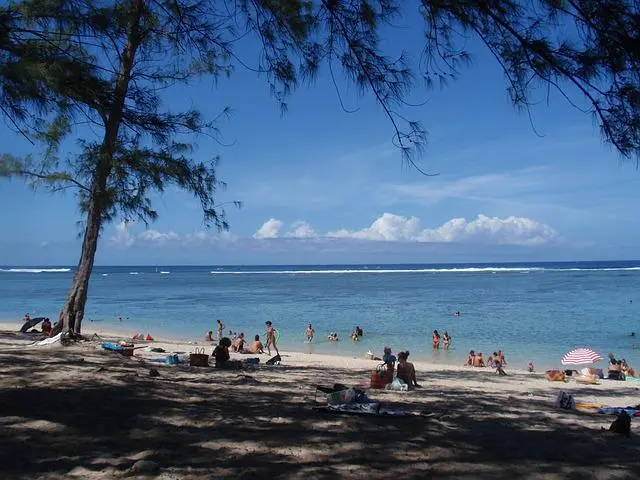
Grande-Anse is one of the finest bays in the south of the island, enclosed by basalt cliffs and fringed by a coconut grove. The fine sandy beach isn't supervised for open-sea swimming, but the safe rock pool carved into the shore is the family attraction of the wild south. The whole area is laid out for an easy stroll.
Why it's accessible: The paved path that runs along the beach and climbs gently to the viewpoint lets you enjoy the panorama over the bay without a single step. The snack bar and toilets are accessible. A flat wooden bridge connects the picnic area to the main viewpoint.
Access: Paved paths for the entire route, ideal for a wheelchair or pushchair.
Parking: Disabled parking just metres from the bay, at the top of the beach.
Facilities: Toilets, snack bars open year-round, showers, covered barbecue areas, shaded spots under the coconut grove.
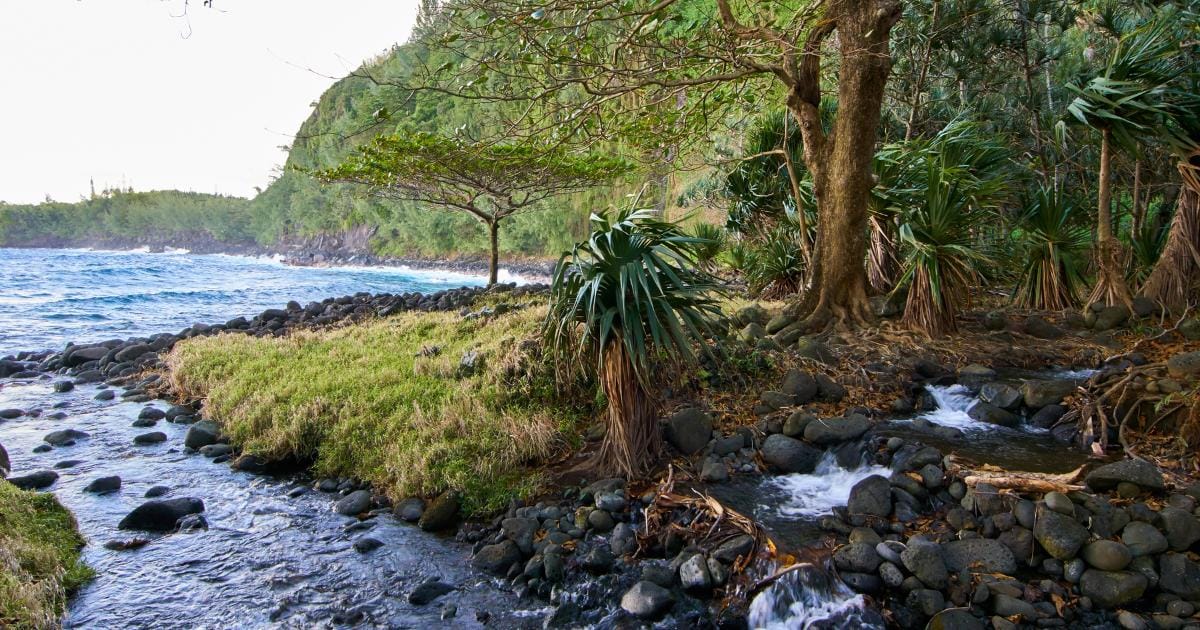
Anse des Cascades gets its name from the countless trickles of water that spring from the volcanic cliff before disappearing into the coconut grove below. It's one of the most photographed spots in the east, between Bois Blanc and Sainte-Rose, with its small traditional fishing harbour, its screwpine trees, and its picnic tables set beneath the coconut palms.
Why it's accessible: The main path is entirely paved, flat and wide. The restaurant right on the path serves lunch and the toilets are accessible. For anyone who wants to extend the visit, the seafront offers a view over the wild coast with no difficult walking.
Access: A paved seafront path, easy going for wheelchairs and pushchairs alike.
Parking: Signed disabled spaces just past the site's entrance barrier.
Facilities: Water points, toilets, a snack bar and restaurant open year-round, benches facing the ocean.
Parc du Colosse reopened in July 2021 after two years of renovation. Wedged between the Indian Ocean and the Cambuston pond, it's one of the largest free public leisure spaces in the north-east. Jetties, shelters, grassy stretches and paths wind around the water and the seafront, ideal for a family morning or a long picnic before the Saint-André street markets.
Why it's accessible: The whole park was redesigned for accessibility, with paved paths throughout and secure jetties that let you get close to the water safely. The park is open every day, from 2pm on Mondays and until 6pm on other days, free entry.
Access: A network of small paved paths, with almost no slope, suitable for wheelchairs and pushchairs.
Parking: Disabled parking at the main entrance, with direct access to the jetties.
Facilities: Shelters, benches, tables, secure jetties, play areas, a landscaped pond.
The five loops are split between the south (Saint-Pierre, Le Tampon, Petite-Île) and the east (Sainte-Rose, Saint-André), and each of the car parks listed above has at least one disabled space. Having your own vehicle, whether a fitted van or a car, saves you from juggling bus connections, and not every Car Jaune stop is wheelchair-equipped. If a car suits you best, look through the rental offers, and if you need any specific equipment, confirm it with the rental company you pick before you book.
2 bonus spots at altitude
Bélouve and Nez de Bœuf, altitude made accessible
Two mid- and high-altitude viewpoints worth the detour for anyone who wants a change from the coastal sites. The first offers a wooden-boardwalk route unique in France, the second a panoramic viewpoint over the Rivière des Remparts.
Bonus 1
SalazieMid-mountain
Bélouve forest, Salazie
Duration
30 min to 1h
Distance
A short loop near the gîte
Access: The only mid-mountain trail in Reunion Island adapted for reduced-mobility and visually impaired visitors: a flat, wide, continuous wooden boardwalk, braille signage, a guide rope.
Bélouve stands out for more than one reason: you can drive right up to the gîte (1,500 m altitude), the wooden boardwalk lets a wheelchair move through the heart of a primary forest of cryptomerias and moss-covered tamarins (a native mountain acacia), and the light filtering through the tree ferns shifts throughout the day. Several braille interpretation panels line the route, which ends with a sweeping view down into the Salazie cirque. Booking ahead at the gîte for a meal is recommended.
Access: A disabled-accessible platform with a panoramic viewpoint, 2 adapted parking spaces and fitted shelters. A short path between the car park and the viewpoint with no steps at all.
On the road to the volcano, Nez de Bœuf is one of the major viewpoints overlooking the Rivière des Remparts. The 660 m paved access path to the viewpoint crosses high-altitude moorland dotted with heather and stunted tamarins. The car park has two signed disabled spaces, the shelters are accessible, and the viewing platform is designed so a wheelchair can reach the railing with no slope. A 360° view over the river, Piton de la Fournaise and the Plaine des Cafres.
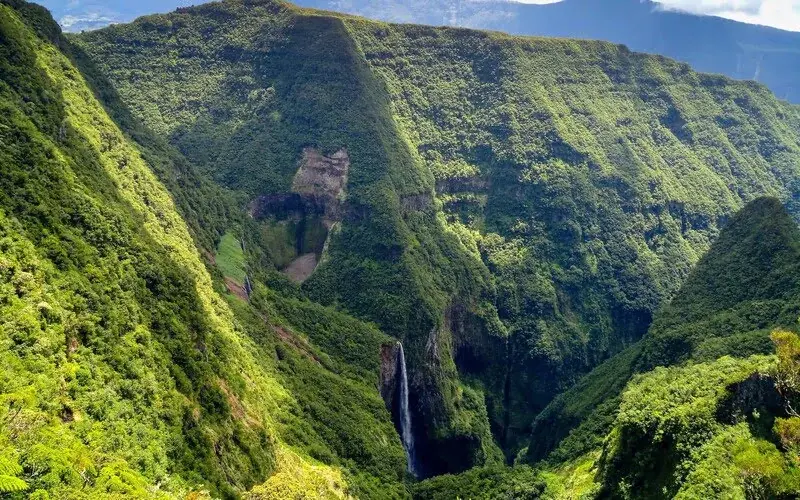
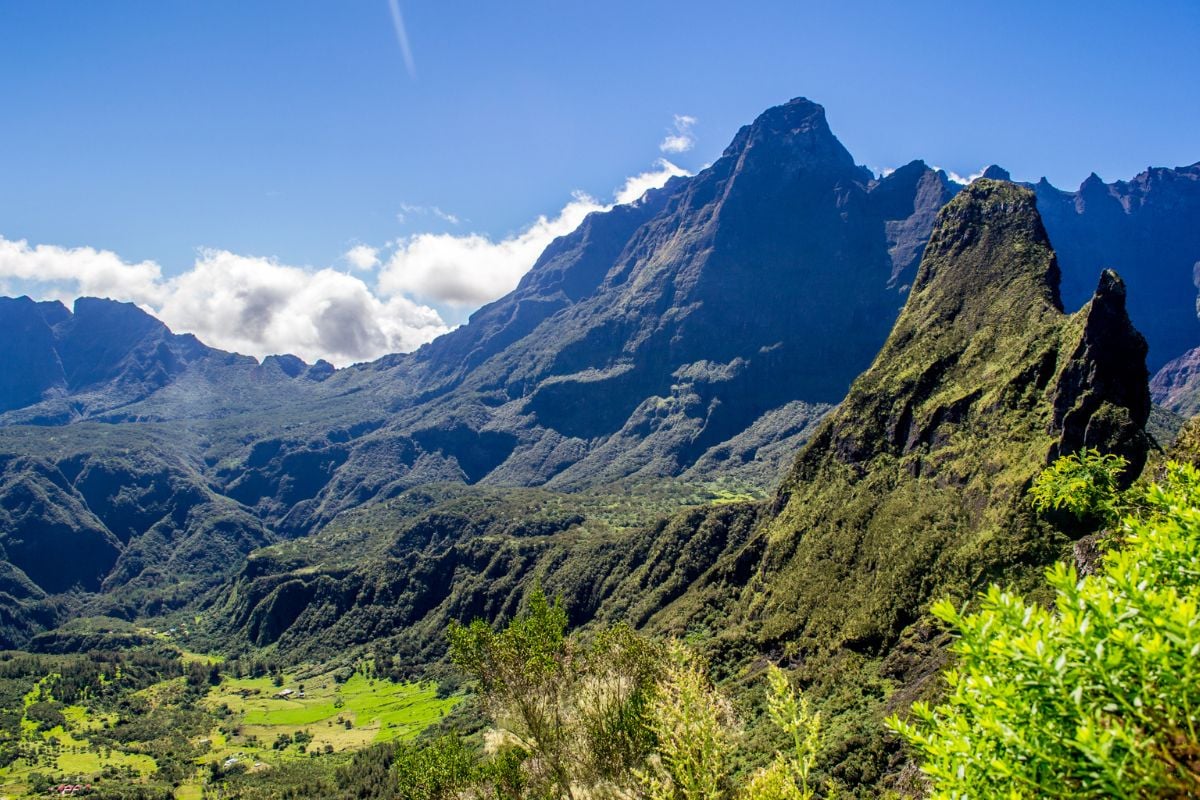
For anyone who can't walk at altitude, a helicopter flyover remains the simplest way to see Mafate, Piton des Neiges, Piton de la Fournaise and the Trou de Fer waterfalls. The island's operators help with boarding and adapt the seating, with advance booking. 25 to 55 minutes of flight time from Pierrefonds or Saint-Pierre.
Five addresses welcoming to families and visitors with reduced mobility, spread out geographically to cover all 7 loops without more than 30 minutes' drive. Indicative Agoda rates as of the date of writing.
Saint-Pierre9.6 / 10 (19 reviews)
Le Miougane
Comfortable rooms right in the heart of Saint-Pierre, a few minutes' drive from Pointe du Diable and Grande-Anse. Ideal as a base for the accessible trails in the south.
A gîte in Plaine des Cafres, 15 minutes' drive from Parc des Palmiers and 30 minutes from Nez de Bœuf. A cool mountain setting, ideal to complement a stay by the sea.
A hotel well suited to longer stays in the Hauts, halfway between Saint-Pierre and Le Tampon. Views over the Cilaos cirque, spacious rooms, an on-site Creole restaurant.
A guesthouse 10 minutes from Anse des Cascades, in the island's most tropical area. A family welcome, table d'hôtes dinners booked in advance, an ideal base for the east.
A contemporary lodge 5 minutes' drive from Parc du Colosse. A good base for exploring the north-east (Niagara waterfall, Saint-André markets, the coastal road).
Agoda rates shown as of 11 October 2026 for a 1-night stay for 2 people. Check availability, the accessible room and the cancellation policy directly on the partner listing.
Mobility to the trailhead
A fitted van, to manage your stops on your own terms
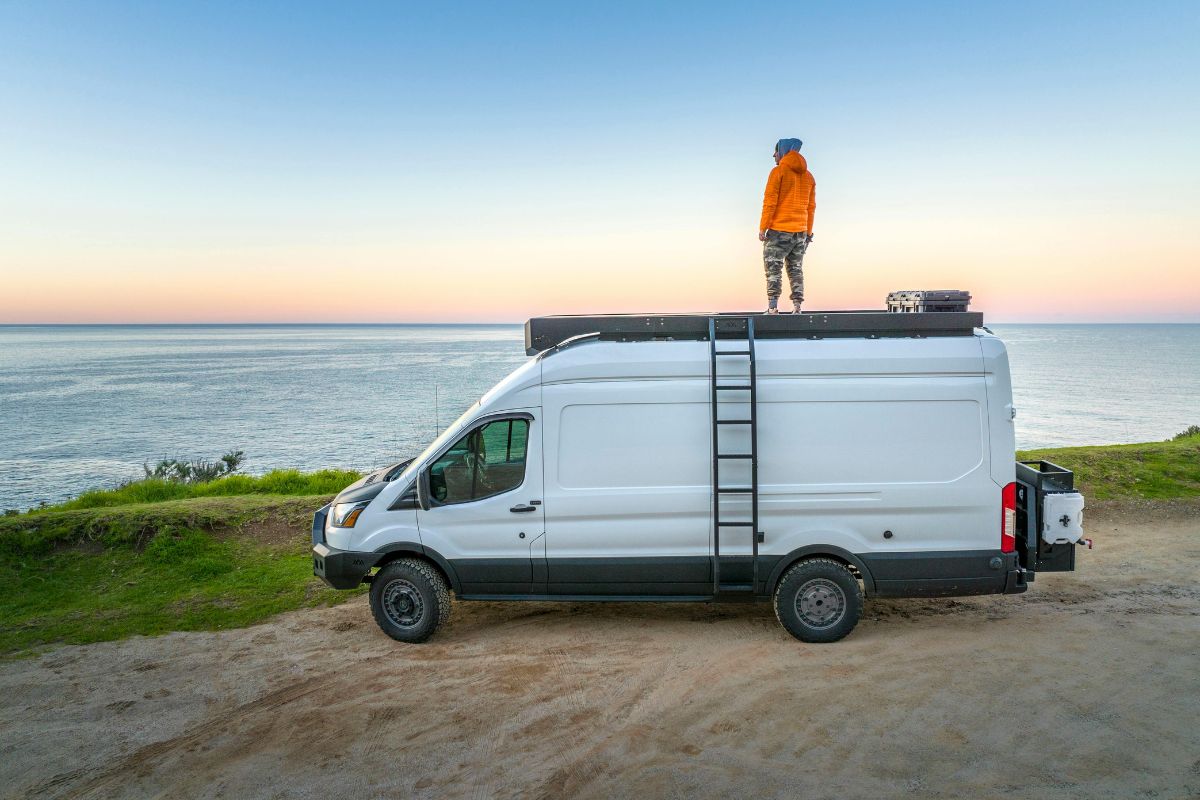
For a trip with a companion with reduced mobility, a fitted van gives you real freedom: stop wherever you like, take your time at Parc des Palmiers or Bélouve, reach Nez de Bœuf without any pressure to get back to the gîte. Yescapa connects owners with travellers, and some models come with an access ramp.
Which trails are genuinely wheelchair-accessible in Reunion Island?
Seven loops stand out as fully wheelchair-accessible: Pointe du Diable in Saint-Pierre, Parc des Palmiers in Trois-Mares, Grande-Anse in Petite-Île, Anse des Cascades in Sainte-Rose, Parc du Colosse in Saint-André, the wooden boardwalk through Bélouve forest in Salazie, and the Nez de Bœuf platform on the road to the volcano. All of them have a paved or wooden surface, no steps, and disabled parking right next to the trailhead.
Is there a genuine mid-mountain hike accessible to wheelchairs?
Yes: Bélouve forest in Salazie (1,500 m altitude) is the only mid-mountain circuit in Reunion Island adapted for wheelchairs and visually impaired visitors. The wooden boardwalk is flat, wide and continuous, braille panels line the route, and a guide rope connects the points of interest. You can drive right up to the gîte, then move freely through the forest of cryptomerias and moss-covered tamarins (a native mountain acacia).
Do you need a joëlette or an all-terrain hiking wheelchair?
For the 7 loops covered in this guide, no: a standard manual or electric wheelchair is enough. A joëlette becomes necessary if you want to reach more demanding trails (the Mafate cirque, the climb up Piton des Neiges, crater trails). The association La Réunion pour tous organises accompanied outings with joëlettes, with equipment and carriers provided on request.
What season is best for these accessible walks in Reunion Island?
All 7 trails are usable year-round. The dry season (May to November) remains the most comfortable: less rain, mild temperatures, light wind. The wet season (December to April) shows off the greenest landscapes but calls for keeping an eye on the weather, especially at coastal sites exposed to swell (Pointe du Diable, Anse des Cascades). More detail in my guide on when to visit Reunion Island.
Are the snack bars and restaurants at these sites accessible?
Anse des Cascades has a restaurant and a snack bar with level access, open year-round except Mondays. Grande-Anse has a snack bar open year-round with accessible toilets. Parc des Palmiers has no food service on site but does have covered picnic shelters. Pointe du Diable, Parc du Colosse and Nez de Bœuf have no food service, so bring your own meal.
Where should you stay to visit these trails without too much driving?
In the south, accommodation in Saint-Pierre or Petite-Île covers Pointe du Diable, Grande-Anse and Parc des Palmiers within 30 minutes' drive. In the east, accommodation in Sainte-Rose, Saint-Benoît or Saint-André puts Anse des Cascades and Parc du Colosse within easy reach. Five concrete Agoda suggestions are in the selection further down the page.
Can you swim at Grande-Anse and Anse des Cascades?
Grande-Anse has a safe rock pool carved into the shore, supervised in summer, where you can swim safely. Swimming in the open sea is banned there because of the swell and currents. Anse des Cascades isn't a sandy beach but a black pebble coastline where swimming isn't recommended. See my waterfalls and pools guide for the island's best swimming spots.
How much does a day out at these sites cost?
Access to all 7 trails is free. The only cost is the car (rental, fuel) and food. For anyone who wants to combine these walks with paid accessible activities (catamaran trips, whale watching, Creole cooking classes, helicopter flights), budget €40 to €250 per activity. For smaller budgets, see my list of 10 free activities in Reunion Island.
Do you need a permit or a guide for these trails?
No. All 7 loops are freely accessible, with no permit, no mandatory guide, and no registration required. That's a major advantage over the high-altitude trails, which demand experience and close attention to the weather. For Bélouve, you can combine the walk with a night at the gîte to catch sunrise over the Salazie cirque; booking ahead is recommended.
How do you get around without a car when using a wheelchair?
The Car Jaune bus network covers the main coastal towns, but not all stops are wheelchair-equipped. For an accessible trip, a rental car or an adapted taxi remains the simplest solution. Several rental agencies offer vehicles with an access ramp. My car rental guide details the options and best practices.
Is there an accessible aerial activity for visitors with reduced mobility?
Yes, a helicopter flight is the most accessible option: the island's operators (Hélilagon, Mafate Hélicoptères, Corail) can help a passenger with reduced mobility board with ground staff assistance. It's the ideal way to see the cirques, Piton de la Fournaise and the coast without walking. Details in my helicopter page.
How can you share your experience to help improve accessibility?
The association La Réunion pour tous keeps a record of accessible trails, accommodation and restaurants. Feedback after a visit (photos, measurements, comments) helps site managers fix problem spots. Each park's Facebook page also welcomes comments; it's often the channel most closely followed by municipal teams.