Kayak or paddleboard: which should you choose in Reunion Island?
Stability or fitness, distance or views, easy or versatile? A point-by-point comparison of the two favourite ways to explore Reunion Island's lagoon, with 6 criteria and the best of 6 west-coast spots for each.
From €7 an hour to hire6 criteria compared6 spots on the west coastAge 8+ in a tandem
Quick facts
Kayak vs SUP at a glance
Kayak position
Seated, double-bladed paddle
Paddleboard position
Standing, single-bladed paddle
Kayak learning curve
10 minutes of practice
Paddleboard learning curve
30 min to 1 hour
Hire in the lagoon
€7 to €15 an hour
Ideal season
April to November (dry season)
Minimum age
8, in a supervised tandem
Life jacket compulsory
More than 300m from shore
Torn between the two? This page helps you decide quickly, with a clear comparison across 6 equally weighted criteria and the best spots in the west-coast lagoon for each. For more on inflatable kayaks, see my guide to inflatable kayaks in Reunion Island; for everything on water sports, see Base Nautique de l'Ouest.
The two disciplines
Kayak and paddleboard at a glance
Position, paddle, how quickly you'll pick it up, price and who it suits: the basics, side by side, before the head-to-head.
Kayak
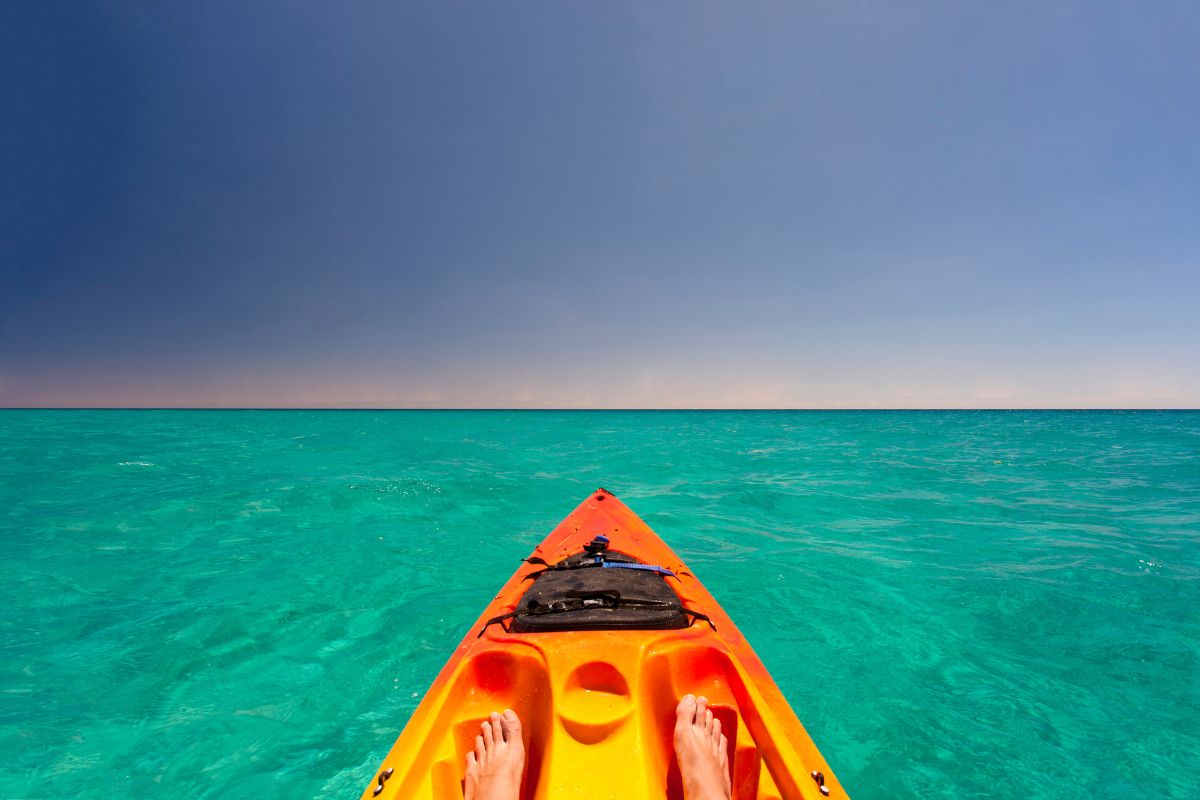
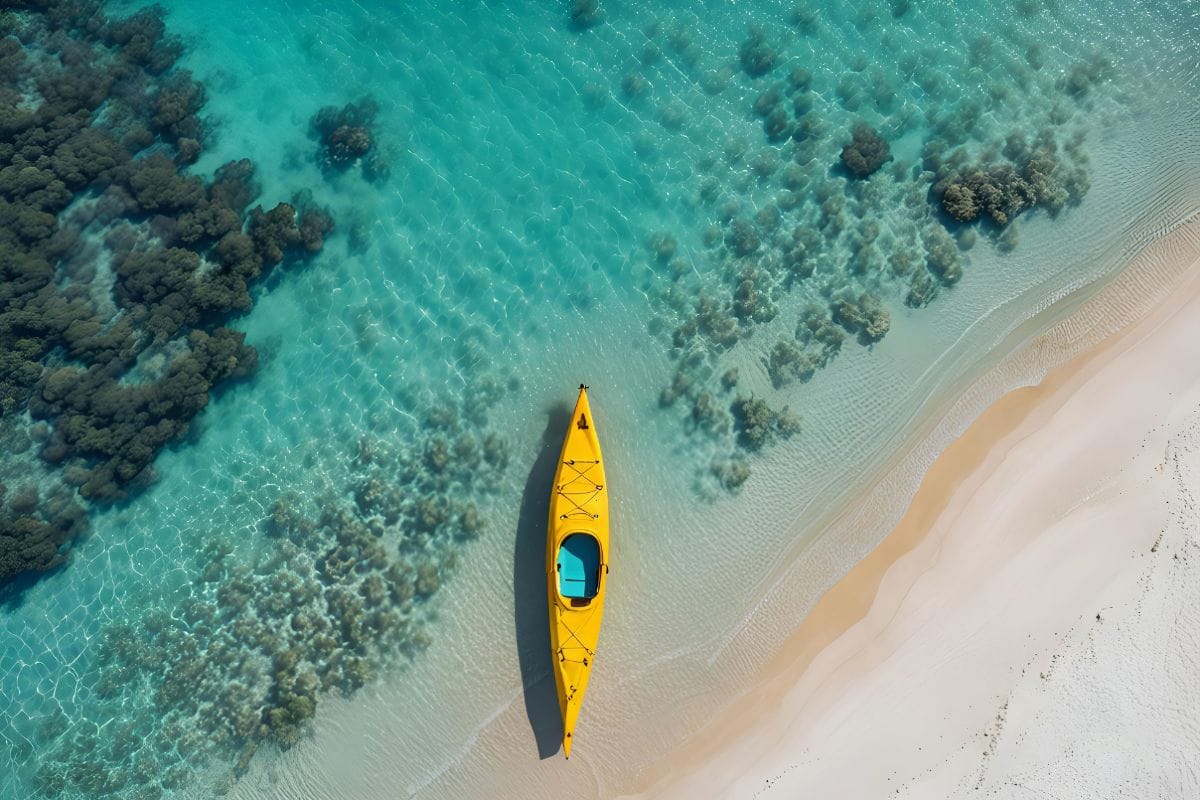
Position: Seated, legs straight or bentPaddle: Double-bladed paddle, alternating left and rightLearning curve: Very quick, from the very first outingHire: €7 to €15 an hour in the lagoon
The classic small craft: a slim hull, a low centre of gravity and a double-bladed paddle that drives you forward with every stroke. You go faster than on a paddleboard for the same effort, hold your line better and can carry more (a dry bag, water, snacks) for longer trips. It copes better with chop and wind, and tandem kayaks make it family-friendly from age 8.
Best for: Families with children, long exploring trips, beginners who want stability, paddlers who want speed or distance
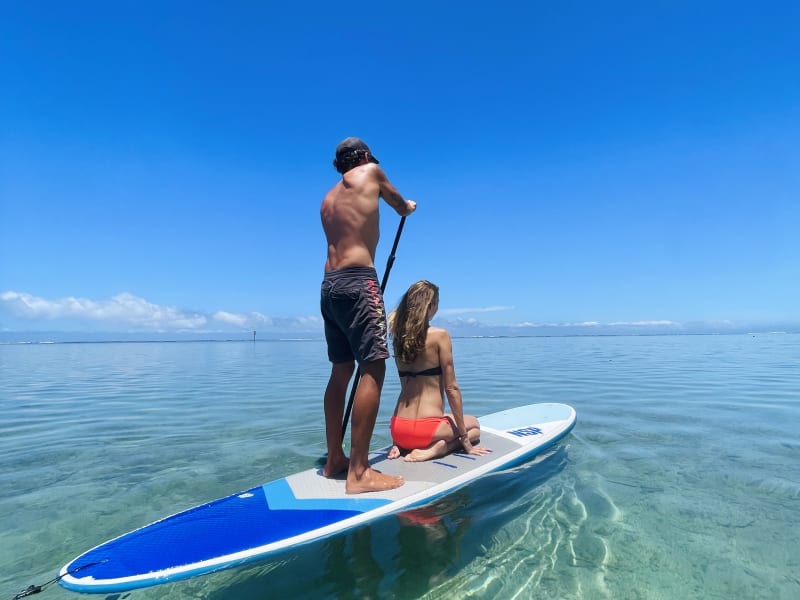
Position: Standing, legs parallel and shoulder-width apartPaddle: Single-bladed paddle, long shaft, alternating gripLearning curve: 30 minutes to 1 hour to stand up confidently in the lagoonHire: €10 to €15 an hour in the lagoon
Booming since 2010: you stand the whole time on a wide board (75 to 85cm), either inflatable or rigid. Your core and balance are working almost constantly, burning 2 to 3 times more calories than kayaking. Standing up gives you a great view over the lagoon, ideal for spotting fish and turtles without a mask, and variations like SUP yoga, SUP fishing and SUP surfing add to the fun.
Best for: Anyone after a workout, relaxed wildlife-spotting in the lagoon, teenagers and young adults, board-sport fans and all-rounders keen to try different styles
A clear winner for each criterion and the reason why. No draws: pick the one that matches what you want to do.
Criterion 1
Ease of learning
Kayak
You're seated from the start with a low centre of gravity, so there's no risk of falling in on flat water, and the double-bladed paddle technique takes 10 minutes to learn. On a paddleboard it takes 30 minutes to 1 hour to stand without falling, and several outings to paddle smoothly.
Criterion 2
Fitness and calories
Paddleboard
Paddleboarding works your core non-stop, along with your abs, glutes, hamstrings, calves, shoulders and back. An hour of steady SUP burns 400 to 600 kcal, and up to 1,000 kcal when racing. Kayaking uses fewer muscle groups (arms, back, core) and burns 250 to 400 kcal in the same time.
Criterion 3
Distance and long outings
Kayak
More storage (50 to 100 litres in a sea kayak) and a double-bladed paddle that's more efficient than a paddleboard's single blade. Covering 10km in the lagoon takes 2 to 2.5 hours by kayak and 3 to 3.5 hours by paddleboard. For a trip taking in several spots, the kayak is the tool for the job.
Criterion 4
Windy conditions
Kayak
A kayak sits low with less surface exposed to the wind, and a sea kayak can take a neoprene spray deck to seal the cockpit. On a paddleboard your body acts like a sail, so from 15km/h of wind you start losing balance and direction; above 20km/h, SUP becomes a battle.
Criterion 5
Wildlife-watching and scenery
Paddleboard
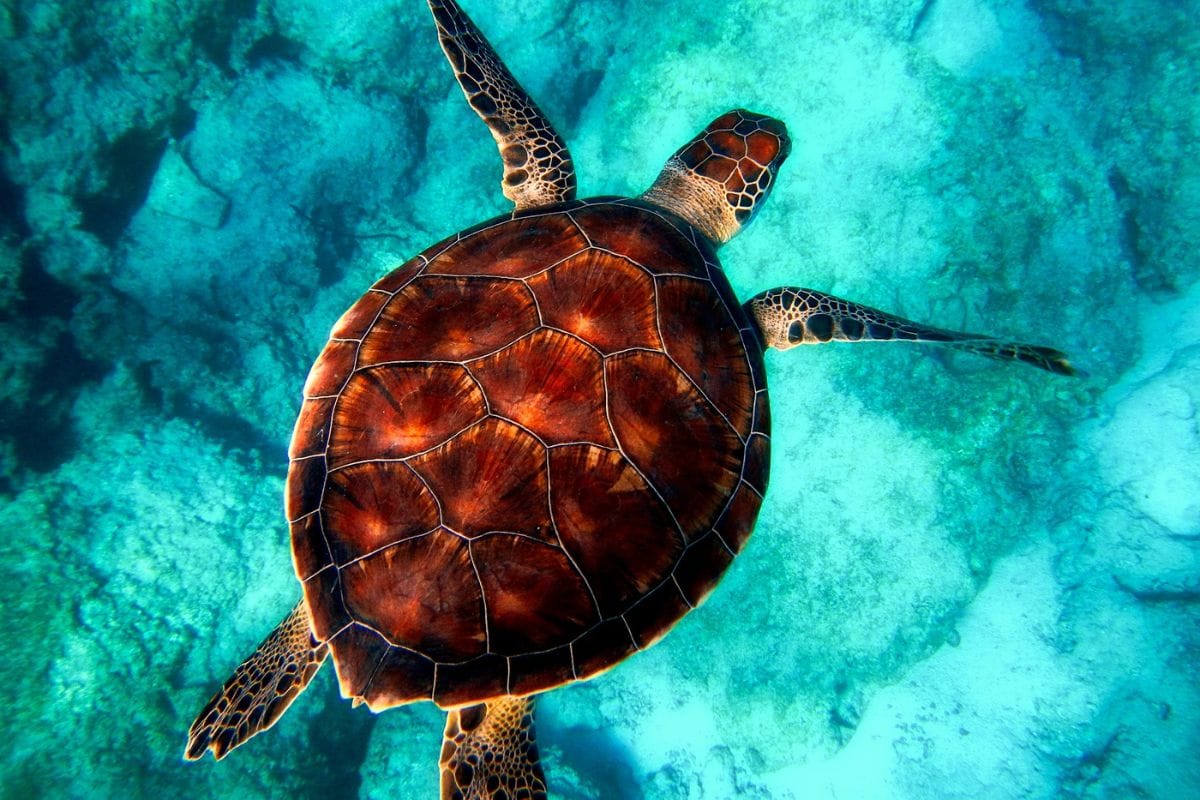
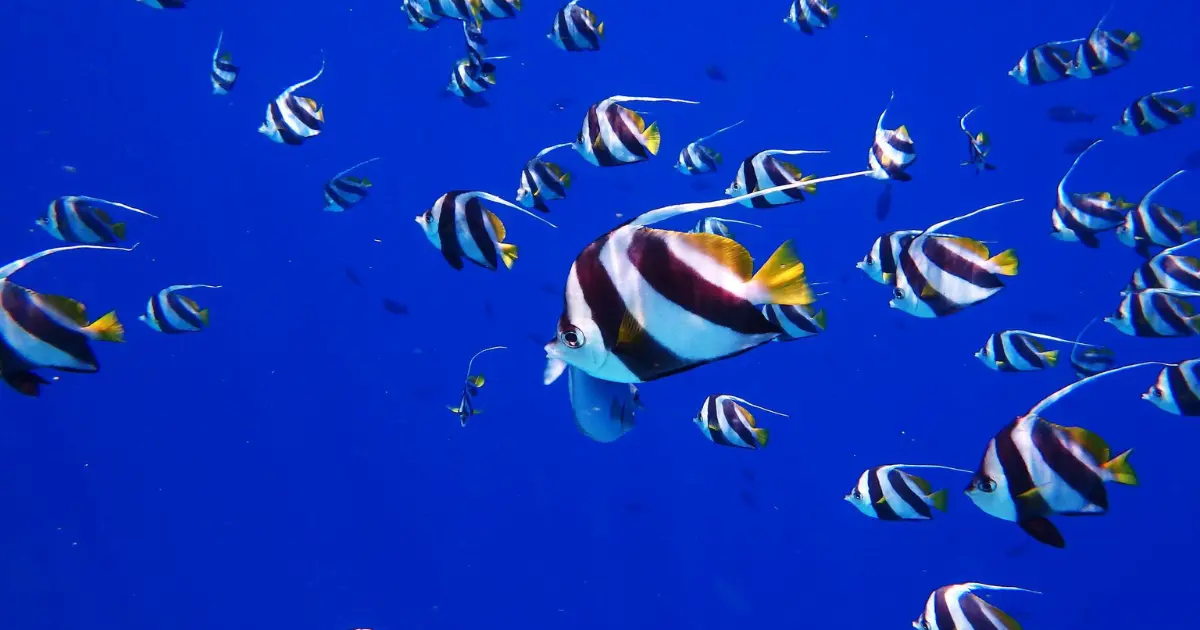
Standing up gives you a bird's-eye view of the seabed. In the Trou d'Eau or L'Hermitage lagoons you can spot turtles, butterflyfish and rays without a mask or snorkel. If you'd rather stay seated, a clear-bottom kayak lets you watch the reef too.
Criterion 6
Family fun
Paddleboard
Endless ways to play: sit, kneel, stand, jump in for a swim and climb back on. Try SUP yoga, share a board with your child or swim straight off it. Kayaking gets a bit repetitive for children after the first hour.
6 west coast spots
Where to kayak or paddleboard in Reunion Island
6 spots from L'Hermitage lagoon to the Saint-Paul pond, with the best choice for each given local conditions.
L'Hermitage-les-Bains
L'Hermitage Lagoon
Recommended discipline: Both work well; paddleboard for the view
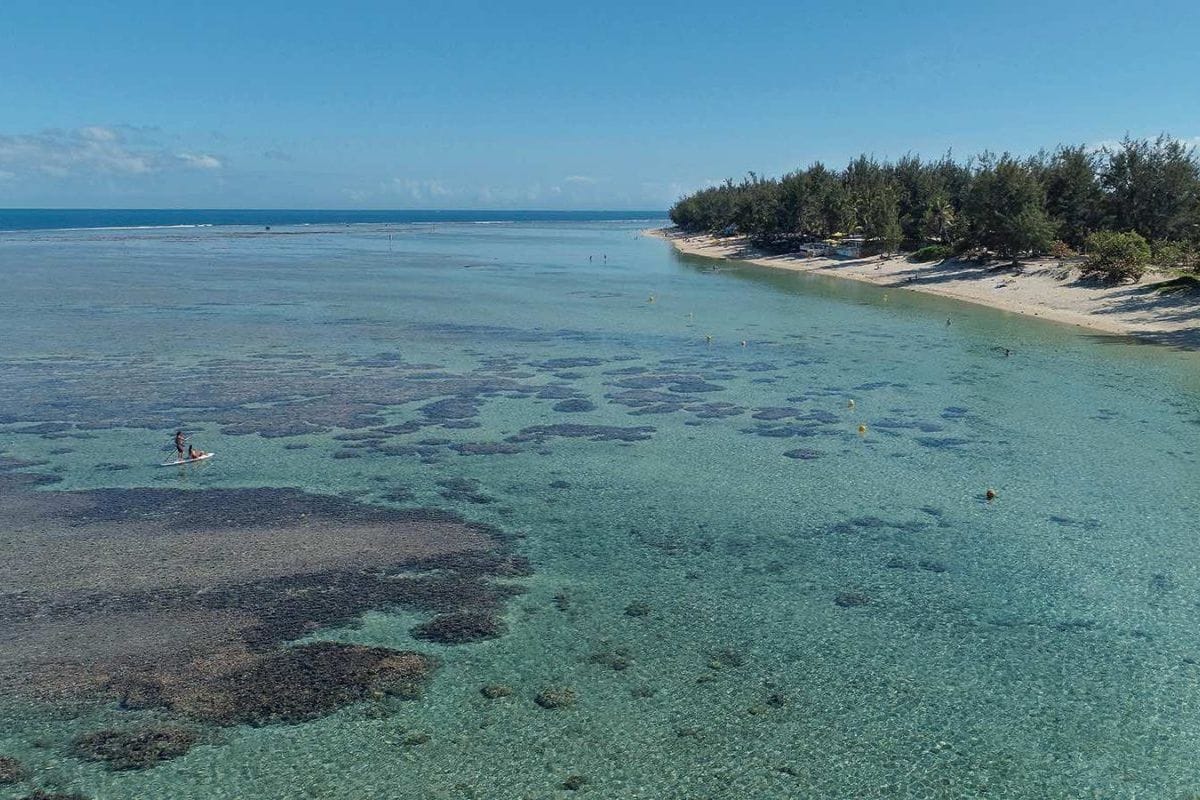
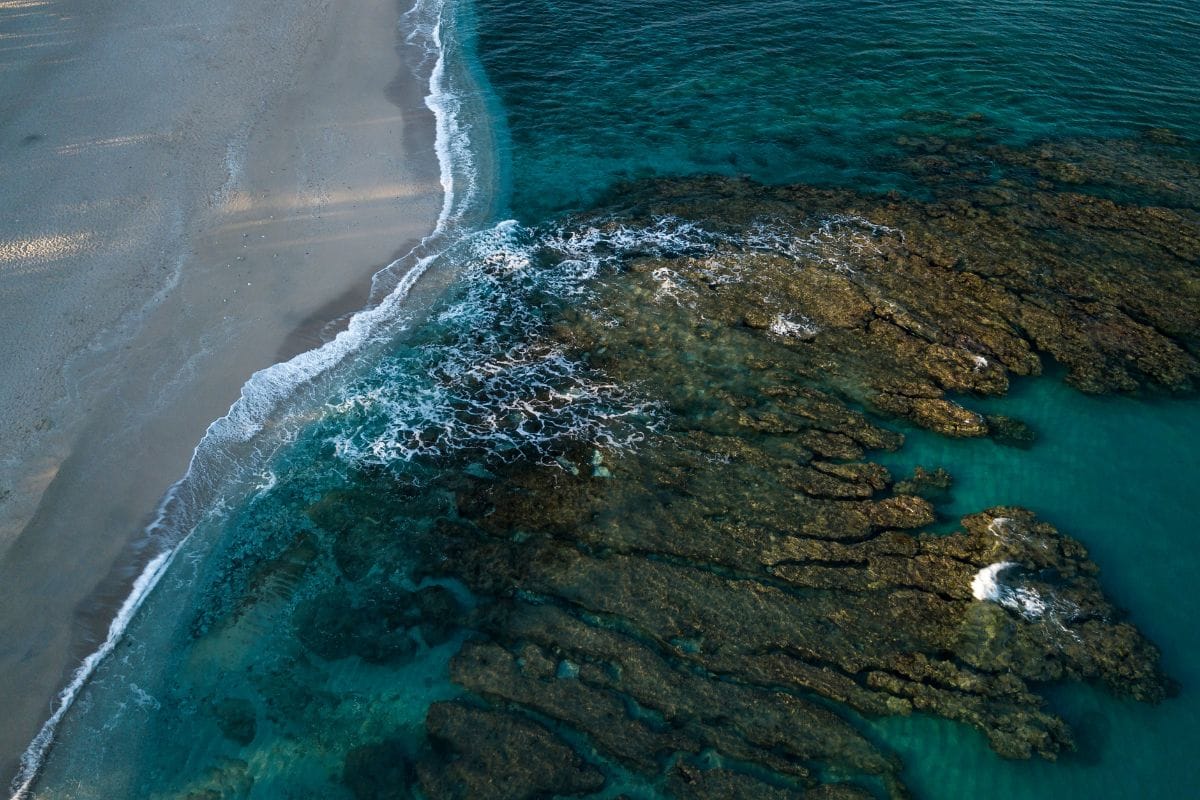
The island's widest lagoon, with a shallow sandy bottom and easy launching from the beach. On a paddleboard, it's ideal for spotting turtles and coral, and there's a SUP school in season. By kayak, paddle a long way along the reef towards the Hermitage channel. Watch out for the afternoon breeze.
Recommended discipline: Clear-bottom kayak for families
The calmest stretch of the west-coast lagoon, with crystal-clear water 1 to 2m deep. The local speciality is the clear-bottom kayak, perfect for children who want to see the coral without getting in. On a paddleboard, enjoy a relaxed paddle on flat water, spotting fish. No wind in the mornings.
Recommended discipline: Kayak (hired from BNO) to explore on your own
A narrower lagoon with more traffic (small boats, sailing dinghies, jet skis) and strictly marked zones. The Base Nautique de l'Ouest hires out rigid kayaks from €12 an hour. Paddleboarders are more exposed to passing motorboats, so go early in the morning.
A trip outside the lagoon along the reef, where there can be a moderate swell. By kayak, a more demanding 1 to 2km paddle heading south, passing divers and sometimes dolphins. Less suited to paddleboards because of the swell and wind, except very early in the morning.
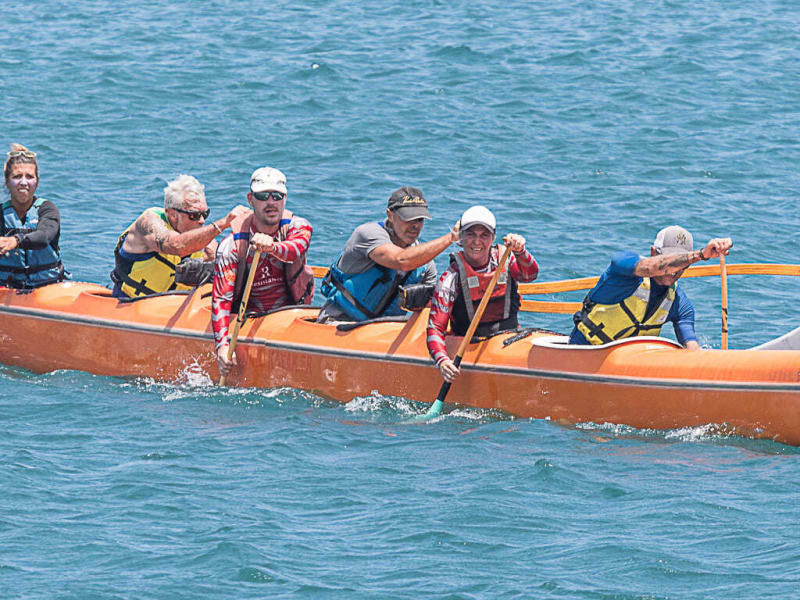
Recommended discipline: SUP surfing or Hawaiian outrigger canoe
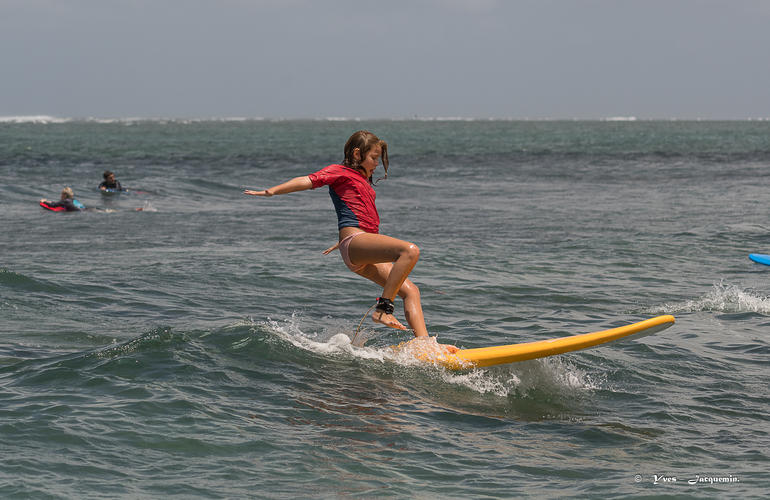
A bay with decent waves during the southern swell season. SUP surfers ride gentle waves outside the shark net, but only under supervision. It's no place for a kayak, given the current and swell. A Hawaiian outrigger canoe trip is a fun, supervised alternative.
Recommended discipline: Kayak (freshwater and birds)
A 447-hectare nature reserve and the island's largest wetland. Paddle an inflatable or rigid kayak away from the lagoon through wooded surroundings, spotting endemic birds. You can paddleboard too, but a kayak covers more ground and lets you bring binoculars and a notebook.
Six tips on choosing, hiring before you buy, the season, safety and combining kayak and paddleboard on one trip.
Who should choose the kayak
Families with young children (a stable tandem from age 8), anyone wanting to cover distance or visit several spots, and trips in windy conditions or a moderate swell. The kayak suits 80% of situations in Reunion Island's lagoon and is the safe bet for a first outing with no risk of falling in.
Who should choose the paddleboard
Teenagers and adults who want a workout, anyone who loves watching lagoon life from above, those keen to try yoga, fishing or surfing on a board, and couples or friends who like paddling side by side. Inflatable boards also travel more easily, as they fit in a backpack.
Test before you buy
Hire before you buy: one or two sessions at €10-15 an hour cost far less than a €400-800 mistake. Hire centres on the west coast (BNO, Trou d'Eau, L'Hermitage) offer both. Spend 30 minutes on a paddleboard to test your balance, and an hour in a kayak to see how comfortable the seat is.
Season and weather
Dry season (May to November): calm, windless mornings ideal for paddleboarding, and decent conditions all day for kayaking. Cyclone season (December to April): mornings are still fine, but stay ashore during weather alerts. Maximum wind: 12km/h for a beginner on a paddleboard, 20km/h in a kayak. Always check the marine forecast before setting off.
Safety in the lagoon
A life jacket is compulsory more than 300m from shore and strongly recommended for children at all times. Use a leash for the paddle (kayak) or the board (SUP). Tell someone your route and when you expect to be back. Never head out alone into open water beyond the lagoon, and stick to the marked zones.
Combining both disciplines
An ideal plan for a week: 2 kayak trips (a long exploration of Saint-Leu Bay, or a run along L'Hermitage lagoon), 1 paddleboard session (wildlife-spotting at Trou d'Eau or yoga at L'Hermitage) and a family clear-bottom kayak trip. For around €60 to €80 in hire fees, you'll have tried everything the west-coast lagoon has to offer.
Where to stay on the west coast
4 hotels for a kayak or paddleboard holiday
From a €101 3-star hotel to a €286 4-star resort: 4 places to stay on the west coast and in Saint-Leu, booked through Agoda and all rated at least 8/10 (72 to 297 reviews).
Saint-Gilles-les-Bains8.1/10 (72 reviews)
Hotel Le Kerveguen
3-star · free wifi
A 3-star hotel in the heart of Saint-Gilles, a 10-minute walk from the harbour and the Base Nautique de l'Ouest. Reasonable prices and simple rooms: a good base for kayak hire at BNO and paddleboarding in the lagoon.
A 3-star hotel a 5-minute walk from Saint-Gilles beach. Breakfast included, free parking and accommodating staff. Ideal for a morning on a kayak or paddleboard and an afternoon relaxing by the lagoon.
A 4-star hotel in Saint-Leu, 130 Agoda reviews at 8/10. Perfect for kayaking in Saint-Leu Bay and some of the coast's best diving. Quiet, with ocean views and a Creole restaurant.
A 4-star hotel facing Boucan Canot bay, 297 reviews. The upmarket choice on the west coast, with a spa, an infinity pool and a gourmet restaurant. Ideal for combining SUP surfing at Boucan, kayak hire in Saint-Gilles and a touch of luxury.
Agoda prices as of 24 September 2026, for 2 people and 1 night.
A panoramic alternative
See the whole lagoon from the sky
To see the whole kayak and paddleboard playground in one go, take a helicopter tour from Le Port over the lagoon from Boucan to Saint-Leu, the coral reef, its channels and the Marine Reserve. A unique way to get to know the lagoon before you paddle it.
A campervan for your inflatable kayak and paddleboard
Inflatable kayaks and paddleboards weigh under 15kg each and fit in a backpack. With a campervan, you can hop between spots depending on the conditions. Yescapa puts travellers in touch with local owners.
10 activities you can book with my partners: kayak hire, clear-bottom kayaking, paddleboarding, snorkelling, diving, whale and dolphin watching, a catamaran cruise, outrigger canoeing, surfing and helicopter tours.
Kayak or paddleboard in Reunion Island: your questions
Kayak or paddleboard: what's the main difference?
In a kayak you sit down and use a double-bladed paddle (alternating left and right strokes), with a low, stable centre of gravity. On a stand-up paddleboard (SUP) you stand on a wide board and use a single-bladed paddle held in both hands. The kayak wins on distance, storage and stability; the paddleboard on fitness, views and fun.
Which one is easier to learn?
The kayak, hands down. Within 10 minutes, anyone in a stable sit-on-top tandem can get moving. On a paddleboard it takes 30 minutes to 1 hour to stand without falling, and several outings to paddle efficiently. For children or a mixed group of beginners, the kayak is the safer choice.
Which one burns more calories?
The paddleboard, by far. An hour of steady SUP burns 400 to 600 kcal, and up to 1,000 kcal when racing or doing intensive SUP yoga. Kayaking uses fewer muscle groups and burns 250 to 400 kcal in the same time. If you want to get fit or lose weight, the paddleboard is more effective.
Which is best for Reunion Island's lagoon?
Both are ideal. On the flat water of Trou d'Eau or L'Hermitage in the morning, a paddleboard gives you an unbeatable view of the marine life. For longer trips or windy afternoons, the kayak wins. The most hired craft on the west coast is the clear-bottom kayak (a local speciality), followed by the paddleboard.
How much does it cost to hire a kayak or paddleboard on Reunion Island?
A standard paddleboard: €10 to €15 an hour, or €25 to €35 for half a day. A sit-on-top kayak: €7 to €12 an hour at the Base Nautique de l'Ouest (Saint-Gilles). A tandem clear-bottom kayak: €15 for 30 minutes or €25 for an hour (La Saline, Trou d'Eau). A paddleboard or kayak lesson: €25 to €40 an hour depending on the operator and location.
Can children go kayaking or paddleboarding?
Yes: from age 8 in a supervised tandem kayak and from age 6 sharing a paddleboard with a parent. Under-18s must wear a life jacket at all times. Stick to the flat lagoons (Trou d'Eau, L'Hermitage), calm mornings and outings of an hour at most the first time, and ask for a quick briefing before you set off.
Do you need to know how to swim?
Yes. Most lagoon operators ask you to be able to swim 25m. A life jacket keeps you afloat if you fall in, but you need to be confident in the water to climb back on. Non-swimmers are better off on a Hawaiian outrigger canoe (a supervised group boat) or snorkelling from the beach.
Which is best for seeing the coral?
A paddleboard gives you a wide view of marine life from the surface (fish, rays, turtles) with no extra gear. A clear-bottom kayak (with a see-through reinforced PVC hull, available at Trou d'Eau) shows you the coral and seabed. For the full experience, combine them: paddleboard in the morning, snorkel from the same beach in the afternoon.
Is SUP more tiring than kayaking?
Yes, for the same length of time. On a paddleboard your core is always engaged, working your abs, legs and glutes as well as your upper body. A relaxed hour is fine for anyone, but a 3-hour SUP trip is more tiring than the same trip by kayak, which is easier to keep up for hours.
Can you paddleboard or kayak during cyclone season?
Yes, in the mornings, with care and a close eye on the weather. December to April brings the heaviest showers and strongest winds. Head out before 10am, check the Météo-France bulletins (cyclone alerts, heavy rain warnings) and stay ashore if the sea is rough. Hire centres automatically postpone bookings during an official weather alert.
What should you bring?
Swimwear, a UV-protective top or rash vest, a cap or bandana that won't blow off, sunglasses on a strap, reef-safe mineral sun cream and neoprene booties for getting in. Add a waterproof pouch for your phone and keys and a 1-litre water bottle. The hire centre always provides the kit (board, paddle, kayak, life jacket, leash).
Is there a shark risk for kayaking or paddleboarding in Reunion Island?
Not inside the lagoon: the coral reef protects it, and no incident involving a kayak or paddleboard has ever been recorded in the west-coast lagoon. Beyond the reef, paddling is still allowed, but you're entering the risk zone at your own risk. Go outside the lagoon only in a supervised group, and keep SUP surfing at Boucan within the area protected by the shark net.
Gear resources
Paddle and accessories for an inflatable kayak
If you'd rather buy an inflatable kayak than hire one, choosing the right model is key. The French specialist Razorkayaks sells high-performance inflatable kayaks, including 2-seaters suited to the lagoon. Don't skimp on the paddle either: a good one (fibreglass, aluminium or carbon) makes paddling far more enjoyable and saves your shoulders.