Inflatable Kayaking in Reunion Island: types, west coast spots and prices
An inflatable is the obvious choice if you're travelling by plane or campervan: 14kg folded, 7 minutes to inflate, and prices from €200. This page compares inflatable and hardshell kayaks, explains the 3 main types (sit-on-top, clear, drop-stitch) and lists 6 spots from the west lagoon to the river.
14kg two-seaterFrom €15 to rent6 spots on the west coastAge 8 minimum
Quick facts
The inflatable kayak in 8 numbers
Two-seater inflatable weight
12 to 18kg (vs 35kg hardshell)
Inflation time
5 to 10 min (hand pump)
Deflation time
2 to 3 min
Folded size
60 × 40 × 30cm in a bag
Average purchase price
€300 to €800 depending on model
Rental price
From €15/30 min, €25/1h
Load capacity
150 to 250kg (two-seater)
Typical pressure
0.2 bar (0.8 bar for drop-stitch)
The inflatable kayak has become the go-to on Reunion Island's lagoon thanks to how practical it is: it flies as ordinary luggage, fits in a flat and performs well enough for 95% of family use. This page covers everything kayak: types, spots, renting and buying. For the wider west-coast watersports hub, see the Base Nautique de l'Ouest and west coast watersports article.
Inflatable vs rigid
Why an inflatable makes sense in Reunion Island
Three things make an inflatable particularly well suited to the island: you can fly with it (14kg as standard hold luggage, against 35kg for a hardshell two-seater), store it in a flat or campervan (a backpack-sized bag instead of a 4m hull), and it costs half as much for the same performance on the lagoon.
A hardshell only wins out for heavy use (more than 20 outings a year), if you have a garage by the sea, or if you're planning long open-sea trips. For 95% of travellers and residents who simply want to enjoy the lagoon, an inflatable does the job.
Three types to know: the easy, family-friendly sit-on-top, the clear kayak for watching coral, and the high-pressure drop-stitch for near-hardshell performance. Here are the prices, who each suits and how they're typically used.
Type 1
Inflatable sit-on-top
Buy: €200 to €500Rent: €15 to €25/hourBest for: Beginners, families, first outings
The easiest type to use: an open deck and a low seat (legs straight or bent), so you can climb on and off straight from the water. Ideal for the lagoon, for a swim between paddles and for children from age 8. It's very stable thanks to side tubes inflated to 0.2 bar, with a self-bailing drain at the back to clear any water that comes aboard. Two-seater models with 2 removable seats cover 90% of family use.
Key takeaway: The all-rounder for the lagoon and children from age 8
Type 2
Inflatable clear kayak
Buy: €400 to €800Rent: €25 to €35/hour (rental only)Best for: Families, coral watching, snorkelling without a mask
A variant of the sit-on-top with a translucent reinforced PVC hull: you can see fish and coral without a mask or snorkel. It's the star attraction on the Trou d'Eau lagoon in La Saline-les-Bains, where several operators rent them out. Few people buy one (they're expensive and trickier to look after), so renting makes more sense for a one-off outing. A typical outing lasts 2h on the lagoon, with a briefing on the coral areas to respect.
Key takeaway: Coral watching with no gear, ideal for families
Type 3
High-pressure (drop-stitch) kayak
Buy: €600 to €1,200Rent: Rare for public rentalBest for: Experienced paddlers, sea-touring enthusiasts
The premium range: a drop-stitch structure (thousands of threads woven between two PVC faces) inflated to 0.8-1 bar, making it almost as stiff as a hardshell kayak. Glide, tracking and paddling performance come close to a polyethylene kayak, while packing down 6 times smaller. Models include the Itiwit X500, Aquaglide Chinook, Sevylor Yukon. For anyone who wants serious sea kayaking or multi-day touring, it's the only inflatable type that really cuts it.
Key takeaway: Hardshell-level performance, packs down 6 times smaller
6 west coast spots
Where to paddle in Reunion Island by inflatable kayak
Six spots, from easiest to most demanding, with the level, area and a related page for each.
L'Hermitage-les-Bains
L'Hermitage lagoon
Level: Very easy, from age 8
The widest stretch of the west lagoon (200 to 600m), a shallow sandy bottom, flat water in the morning and late afternoon. You launch straight from the casuarina-lined beach, and green turtles are often spotted near the Hermitage pass. Ideal for a first inflatable kayak outing, with rentals from several seasonal operators.
The calmest spot on the west lagoon, crystal-clear water 1 to 2m deep, a garden of hard coral visible from the kayak's deck. A favourite for clear kayak rentals, with a typical outing lasting 2h. Abundant marine life: butterflyfish, damselfish, triggerfish, more rarely stingrays near the channel. No current and no swell, so it suits everyone.
A more technical outing: departing from Plage du Centre, hugging the coral barrier south for 1 to 2km. You may see turtles, scuba divers and occasionally dolphins in season. There can be moderate swell in the afternoon, so you need some confidence on the water. For paddlers already comfortable on the west lagoon, it's the natural next step.
A narrower, busier lagoon (fishing boats, jet skis, sailing) with marked zones that must be respected. The Base Nautique de l'Ouest rents hardshell sea kayaks from €12 an hour, an alternative to bringing your own inflatable. Best in the morning before engine traffic picks up.
A protected nature reserve, the island's largest wetland (447ha), endemic and migratory birds visible from the water. Regulated water entry, some areas off-limits to protect nesting. An unusual way to paddle away from the lagoon, on flat water year-round. Worth combining with a birdwatching walk.
One for sea kayaks or drop-stitch models only: a serious outing, with ocean swell and currents at the estuary. Reserved for experienced paddlers equipped with a life jacket, leash and whistle. A fine view of the Massif de la Montagne and the commercial port. Don't attempt it without sea-kayaking experience, and ideally go in a group with a local.
Practical tips
Getting ready for an inflatable kayak outing
Six points to get buying, gear, timing, safety and upkeep right from the start, and avoid the classic first-year mistakes. To compare models before choosing, The Equipment Guide's inflatable kayak comparison reviews the technical criteria.
Choosing inflatable or hardshell
Go inflatable if you travel by plane or campervan, need to store it in a flat or paddle 2 to 5 times a year. Go hardshell if you can store it by the sea in a garage or garden, go out more than 10 times a year or want pure performance. In Reunion Island, an inflatable covers 95% of everyday use (family rentals, holidays, the occasional outing).
Material: PVC or Nitrilon
PVC is the standard (cheap, reasonably tough, with a 5-to-8-year lifespan). Nitrilon (notably the Gumotex brand) offers better UV and chemical resistance, but costs 30-50% more. Drop-stitch models generally combine a woven drop-stitch floor with PVC or Nitrilon side tubes. For heavy use in the tropics, choose Nitrilon if your budget allows.
Essential personal gear
A CE-rated life jacket (50N minimum, 100N in open sea), a distress whistle attached to the jacket, a paddle leash, a waterproof case for phone and keys. Mineral sunscreen free of oxybenzone to protect the coral, sunglasses on a cord. An anti-UV shirt or rash guard for long outings, neoprene booties useful for entering over a coral bottom.
Season and weather
Dry season, May to November: calm mornings and an afternoon sea breeze, so the lagoon is at its best in the morning. Cyclone season, December to April: frequent showers and bigger swell, best avoided for your first outings. Maximum wind: 15km/h for beginners in the lagoon, 25km/h for experienced paddlers. Always check the marine forecast on Windguru or Météo-France before setting off.
Safety in the lagoon
The west lagoon is protected by the coral barrier, so there's no shark risk inside it. Outside the lagoon (beyond the pass), only go on supervised outings or with a safety boat. Never set off alone, and tell someone your route and expected return time. Keep the paddle attached, your phone in the waterproof case, and drink 1L of water an hour under the tropical sun.
Upkeep after each outing
Always rinse in fresh water (salt attacks seams and valves) and dry fully in the shade before folding (heat damages PVC in storage). Check the valves and seams every 5 to 10 uses, and do a test inflation once a month in the off-season. Store flat or loosely folded somewhere dry, out of the sun. With good care it will last 5 to 10 years.
Stay near the spots
4 Agoda hotels on the west coast and Saint-Leu
From a €50-a-night guesthouse to a 4-star at €180: four Agoda hotels rated 8/10 or higher, with 43 to 135 reviews each. La Saline for the Trou d'Eau lagoon, Saint-Gilles for the BNO, Saint-Leu for the technical bay.
La Saline-les-Bains9.5/10 (51 reviews)
Le temps d'une île
3-star · free wifi
A guesthouse in La Saline-les-Bains, 9.5/10 from 51 Agoda reviews. Budget-friendly, with a warm Creole welcome, and a 10-minute walk from the Trou d'Eau lagoon, the top spot for clear kayaking. The best rating on the west coast for anyone who wants to paddle in the morning and come back for a coffee.
A 3-star hotel 5 minutes' walk from Roches Noires beach and 15 minutes from the Base Nautique de l'Ouest. Good value for Saint-Gilles, with parking and breakfast included. Ideal for combining a BNO kayak rental with independent outings on your own inflatable.
A 3-star hotel in the hills above Saint-Leu, with panoramic views over the bay and the reef, a pool, a tropical garden and a restaurant. Ideal for paddling in Saint-Leu bay (intermediate level) and diving at the coast's best dive spot.
A 4-star hotel in Saint-Leu, 8.5/10 from 43 reviews: an intimate hotel with a spa and spacious, well-finished rooms. A 10-minute drive from Plage du Centre, the starting point for kayaking in Saint-Leu bay. The upmarket option on the south-west coast, and an alternative to the big resorts.
Agoda rates checked on 5 November 2026 for 2 people, 1 night.
A panoramic alternative
See the lagoon and the coral barrier from the sky
For anyone who wants to take in the whole west lagoon before or after the kayak outing, a helicopter flight from Le Port flies over the passes and the coral barrier before heading on to Mafate or the volcano. Seeing your watersports playground from above changes the way you look at the lagoon.
The winning combo: a campervan and an inflatable kayak
An inflatable kayak and a campervan are made for each other: a 14kg bag in the boot, a morning paddle from where you parked for the night, and it dries on the way to the next spot. Yescapa connects local owners with travellers, with everything from converted vans to full motorhomes.
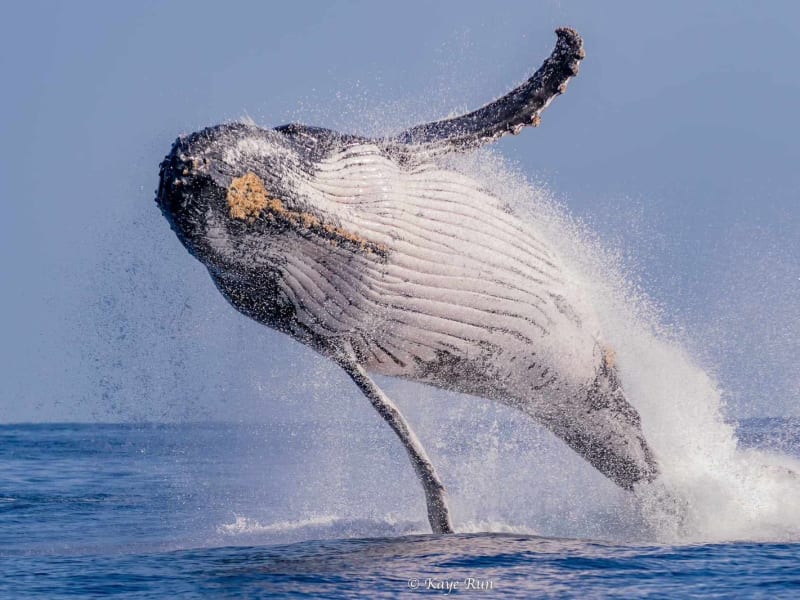
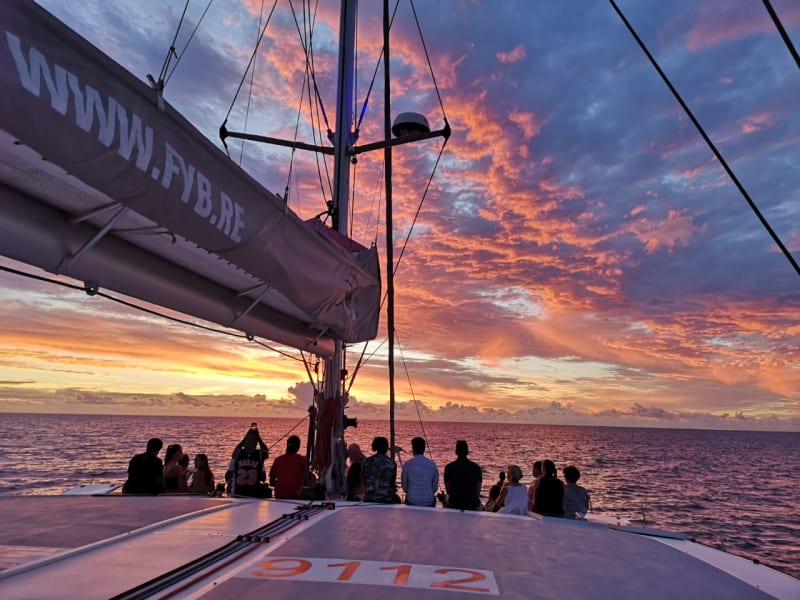
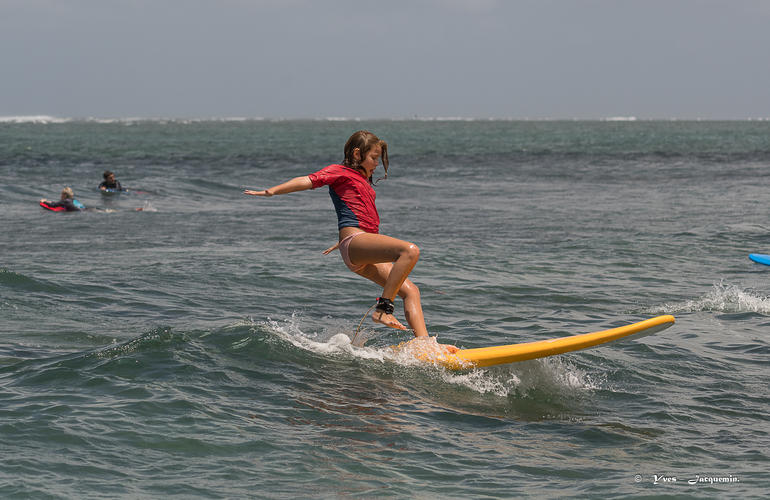
10 west-coast partner listings to round off a watersports trip: BNO kayak rental, clear kayaking, paddleboarding, snorkelling, diving, whale and dolphin watching, a cruise, an outrigger canoe, surfing and a helicopter flight.
Inflatable kayaking in Reunion Island: your questions answered
Can you inflatable-kayak in Reunion Island?
Yes, and it's particularly well suited to the island: easy to bring on a long-haul flight (15kg as hold luggage), usable on the west lagoon and calm rivers. The most popular areas are L'Hermitage, Trou d'Eau in La Saline, Saint-Gilles and Saint-Leu bay. There are no specific rules, but a life jacket is compulsory at sea.
Which inflatable kayak should you choose for Reunion Island?
For the lagoon as a family: a two-seater inflatable sit-on-top, €200 to €500, Itiwit or Sevylor models. For watching coral: a clear kayak (usually a rental, rarely bought). For open-sea outings or sea touring: a drop-stitch like the Itiwit X500 or Aquaglide Chinook, €600 to €1,200, with performance comparable to a hardshell.
How much does inflatable kayak rental cost in Reunion Island in 2026?
Typical west-coast rates: a two-seater clear kayak €15 for half an hour, €25 for an hour (La Saline, Trou d'Eau). A hardshell sit-on-top at the Base Nautique de l'Ouest: €12 an hour, €20 for 2h. Buying your own inflatable costs €200 to €800 depending on the model, and pays for itself compared with renting if you go out 10 to 15 times a year.
What are the best areas for inflatable kayaking in Reunion Island?
L'Hermitage lagoon and Trou d'Eau lagoon (La Saline-les-Bains): flat water, a shallow bottom, accessible to beginners and children from age 8. Saint-Gilles lagoon: busier, with marked zones to respect. Saint-Leu bay: intermediate, with a lovely route along the reef. Étang de Saint-Paul: freshwater and birdwatching. Rivière des Galets estuary: advanced, with currents.
Is an inflatable kayak as good as a hardshell?
For the lagoon and family outings, yes, about 90% as good. For long sea touring (20km or more) or serious open-sea use, a hardshell is still faster and tracks better. High-pressure drop-stitch models narrow the gap to 5-10% compared with an equivalent hardshell, while packing down 6 times smaller.
How long does it take to inflate a kayak?
5 to 10 minutes on average with a hand pump for a standard two-seater inflatable (a target pressure of 0.2 bar). With a 12V electric pump, the time drops to 2-3 minutes but needs a battery or a car power source. Deflating is quicker: 2 to 3 minutes, opening the valve and pressing the air out by hand.
What season is best for kayaking in Reunion Island?
The dry season, May to November, is ideal all day on the lagoon. In the cyclone season, December to April, mornings are usually fine before the afternoon showers, but avoid going out during weather alerts. Whale season, June to October, adds the chance of sightings for anyone venturing beyond the lagoon in a supervised group. Lagoon water stays between 24 and 28°C year-round.
Do you need a licence for inflatable kayaking in Reunion Island?
No, no boating licence is required to paddle a kayak (inflatable or rigid) in a lagoon, river or within 2 nautical miles of shelter (about 3.7km). Beyond that, French 'division 240' rules require specific safety gear (life jacket, whistle, waterproof torch, towing device, signalling mirror). A life jacket is always compulsory for under-18s.
Can you bring an inflatable kayak on a plane?
Yes, that's its main advantage. A two-seater inflatable kayak weighs 12 to 18kg and folds to about 60 × 40 × 30cm, fitting within the standard hold-baggage allowance (23kg). Air Austral, Air France and Corsair accept standard baggage with no surcharge. Pack the pump and paddle (no metal shaft over 60cm in the cabin) in hold luggage too.
What inflatable kayak models are recommended?
Two-seater sit-on-top: Itiwit X100 (€350, Decathlon), Sevylor Riviera (€250), Intex Excursion Pro (€300). Drop-stitch: Itiwit X500 (€800, performance close to a rigid kayak), Aquaglide Chinook (€700), Gumotex Solar 3 (€1,100, Nitrilon). Clear kayak: usually rented locally, as few people buy one given the high price and specific upkeep.
What's an alternative to inflatable kayaking in Reunion Island?
An inflatable stand-up paddleboard (SUP): simpler, more versatile and suitable from age 6. A traditional Hawaiian outrigger canoe in Saint-Gilles: something different, led by an instructor. A sports catamaran at the Base Nautique de l'Ouest: €50 for a solo session. If you're torn, also see my kayak or paddleboard guide, a complete comparison of the two disciplines.
How long does a typical outing last?
A family lagoon outing: 1 to 2h, enough to explore a stretch of beach before the kids tire out. A clear kayak outing at Trou d'Eau: 2h, supervised. A long outing on your own: 3 to 4h covering 8-12km of lagoon. A multi-spot touring day: a full day and 15 to 20km, for experienced paddlers with a drop-stitch kayak.