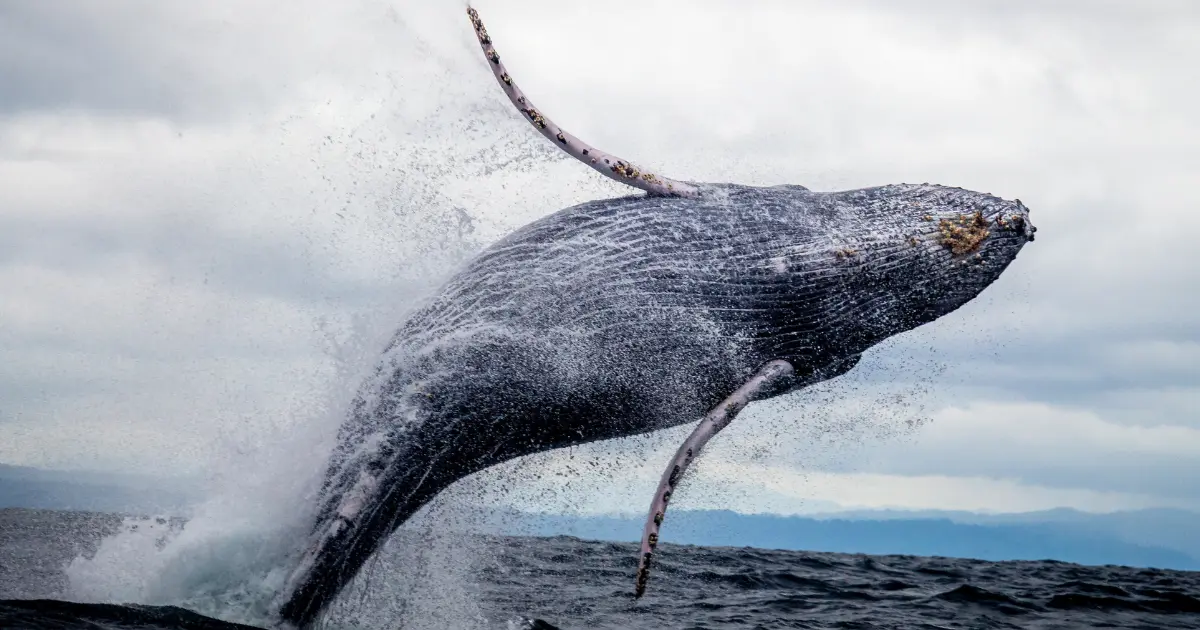
Whale and Dolphin Watching in Reunion Island: the complete guide
Humpback whale season (June-October), spinner dolphins year-round, the species you can see, trips departing from Saint-Gilles, the prefectural approach rules and prices. The complete guide to planning your trip.
Reunion Island is one of the best spots in the world for humpback whale watching between June and October, and the only place in France, overseas territories included, where supervised swimming with dolphins is permitted year-round. Trips mostly depart from Saint-Gilles, on the west coast, where calm waters and nearby sandbanks favour good sightings.
Here are the species you can see, the approach charter set by the prefectural order, prices and operators, and the best windows to maximise your chances of an encounter.
Which cetaceans do you see in Reunion Island?
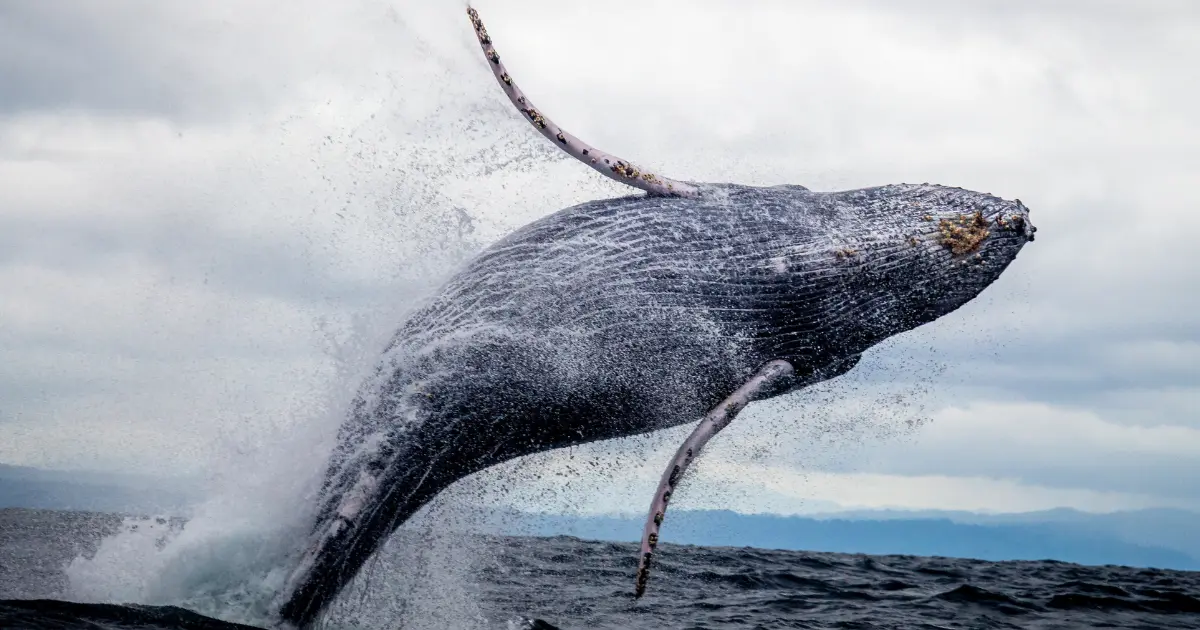
Humpback whale
Megaptera novaeangliae. Expect pregnant females, mothers with calves and singing males. They migrate from Antarctica to give birth in warm waters. Spectacular breaches, songs audible underwater.
Spinner dolphin
Stenella longirostris. The dominant species around the island, living in groups of 30-200. Spinners rest near the coast in the morning, so trips run at dawn or mid-morning.
Indo-Pacific bottlenose dolphin
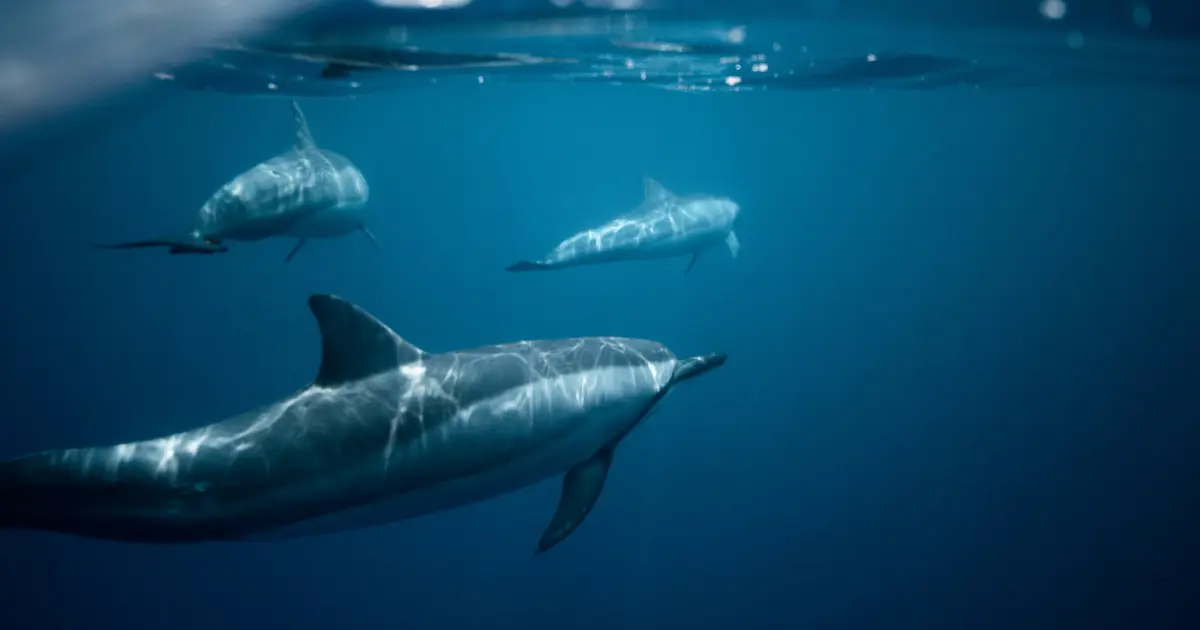
Tursiops aduncus. Larger than the spinner dolphin, with complex social behaviour, it's sometimes seen close to divers. The population is resident.
Sperm whale
Physeter macrocephalus. A deep diver (800m+) with a characteristic angled blow. It's rarely seen, usually on dedicated trips with hydrophones.
Short-finned pilot whale
Globicephala macrorhynchus. A cousin of the orca that lives in tight-knit groups. Occasional sightings on longer boat trips.
False killer whale
Pseudorca crassidens. Marked social behaviour, sometimes seen interacting with dolphins.
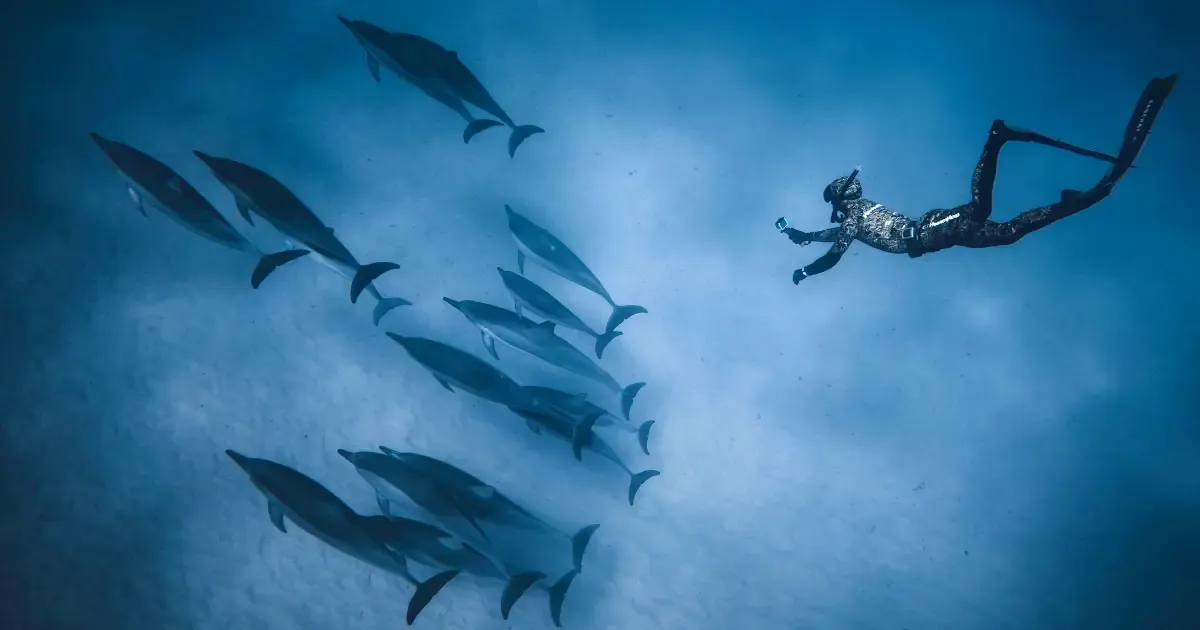
Swimming with spinner dolphins at Saint-Gilles
Saint-Gilles harbour is the hub for whale and dolphin trips. Boats (a RIB or catamaran) leave between 7 and 9am and return 2-3 hours later. Entry into the water happens if the dolphins are resting in the morning and the sea allows it. Snorkel, mask and fins are provided, or bring your own.
Outside whale season, the trip stays focused on spinner dolphins (Stenella longirostris) with ≈ 95% odds of a sighting. From June to October, it's always combined with a search for humpback whales (≈ 70-85% success in high season).
The prefectural watching rules
The 2009 prefectural order regulates every commercial or private approach to cetaceans. Every reputable operator respects these minimum thresholds. Offenders risk fines and losing their licence.
A free approach zone, strictly slow speed
Neutral gear, passive observation recommended
No closer approach allowed (boat stationary)
The permitted watching window
Maximum at once near a group of cetaceans
Minimum age to get in the water (snorkelling gear)
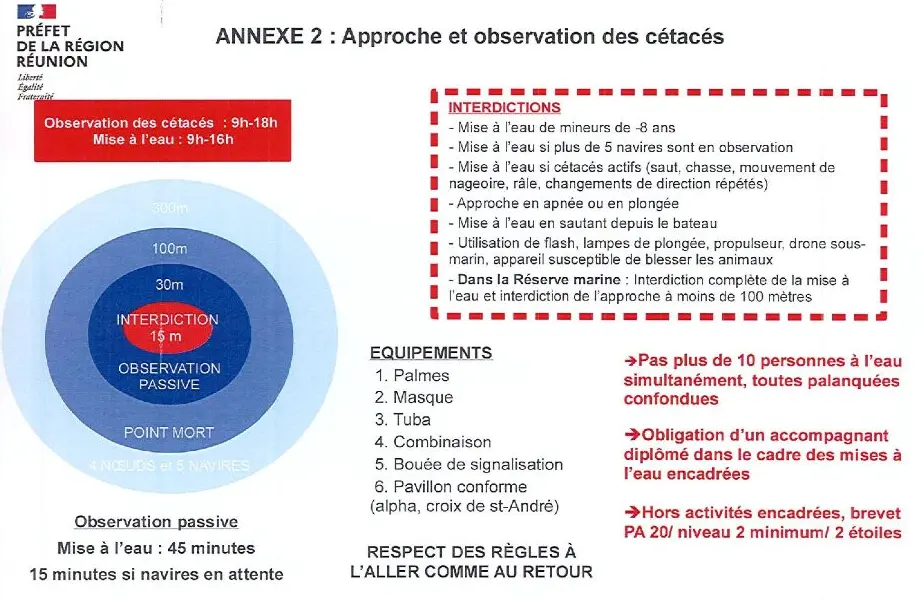
Official source: the Reunion Island prefectural order on cetacean watching (a French-language document, shown above). Scientific monitoring of the populations by GLOBICE Réunion (globice.org) and the maritime gendarmerie's nautical brigade. The most committed operators also sign the Quiétude label's charter, which sets stricter approach thresholds than the regulations require.
When to go out for which species
Cyclone season. Spinner dolphins are around but the sea can be rough. Head out early, before the wind picks up.
Calmer seas, dolphins daily and very clear visibility. A good window outside the busiest tourist period.
The first humpback whales arrive. Sightings are still irregular but exciting.
The peak of humpback whale season. Females with calves, singing males, spectacular breaches. Generally calm seas. Book 3-4 weeks ahead.
The last whales before they head back to Antarctica. Sightings are still possible, with an end-of-season feel.
The whales have gone, but dolphins are seen daily and the sea is calm. Often overlooked by tourists, yet excellent for trips.
Book a cetacean trip at Saint-Gilles
Boats leave Saint-Gilles marina early in the morning, at ≈ €50-95 depending on the package, with a strict approach charter, snorkelling gear provided, and supervised watching and swimming with dolphins if conditions allow.
See cetacean tripsWhale and dolphin trips in Reunion Island, in practice
What is whale season in Reunion Island?
What is dolphin season in Reunion Island?
How much does a whale watching trip cost in Reunion Island?
Can you swim with whales in Reunion Island?
Where can you see whales from the coast without a boat?
What time is best to see whales?
How can you improve your chances of seeing whales?
Who oversees watching trips?
Keep reading
- → Where to See Whales in France: 4 Spots.
- → Where to Swim with Dolphins in France.
- → Swimming with Turtles in Reunion Island.
- → Scuba Diving in Reunion Island.
- → Book a Cetacean Trip at Saint-Gilles.
Article updated on 24 October 2026.