Self-sufficient trekking · Freeze-dried food · Mafate

Trekking food in Reunion Island: meals, freeze-dried food and water

How to plan meals day by day, choose between freeze-dried and homemade food, manage water and rubbish, and pick light cooking gear. The 5 essentials of eating well on a trek, adapted to Reunion Island (Mafate, Bélouve, mountain huts, where to shop).

3,500 kcal per day600-800 g dry food a day2.5-4 L of water / day
Quick facts

Trekking nutrition in 8 numbers

Target energy intake
3,000 to 4,500 kcal a day
Food weight per day
About 600 to 800 g dry
Target hydration
2.5 to 4 L of water a day
Average freeze-dried meal
120 to 180 g, 500-700 kcal
Rehydration time
5 to 10 minutes with hot water
Water per meal
About 350 to 500 ml
230 g gas canister
10-15 hot meals, 2-3 days
Mafate gîtes
Half-board from €35-45 a night

Serious hiking in Reunion Island needs more careful food planning than a gentle walk: cumulative elevation gain (often 1,000 to 1,500 m a day), tropical heat, limited drinking water outside the inhabited îlets (hamlets) and long self-sufficient stages in Mafate. This page covers the 5 essentials (planning, freeze-dried food, hydration, waste, gear), then 6 things specific to Reunion Island (Mafate bivouac, gîte half-board, mountain huts, water, local resupplying, guided packages).

Why this matters

Eating well is half the battle on a trek

People who give up on a trek usually do so for one of three reasons: badly planned food (too heavy, too few calories, or simply sick of it), not drinking enough, or blisters. This page tackles the first two. An experienced hiker who spends an hour planning meals before a 3-day trek halves the risk of dropping out from exhaustion, saves 1 to 2 kilos in the pack and enjoys the trip more.

It's an environmental issue too: more than 500,000 walkers a year use Reunion Island's trails. Handled badly, their food waste (litter, run-off, polluted springs) quickly damages the very scenery everyone comes to see. Leave No Trace isn't optional: it's what keeps the national park, a UNESCO site since 2010, intact.

5 pillars

The 5 essentials of trekking food

Planning, freeze-dried food, water, rubbish and gear: the checklist for every trek, whether you're self-sufficient or staying half-board in gîtes. Each point comes with a figure to help you pack.

Pillar 1

Plan meals day by day before leaving

Before you set off, list every breakfast, lunch, dinner and snack for the trip, so you can control the weight and make sure you're eating enough.

The most common mistake on a self-sufficient trek is a last-minute supermarket dash the night before: the result is a heavy pack, an unbalanced diet and a headache once you're at altitude. What works is a day-by-day table, one line per meal, noting for each entry the dry weight, the approximate calorie intake and the preparation method. Aim for around 3,000 to 4,500 kcal a day on Reunion Island's steep terrain. Split it between complex carbohydrates (pasta, rice, semolina, oat flakes), compact proteins (dried pulses, plant protein powder, hard cheeses, dried meats), healthy fats (nuts, oil in a mini bottle, peanut butter in a sachet) and fast sugars for exertion (dried fruit, fruit pastes, homemade bars).

Key takeaway: A day-by-day spreadsheet, aim for 600-800 g dry and 3,500 kcal/day on average on Reunion Island trails
Pillar 2

Favour freeze-dried and dehydrated food for weight

Freeze-dried meals weigh 3 to 4 times less for the same calories, but they cost more and you need hot water.

A 120 to 180 gram dry freeze-dried pouch gives, once rehydrated with hot water, the equivalent of a full 500 to 700 kilocalorie meal. Compare that to the 350 to 450 grams of a tin can for an often lower calorie intake. On a 2-3 day Mafate trek, the difference can reach 1.5 kilos, which your back will notice by the middle of day two. The main European brands found in France (Lyophilise.fr, Trek'n Eat, Voyager, MX3, Adventure Food) offer full ranges from breakfast to dessert, in omnivore, vegetarian and gluten-free versions. Expect €8 to €14 a pouch, two to three times the cost of drying your own food at home with a dehydrator. Keen hikers often end up dehydrating their own dishes (tomato sauce, lentil stew, fruit) for a third of the price.

Key takeaway: 1 pouch: 120-180 g, 500-700 kcal, 5-10 min to rehydrate. A third of the weight of a tin
Pillar 3

Plan your water: running dry is the main reason people give up

Water weighs 1 kilo a litre, so you can't carry it all. Mapping water points and bringing a filter or tablets is non-negotiable.

On a tropical trek you can easily need 2.5 to 4 litres a day: the effort is sustained, it reaches 25-28°C at midday even at altitude, and you sweat heavily climbing the ramparts (cirque walls). Carrying 4 litres from the start isn't realistic: the weight kills your pace. The method used by local guides: set off with 1.5 to 2 litres maximum in the pack and refill at every water point identified on the map (a spring, an îlet's water supply, a mountain-hut tap). In Reunion Island, springs in the Hauts (highlands) are generally very clean, but filtering or treating the water removes the remaining risk (parasites, and leptospirosis in stagnant water). Three proven options: a Sawyer Squeeze pump filter (€100-130, a 1.5-million-litre lifespan), Micropur or Aquatabs hydrochlorazone tablets (1 tablet per litre, a 30-minute wait, about €10 a box), a Lifestraw filtering bottle (€50-70). The golden rule is to drink regularly even when you're not thirsty: dehydration shows up late and quickly leads to exhaustion.

Key takeaway: 1.5-2 L in the pack, refill at springs, and always filter (Sawyer) or treat (Micropur)
Pillar 4

Carry out all your waste without exception

Leave No Trace applies in full in Reunion Island's protected areas: no rubbish and no food scraps left behind.

On the trails of Mafate, Bélouve, Bras Rouge or around the summits, Reunion Island's national park has strict rules. No waste should stay on the ground, including fruit peel, cigarette butts, wrappers and organic leftovers. The rule also applies to the pot's rinsing water, which should be filtered then scattered at least 50 metres from a spring. In practice, pack a thick 30-40L plastic bin bag at the bottom of your pack, closable with a knot, to collect everything throughout the trek. Freeze-dried meals' foil pouches, once eaten, fold up and go in that same bag, likewise for individual wrappers. A practical tip: repack rations at home in resealable freezer bags to cut down on packaging, and use reusable silicone bags for dried fruit and biscuits. Leave No Trace isn't just a slogan: it's what keeps Reunion Island's trails in such good shape despite more than 500,000 walkers a year.

Key takeaway: A 30-40L bin bag at the bottom of the pack, rinse the pot away from springs, pre-pack at home to limit volume
Pillar 5

Choose light, practical cooking gear

Stove, pot, cutlery and containers: the ideal kit weighs under 500 grams and fits in the top half of your pack.

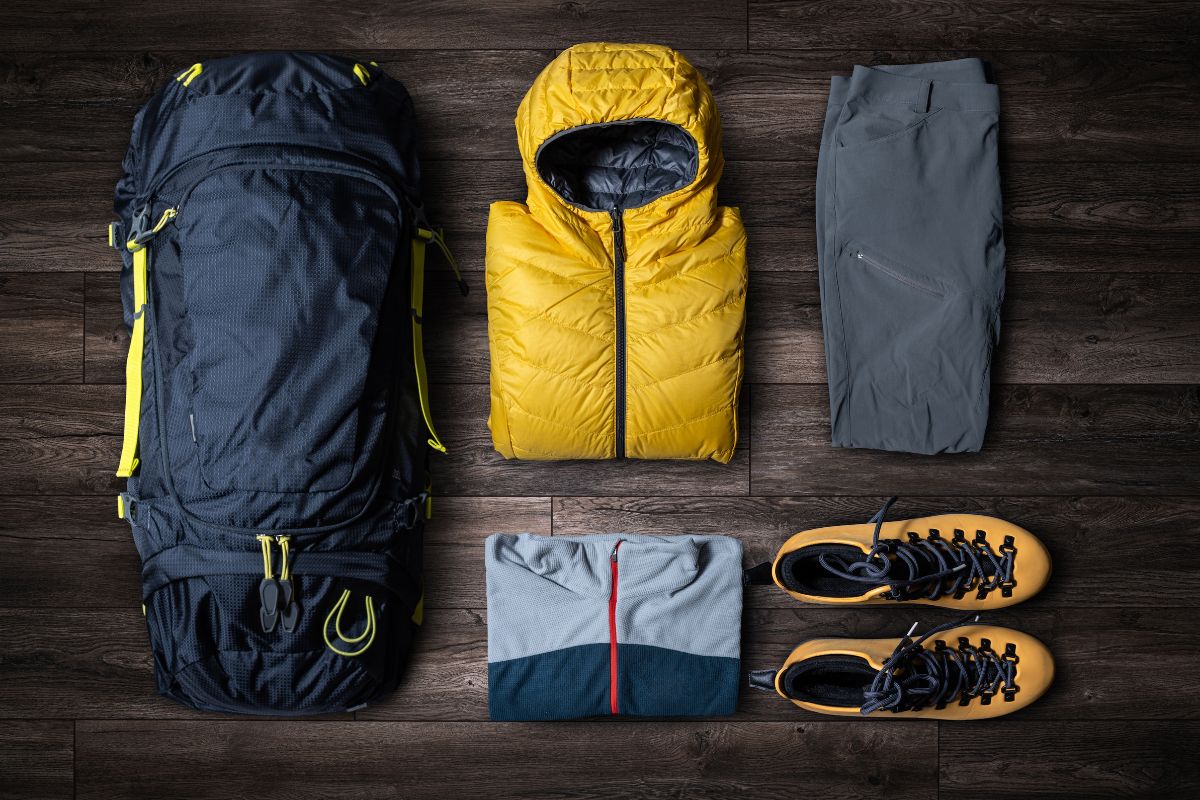
For 1 to 2 people on a short self-sufficient trip, the kit local hikers recommend most is a screw-on gas canister stove like an MSR Pocket Rocket or Soto Windmaster (80-100 g, €50-70), a titanium or anodised aluminium pot of 600 to 900 ml (100-180 g, €30-60), a 230-gram gas canister (380 g full, €6-8 at a Reunion Island sports shop) enough for 10-15 hot meals or 2-3 days, an insulated stainless steel mug of 250 ml (80-120 g, €15-25) and a titanium or nylon spork (10-30 g, €5-15). A compact multi-tool knife such as an Opinel No. 7 or Victorinox Climber rounds out the set. That's around 450-500 grams without gas, which fits easily in a 40-50 litre pack. Experienced hikers save a few dozen grams more with a collapsible cup instead of a rigid pot, or by splitting the gear between two packs. One practical point: you can't fly with gas canisters, so buy them on arrival. In Reunion Island they're sold at GO Sport and Decathlon Saint-Pierre, and can sell out during the school holidays.

Key takeaway: A 450-500 g kit: Pocket Rocket stove, 600 ml titanium pot, steel mug and spork. Buy gas locally
Hydration

Water: the main reason people give up on a tropical trek

Dehydration shows up late, often when it's too late to recover that day. Headaches, reduced alertness, cramps, heavy fatigue: all signs that appear one to two hours after the critical threshold. Local guides' rule of thumb: drink a quarter of a litre every 30 to 40 minutes, even without feeling thirsty, paired with a pinch of salt and a lemon wedge on long efforts.

In Reunion Island, the remarkable rainfall in the Hauts (over 4 metres a year on the central massifs) feeds a dense network of springs and small streams, most of which are safe to drink once filtered or treated. The public water supplies at Mafate's inhabited îlets, fitted with taps, deliver water reputed to be drinkable. You rarely need to start with more than 2 litres, as long as you mark the day's water points on the IGN map before setting off.

Three treatment options local hikers swear by: a Sawyer Squeeze pump or gravity filter (€100-130, a 1 L/minute flow rate, a near-unlimited lifespan), DCCNa chemical tablets such as Micropur or Aquatabs (1 tablet per litre, a 30-minute wait, about €10 for a box of 50), a Lifestraw Go or Grayl filtering bottle (€50-70, instant treatment while drawing water). For long efforts, add an electrolyte tablet or a spoonful of powdered isotonic mix per bottle.

A blue hiking water bottle filled at a spring flowing over a tree trunk in green moss, hydration in nature
Local know-how

6 things that change how you plan food in Reunion Island

Wild camping in Mafate, half-board in gîtes, the Piton des Neiges and Bélouve mountain huts, shopping on the coast, water at altitude and all-inclusive guided hikes: what makes trekking here different, and how to plan for it.

Wild camping in Mafate: fully self-sufficient

Mafate has no roads, so you need all your food for 2 to 5 days. There's nowhere reliable to restock apart from the inhabited îlets (hamlets: La Nouvelle, Marla, Roche Plate, Aurère, Grand Place), which have a few half-board gîtes (mountain guesthouses). Wild camping is regulated in the national park: only from 6pm to 9am, in certain marked zones. Plan every meal for the whole loop, plus a spare day. Mafate is where food weight matters most, and where freeze-dried meals make the biggest difference.

Half-board in a Mafate gîte: the easy option

The 5 inhabited îlets offer gîtes in dormitory rooms or private huts, half-board from €35-45 per person. That covers a Creole dinner and breakfast; lunch is up to you. On a 3-day crossing, staying in gîtes saves 1 to 1.5 kilos of food and gets you home-cooked local dinners (sausage rougail, a spicy tomato stew, chicken carri, lentils) that no freeze-dried meal can match. Add a picnic lunch for the day (sandwich, dried fruit, hard cheese) that you carry from the morning's gîte.

Caverne Dufour and Bélouve mountain huts

On the ascent of Piton des Neiges, the Caverne Dufour mountain hut offers dinner and breakfast half-board for around €40-50 depending on the period, and must be booked online through the forestry office (ONF) partners. The same goes for the Bélouve hut, a base for the Trou de Fer hike the next morning. The huts are staffed in the tourist season, so you don't need to carry gas or dinner for the first night: a real game-changer on short 2-day ascents.

Water at altitude: reliable sources and places to avoid

Springs in Reunion Island's Hauts are generally of remarkable quality, fed by rainfall exceeding 4 metres a year on the central massifs. Mafate's îlet water supplies (public taps at the inhabited îlets) deliver water reputed to be drinkable. In the wild, the springs of Bébour-Bélouve, Grand Bénare and the south-west plateaus are reliable once filtered. Places to avoid: streams downstream of grazing areas (a few farms in the western Hauts), stagnant puddles and dead water on low-altitude trails where the risk of leptospirosis persists. Never drink water that looks questionable or stagnant without full treatment.

Where to buy trekking food in Reunion Island

The Decathlon Saint-Pierre, GO Sport Saint-Denis and Run Adventure Saint-Gilles chains hold the island's best-stocked trekking aisles: Trek'n Eat and MX3 freeze-dried meals, energy bars, gas canisters, Sawyer filters, Micropur tablets. For cheaper homemade rations, grocery shops in Saint-Paul, Le Port and Saint-Denis (the towns closest to Mafate) sell the basics: rice, lentils, pasta, dried fruit, semolina, Victoria pineapple and local honey. The weekend street markets (Saint-Paul on Friday-Saturday, Saint-Pierre on Saturday morning) give access to local dried fruit and lychees when in season. Shop 24-48h before you set off so you don't get caught without gas.

Guided hikes: everything taken care of

For anyone who doesn't want the hassle of putting together rations, guided day hikes (Bélouve, Cilaos, the Volcano, Mafate) almost always include the packed lunch prepared by the guide, filtered water for the day and shared cooking gear if bivouacking. Rates start at €50-67 per person for a day, meals included. On 2-3 day formats with a night in a gîte, half-board is included in the price and the guide handles the shopping. It's no compromise at all if you're new to hiking in Reunion Island or want to try it before investing in your own gear.

Let someone else do the planning

Guided hikes that handle the food and water

Four guided hikes on Reunion Island's classic trails, from €50-55 per person with meals included. If you'd rather not deal with rations, gas, filters and washing up, a guided hike is hard to beat, and local guides also know the endemic plants, the route and the weather.

Guided packages almost always include the packed lunch, filtered water for the day and shared cooking gear when bivouacking. A good way to try it out before buying your own gear, or if you'd rather spend your trip walking than planning.

Sleeping out

Sleeping gear matters just as much

After food, sleeping gear is the best place to save weight. For Mafate and high-altitude bivouacs, a lightweight 1-2 person tent (1 to 2 kilos), a synthetic 0/+5°C sleeping bag and a self-inflating mat cover overnight needs for 2-3 kilos combined.

If you want to camp legally in the national park, the rules are strict: only from 6pm to 9am, only in marked zones, and following the Leave No Trace food and toilet rules on this page. Otherwise, a Mafate gîte or a staffed mountain hut is the way to go.

A hiker making their way through the Mafate cirque with a loaded backpack, a ridge trail on the ramparts, Reunion Island
Going further

6 more guides to plan your trek

Gear, apps, routes, summits and crossings: related articles to finish planning your Reunion Island trek, self-sufficient or guided.

FAQ

Trekking food in Reunion Island: your questions answered

12 questions from hikers planning their first self-sufficient trek or their first Mafate crossing.

How many calories should I plan for per day trekking in Reunion Island?+

Plan for 3,000 to 4,500 kilocalories a day for an adult hiker on Reunion Island's trails, which rack up significant elevation gain (800 to 1,500 m per stage on Mafate or the three-cirques crossing). Intake should be split between complex carbohydrates (50 to 55%), healthy fats (30 to 35%) and proteins (15 to 20%). For long efforts (over 6 hours of walking), supplement with fast sugars roughly every 1h30 (dried fruit, fruit pastes, energy bars).

How much does a day's food weigh on a trek?+

For a self-sufficient hiker, aim for 600 to 800 grams of dry food per day. That covers breakfast (oat flakes, powdered milk, coffee), a dry lunch (dried sausage, hard cheese, crispbread, dried fruit), a freeze-dried dinner and snacks. On a 3-day trek, the pack holds about 2 kilos of food at the start, dropping to 600 g on the last morning. After clothing and sleeping gear, food is one of the easiest places to save weight.

What freeze-dried food can I buy in Reunion Island?+

Decathlon Saint-Pierre holds the best-stocked aisle: Forclaz (the in-house brand), MX3, sometimes Trek'n Eat. GO Sport Saint-Denis and Run Adventure Saint-Gilles stock a few more. For other brands (Voyager, Adventure Food, Lyophilise.fr), bring them from home or order online 2-3 weeks ahead (they ship from mainland France). Expect €8 to €14 a pouch for 500-700 kilocalories. Shelves can empty during the school holidays, so buy 48h before you set off.

Is spring water drinkable in Reunion Island?+

The springs of the Hauts (Bébour, Bélouve, Grand Bénare, the high plateaus) are generally of remarkable quality. Public water supplies at Mafate's inhabited îlets (taps at the îlets) deliver water reputed to be drinkable. In the wild, filtering or chemical treatment is the minimum precaution (Sawyer Squeeze, Micropur DCCNa tablets). Never drink stagnant water, puddles or streams below grazing land. Leptospirosis is present in Reunion Island: the risk is low but real in low-altitude water.

Do you need a guide for a trek in Mafate?+

It isn't compulsory if you're comfortable reading an IGN map, navigating and managing your gear. The cirque's trails are well waymarked (the GR R2 and other official routes), and the inhabited îlets are signposted and welcoming. A guide is still recommended for a first crossing, both for safety (weather, water points, emergencies) and for the local insight (meeting residents, understanding the endemic plants). Guided Mafate packages start at €55 per person for the day, meals included.

Which stove should I choose for a trek in Reunion Island?+

A screw-on gas canister stove such as an MSR Pocket Rocket 2 or Soto Windmaster is the standard: 80-100 grams, piezo ignition, frugal and reliable. Expect €50-70 for the stove, €6-8 for the 230g canister at a local sports superstore. One canister covers 10-15 hot meals, or 2-3 days for 2 people. Gas canisters can't go on a plane, in the cabin or the hold, so you'll have to buy them in Reunion Island.

Can you light a fire to cook?+

No, fires are strictly banned throughout Reunion Island's national park, which covers 40% of the territory including Mafate, Salazie, Cilaos, Piton de la Fournaise and the Bébour-Bélouve primary forests. The fire risk in the dry season is very high, and accidental fires have caused serious damage (the 2010 Maïdo fire burnt 800 hectares). Cook only on a gas stove, on stable ground and never under dense vegetation.

How do you wash up without polluting?+

For personal washing, use a biodegradable soap such as Dr Bronner or Marius Fabre, wash at least 50 metres from a stream or spring, rinse with water collected in a container. Washing up follows the same rules: rinse the pot with water alone, finish with a dry sponge, scatter the rinsing water at least 50m from a spring, never pour it directly into a stream. Solid leftovers (crumbs, grains) go in the bin bag, not on the ground.

What's the difference between freeze-dried and dehydrated?+

Freeze-drying (a cold vacuum sublimation process) removes water from food while preserving 90-95% of nutrients and flavour. Classic dehydration (hot drying) removes water more simply but alters texture and some heat-sensitive nutrients more. Freeze-dried food rehydrates in 5-10 minutes with hot water and keeps a texture close to fresh. Dehydrated food needs longer soaking and gives a more altered texture. Freeze-dried food is two to three times more expensive.

What food works for a vegetarian trek in Reunion Island?+

There are plenty of options if you plan ahead. Vegetarian freeze-dried meals (Trek'n Eat lentil curry, MX3 mushroom risotto, Forclaz vegetable semolina), pre-packed dried pulses (lentils, chickpeas, kidney beans) to cook with a bit of stock cube, hard cheeses (Comté, Parmesan), nuts (almonds, cashews, walnuts) which provide protein and healthy fats. For vegans, add plant protein powder (pea, rice) and nutritional yeast for vitamin B12. All Mafate gîtes offer a vegetarian option on request when booking.

How do you manage organic waste on a trek?+

Like all other waste: you carry it out. Fruit peel, meal leftovers, coffee grounds, tea bags: it all goes in the bin bag, not on the ground. The rule is strict because organic waste attracts rats and feral cats, invasive species that prey on Reunion Island's already fragile endemic wildlife. A banana peel that would be harmless in your compost at home does real damage in a closed island ecosystem. Keep a 30-40L bin bag at the bottom of your pack and take it back to the gîte or down to the coast for recycling.

Are salt and electrolytes necessary?+

Yes, on long days in tropical heat. Sweating can reach 1 to 2 litres an hour on rampart climbs in full sun, with significant mineral losses (sodium, potassium, magnesium). Powdered isotonic drinks (Isostar, Overstim's, Decathlon's Forclaz brand) mixed into your bottle solve the problem for €1-2 a day. A cheap homemade alternative: add a pinch of salt and a squeezed lemon wedge to 1L of water, plus a bit of honey or sugar for long efforts. Cramps at the end of the day often signal a lack of electrolytes.

You're on Sous Les Étoiles 974

An independent guide to Reunion Island's activities, places to stay and hikes. To prepare a trek or a nature-focused trip, browse the activity hubs, gîte accommodation and guided packages from €50.

Page updated on 6 November 2026.