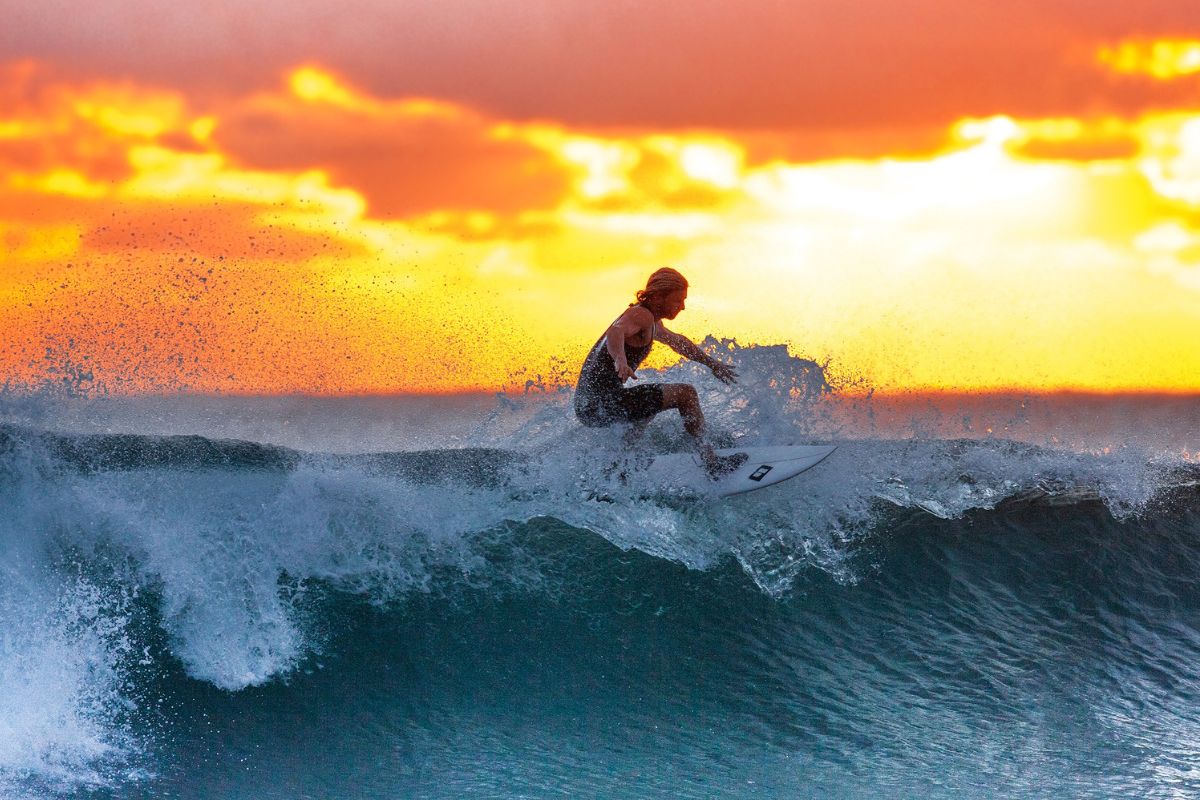
Can you surf in Reunion Island in 2026?+
Yes, but only in zones watched by the Réseau Vigies of the Centre Sécurité Requin (CSR, the shark safety centre). Which spots are open changes with the weather, visibility and sea conditions, and they're marked with a flag on the beach. Everywhere else, surfing is still banned under an order renewed every year since 2013. Surf schools work within the authorised zones and provide the compulsory supervision for beginners.
Which surf spots are currently open in Reunion Island?+
Several spots open under the Vigies and drone system: Saint-Leu (the famous left, venue of the 2024 Open de France), Pointe au Sel, Trois-Bassins, Étang-Salé (a beach break with surf schools) and Pointe des Aigrettes. Openings change daily with the weather, wind and the Vigies' schedule, so check the CSR website and with local clubs before every session.
What are the swimming rules in Reunion Island?+
The current order bans swimming, surfing, bodyboarding, kitesurfing and most water sports outside protected areas, which are: the coral lagoon (from the Hermitage to Saint-Pierre, behind the reef), beaches with shark nets (Boucan Canot, Roches Noires, Étang-Salé) and zones watched by Vigies and drones. The rule mainly applies to the west and south coasts, where the shark attacks happened. The north-east coast and inland areas aren't affected.
How many shark attacks have been recorded since 2011?+
Around 24 attacks between 2011 and 2024, 11 of them fatal, according to the CSR's public figures. They became much rarer once the monitoring systems and the ban on swimming outside protected areas were introduced. The most recent fatal attacks were in 2017-2019. Most victims were surfers and bodyboarders in open water outside supervised zones, on the west and south-west coasts.
What exactly is the Réseau Vigies?+
The Réseau Vigies is a shark-watch system run by the Centre Sécurité Requin (CSR). Trained spotters on stand-up paddleboards patrol a set area of water, backed by a team on land and drones overhead. They report anything suspicious and have the water cleared immediately. When they're on duty, surfing, bodyboarding and longboarding are allowed in the zone, weather and visibility permitting. It's this system that has let competitions and surf schools gradually return since 2018-2020.
What's the future of surfing in Reunion Island?+
Local players (the Ligue Réunionnaise de Surf, the CSR, the regional authority and politicians) want Reunion Island back on the international competition calendar every year, with the stated aim of making it a leading surf destination in the Indian Ocean by 2030. The return of the Open de France in May 2024 was a milestone. Questions remain over extending the authorised zones, keeping the safety systems funded and the public debate over targeted fishing.
Do you need supervision to surf in Reunion Island?+
Yes, in the regulated zones: to surf a spot opened by the Vigies, you either go with a federation-approved club or school, or follow the supervision rules posted on site. Beginners must go through a school. Experienced surfers going it alone need to know the rules and stick to the opening hours. Check with the LRS and the CSR before every session.
Are surf schools resuming their activities?+
Yes, gradually since 2018-2020. Several schools have reopened in zones supervised by Vigies, particularly at Étang-Salé and Saint-Leu. They offer taster lessons (€40-90 a session), improver courses and lessons for children. École de Surf de la Réunion runs lessons most regularly at Saint-Leu (see my surf lessons page). Check that the school is approved by the French Surfing Federation (FFS) and works within the Vigies system. Schools give real-time updates on when zones are open.
What's the difference between an anti-shark net and the Réseau Vigies?+
A shark net is a fixed barrier anchored to the seabed that encloses a swimming area (Boucan Canot, Roches Noires, Étang-Salé). It makes swimming safe but doesn't cover surfing, which happens beyond it. The Réseau Vigies is a mobile team of spotters who watch an area of open water in real time, so surfing, bodyboarding and longboarding can take place under active supervision. The two work together.
Does the targeted fishing programme work?+
The programme, run by the CSR since 2014, is regularly assessed by scientists. Public figures show a marked drop in incidents since 2017-2019, but how much of that is down to fishing, the Vigies or the swimming bans is still debated, and the programme itself is controversial (methods, ethics, impact on target and non-target species). Judging it is a matter for local public debate.
Are there still beaches where you can swim without restriction?+
Yes, you can swim freely in the coral lagoons. The Hermitage, La Saline-les-Bains, Trou d'Eau, Saint-Pierre and parts of Saint-Leu have a lagoon protected by the reef, too shallow for sharks to enter. This is the island's main area for unrestricted swimming, along with the netted beaches (Boucan Canot, Roches Noires, Étang-Salé).
Has the shark crisis affected tourism?+
Yes, indirectly, though it's hard to separate from other factors. Visitor numbers at the west coast's famous beaches fell sharply in 2013-2015 as news of the swimming restrictions spread, and tourism shifted towards the Hauts (the mountainous interior: hiking, the cirques, Piton de la Fournaise) and nature tourism. With the safety systems in place and fresh promotion by the island's tourist board (IRT), numbers have been rising again since 2020 and passed pre-pandemic levels in 2023.