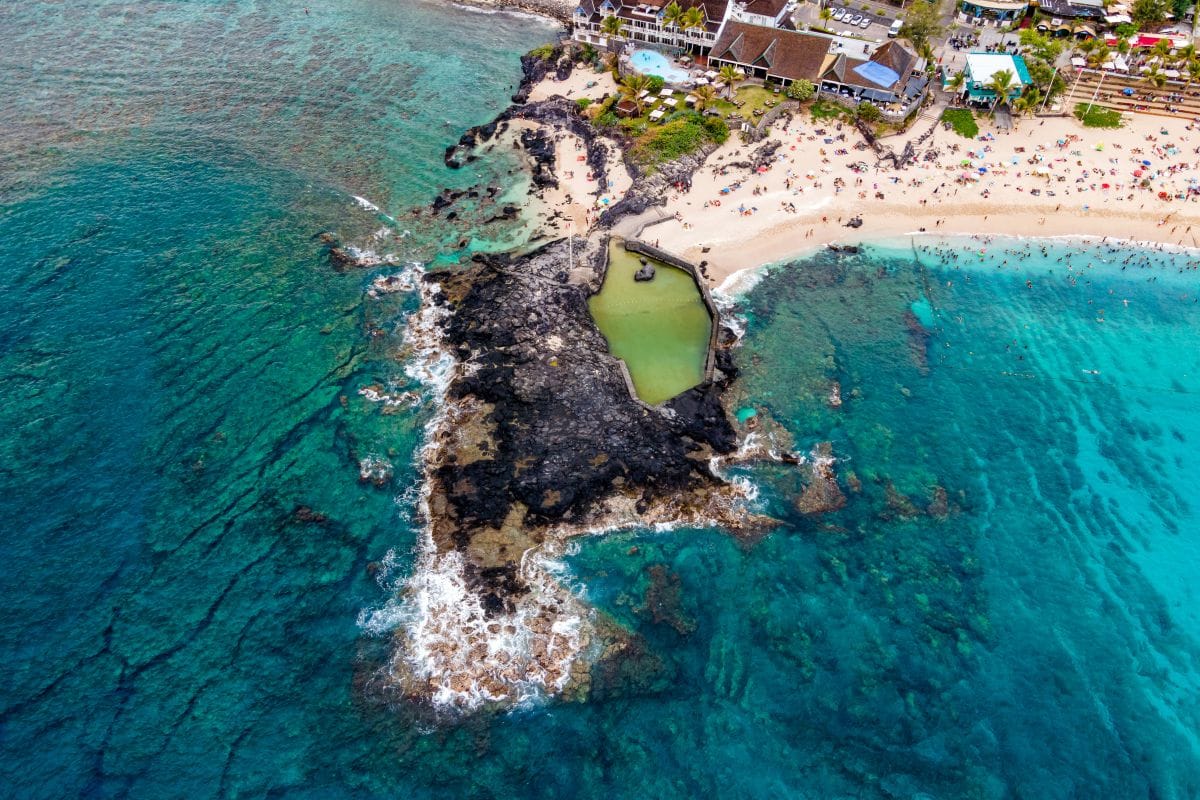
Saint-Paul Market, Reunion Island: 300 stalls by the sea
The island's largest street market, stretching over a kilometre along the Saint-Paul quay. Friday from 8am to 5pm and Saturday from 8am to 12pm. Think exotic fruit, Bourbon vanilla, raffia bags and hot samosas. Here's everything you need: hours, parking, the market's 4 sections and 5 Agoda hotels nearby.
300 stallholders2 days a week1 km of quayFree entry and parking
Quick facts
The Saint-Paul market in 8 numbers
Open days
Friday and Saturday
Friday hours
8am to 5pm, a full day
Saturday hours
8am to 12pm, morning only
Number of stallholders
About 300 stalls
Location
Seafront, Saint-Paul bay
Length
Over a kilometre along the quay
Specialities
Exotic fruit, spices, crafts
Status
Reunion Island's largest street market
Saint-Paul's street market is Reunion Island's largest, both in number of stallholders and in length. Set on the seafront of Saint-Paul bay, it runs on Friday for a full day and on Saturday for the morning. Around 300 stalls sell exotic fruit, Creole crafts, takeaway food and medicinal plants. It's one of the best places to get a feel for local culture, meet growers from the Hauts (the island's highlands) and buy souvenirs that mean something. Below: the 4 sections, practical tips and 5 Agoda hotels nearby.
4 sections to explore
Fruit, crafts, food and spices
The market is split into four main themed sections, aisle by aisle. Here's what each one sells, rough prices and what to look out for.
Area 1
Exotic fruit and vegetables
Type: Local produce
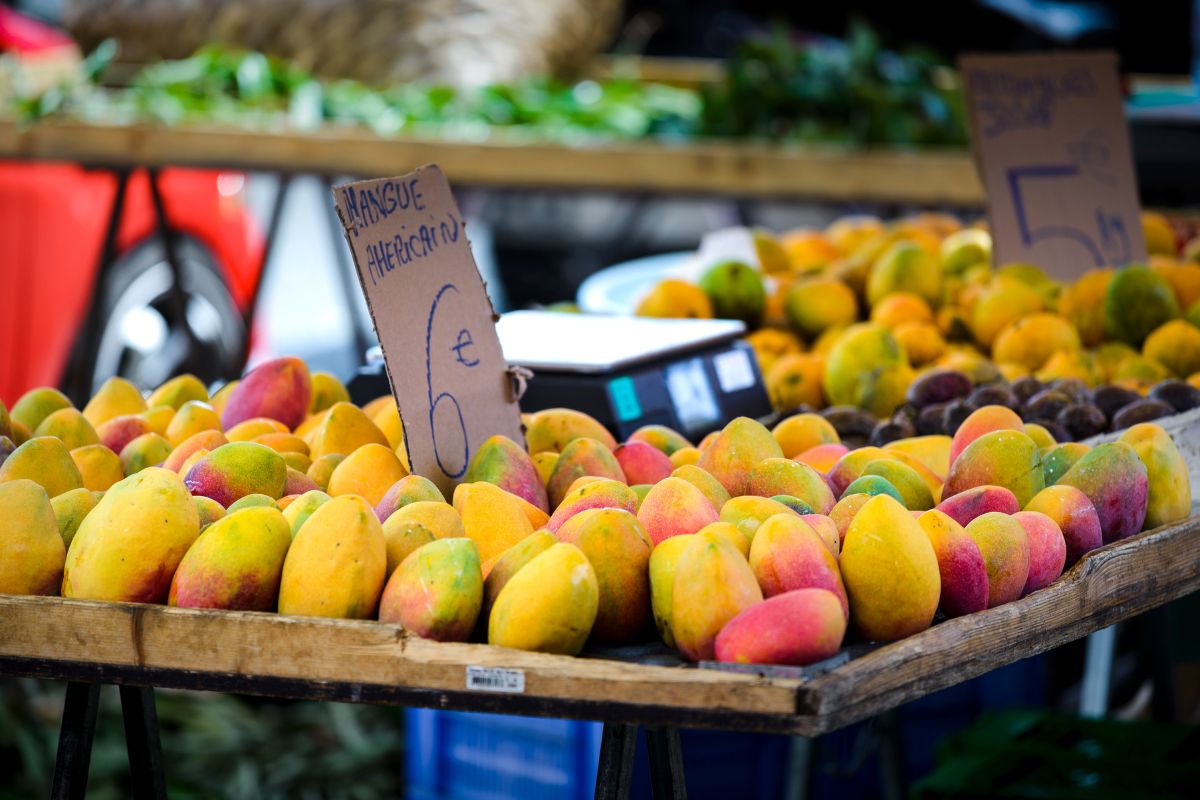
Fruit stalls fill the market's north entrance. Depending on the season, you'll find bunches of lychees from November to January (€4-6 a kilo in peak season), José mangoes from October to March (€5-8 a kilo), Victoria pineapples year-round, passion fruit, papayas, guavas in March-April, plantains. For vegetables: chouchous (chayotes) from the Salazie cirque, songes (taro), brèdes (leafy greens), fresh ginger, turmeric and local chillies. Growers sell direct, and prices beat the supermarkets.
Best for: The liveliest aisle, best first thing in the morning
Area 2
Creole crafts
Type: Basketry, jewellery, clothing
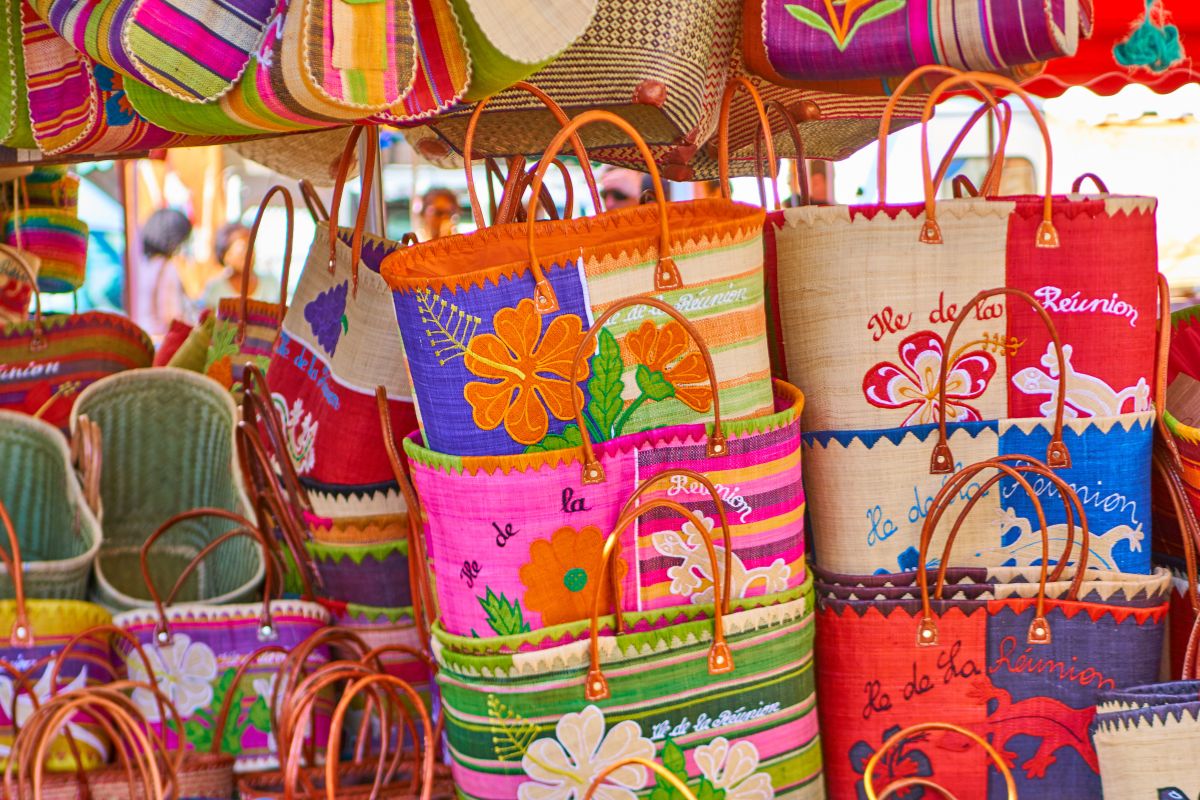
The craft aisle runs through the middle of the market. Embroidered rabane bags (€15-35 depending on size), vacoa-leaf baskets, straw hats, jewellery made from red pea or jackfruit seeds, and printed sarongs. Sarongs and bags in the island's colours are the most popular souvenirs. Cilaos embroidery, a craft handed down through a few workshops, is sold at a handful of specialist stalls. A little haggling is possible, especially late on Saturday morning.
Best for: The souvenir aisle, the place for gifts to take home
Area 3
Creole street food on site
Type: Snacks, samosas, bouchons
The food aisle runs along the seafront. Golden samosas (€0.80-1.50 each), steamed bouchons (Chinese-style dumplings adapted by Creole cooks), bonbons piment (chilli fritters), achards (spiced pickled vegetables), sweet potato cakes, cassava cakes. Hot takeaway dishes include chicken or fish carri (curry), sausage rougail (a spicy tomato stew) and venison stew in the hunting season. Several caterers offer full lunchboxes for €7-10, handy for a takeaway lunch on the nearby beach. A Friday lunch here is one of the cheapest meals you'll find on the west coast.
Best for: A cheap lunch that's easy to take to the beach
Area 4
Spices and local remedies
Type: Vanilla, turmeric, medicinal plants
Several spice and medicinal plant stalls are grouped in the central aisle. Bourbon vanilla in fresh pods (€8-12 for 4 pods depending on quality), fresh turmeric root or powder, fresh ginger, pink peppercorns, combava (Creole lime zest). There are spice blends for carri, rougail and Creole cake. For traditional remedies: periwinkle, pineapple-top and passion-flower teas, plus herbs for a bain démarié (a ritual cleansing bath) and for zembrocal. Stallholders happily explain the traditional uses, which are a big part of local culture.
Best for: The most fragrant aisle, buy Bourbon vanilla in pods
Preparing your visit
Six practical tips before you go
Hours, parking, what to bring, haggling, safety and how to make a day of it: six things to know before you head to Saint-Paul bay.
Opening hours and the best time to go
Friday from 8am to 5pm, a full day, so the crowds are spread out. Saturday from 8am to 12pm, a morning only, so it's busier. To avoid the crush, go on Friday between 8am and 10am, or on Saturday at 8am sharp. Late on Saturday morning some stalls start packing up, but prices drop on some fresh produce. The market doesn't reopen on Saturday afternoon.
Parking
Parking around the market is free but fills up fast: the main seafront car park is full by 9am on Saturday. Try the side streets or the Débarcadère car park, a 5-minute walk away. Without a car, the Car Jaune bus from Saint-Denis or Saint-Gilles stops right nearby. You can also cycle in from Saint-Paul, though there's no bike parking.
What to bring
A hat and sunscreen are essential, as much of the market is in the open. Bring a water bottle, especially in the southern summer (November to April), and a sturdy shopping bag or basket (or several if you're buying fruit and crafts). Carry small notes and coins: not every stallholder takes cards. A backpack is more practical than a handbag between the tightly packed stalls.
Haggling and prices
Prices are displayed or quoted per kilo. There's little room to haggle on fruit and vegetables, as margins are already tight. On crafts you can negotiate a little (10-15% off at most), especially if you buy several items or go late on Saturday morning. For spices and vanilla, compare 2-3 stalls first, as quality varies. Always smell vanilla before you buy: it should be supple and fragrant.
Safety
The market is generally safe and family-friendly. Pickpocketing has been reported at the busiest times, so wear your backpack on your front and keep your phone in a zipped pocket. There's no police post on site; the gendarmerie (police station) is 5 minutes away by car. Women travelling alone shouldn't have any particular concerns. With young children, bring a compact pushchair or a baby carrier, as the aisles are narrow.
Making a day of it
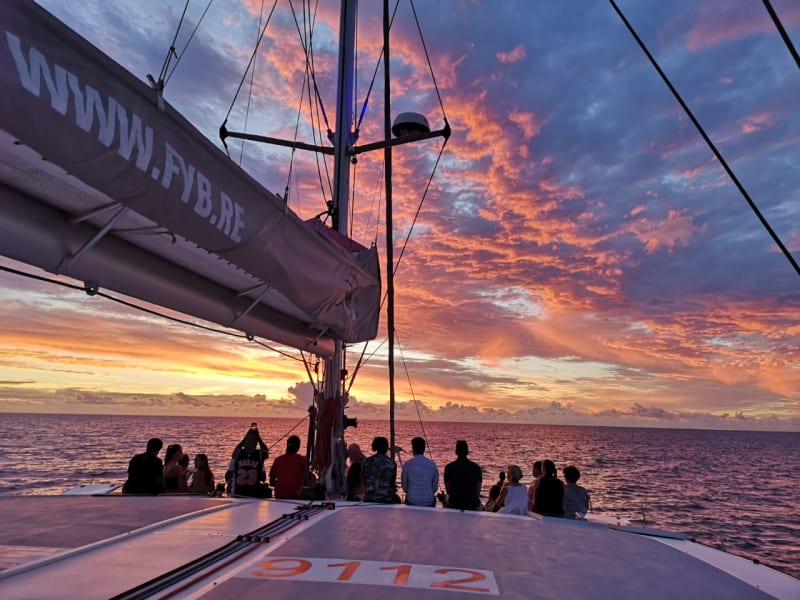
A classic day: the market in the morning (8am-11am), a picnic on the quay or at Boucan Canot beach (15 minutes by car), then a lazy afternoon at L'Hermitage lagoon. For culture, follow the market with Saint-Paul's seafront cemetery, where the 18th-century pirate Olivier Levasseur (known as La Buse) is buried. For the sea, add a catamaran cruise and dolphin watching from Saint-Gilles. For the mountains, drive up to the Maïdo in the afternoon.
Stay near the market
5 Agoda hotels near the Saint-Paul market
From a €50 guesthouse in La Saline to a €267 5-star resort in L'Hermitage: five Agoda hotels 15 to 25 minutes' drive from the market, all rated 8/10 or above with 51 to 353 traveller reviews.
La Saline-les-Bains9.5/10 (51 reviews)
Le temps d'une île
Guesthouse · the area's top rating
A 2-bedroom holiday home with a fitted kitchen, a sea-view terrace and private parking, 15 minutes by car from the Saint-Paul market. A personal welcome and a peaceful setting. The best-rated budget guesthouse on the west coast: 9.5/10 from 51 Agoda reviews.
A 3-star Qualité Tourisme-labelled residence, 21 solid-wood-furnished studios and 19 duplexes with a kitchenette. 20 minutes by car from the Saint-Paul market, 80 metres from L'Ermitage beach. A practical base for a 3-7 night stay that takes in the Friday market.
An 84-room 4-star hotel-residence on the lagoon front at La Saline-les-Bains. A spa with a hammam, the Coconut Grill restaurant, direct lagoon access. 25 minutes by car from the Saint-Paul market. An upmarket choice if you want hotel comfort as well as the market.
A 47-room 4-star hotel with Creole charm, perched on the volcanic rock of Boucan Canot. Exceptional Indian Ocean views, an outdoor pool, wellness treatments. 20 minutes by car from the Saint-Paul market. The upmarket sea-view option for combining the market and the beach.
A 174-room 5-star resort tucked into a 7-hectare tropical park, right on the beach at L'Hermitage. Creole architecture, 3 restaurants, a large pool, free kayak and snorkelling access. 25 minutes by car from the Saint-Paul market. The west coast's benchmark for luxury.
The market gives you a first taste of Creole flavours; a tasting session is the natural next step. Several operators run workshops on rhum arrangé (rum infused with fruit and spices), Bourbon vanilla, Bourbon Pointu coffee and traditional dishes. Half-day sessions, from €35 per person, round off a Friday market morning naturally.
Saint-Paul bay, its seafront cemetery and the market look particularly striking on morning flights. The full island tour follows the west coast before heading on to the cirques and the volcano. Four companies operate in Reunion Island, with 6 packages from €190 per person departing from Pierrefonds or Saint-Gilles.
Saint-Paul on Friday, Saint-Pierre on Saturday, Hell-Bourg on Sunday morning: three markets in three days is easy in a campervan, with no need to keep changing accommodation. Yescapa connects local owners with travellers, from classic motorhomes to converted vans.
Creole tasting, a catamaran cruise from Saint-Gilles, clear kayaking at Trou d'Eau, guided snorkelling, a Maïdo-Mafate excursion and a helicopter flight: six ideas to round off a market morning.
Saint-Paul's street market is open on Friday from 8am to 5pm and on Saturday from 8am to 12pm. Friday is the full day; on Saturday it's mornings only and closes at midday. It isn't open on Sunday or other weekdays. The island's other street markets (Saint-Pierre, Saint-Leu) run on different days, so you can take in several during your trip.
How many stallholders are at the Saint-Paul market?
About 300 stallholders set up at the Saint-Paul market, making it Reunion Island's largest street market. The stalls sell fruit and vegetables, crafts, Creole takeaway food, spices and medicinal plants, plus a few clothes and accessories. The market stretches over a kilometre along the seafront, from Place du Débarcadère to Saint-Paul bay.
Where can you park to visit the Saint-Paul market?
Parking around the market is free but fills up fast, by 9am on Saturday, starting with the main seafront car park. Try the side streets or the Débarcadère car park, a 5-minute walk away. Without a car, the Car Jaune bus from Saint-Denis or Saint-Gilles stops right by the market.
What can you buy at the Saint-Paul market?
Exotic fruit depending on the season (lychees, José mangoes, Victoria pineapples, passion fruit), local vegetables (chouchous, songes, brèdes: chayotes, taro and leafy greens), Bourbon spices (vanilla, turmeric, ginger, pink peppercorns), Creole crafts (rabane bags, vacoa baskets, seed jewellery, sarongs), takeaway food (samosas, bouchons, curries, rougails). Local growers sell direct, with no middleman.
What's the best time slot to visit the market?
Friday between 8am and 10am, to avoid the crowds and enjoy the cool morning air, or Saturday at 8am sharp for the freshest fruit. Avoid Saturday between 10am and 11.30am, when the narrow aisles are packed. Late on Saturday morning (11am-11.45am), prices can drop on fresh produce that stallholders want to clear before closing.
Can you sample the specialities on site?
Yes, several caterers and snack stalls sell food to take away or eat on the benches along the quay: golden samosas (€0.80-1.50 each), steamed bouchons, chilli fritters, chicken or fish curry and sausage rougail, with hot lunchboxes at €7-10. A few stalls offer free tastings before you buy (vanilla, spices, achards).
Can you get around the market with a pushchair?
Partly. The main aisles along the quay are fine, but the inner aisles are narrow and the Saturday crowds make getting around difficult, so a baby carrier or compact pushchair is best. The market is completely flat, with no steps. Public toilets are available near the debarcadère.
Is there a covered market in Saint-Paul?
No, Saint-Paul's street market is entirely open-air, along the quay. A few stalls use tarpaulins or parasols for shade. If it rains, the market goes ahead but with fewer visitors. For a covered market, try Saint-Pierre's covered hall or Saint-Denis's partly sheltered market (Place Sarda-Garriga).
Can you haggle over prices at the market?
There's little room to haggle on fruit and vegetables, which are already cheap. On crafts (bags, sarongs, jewellery), you can usually get 10-15% off, especially if you buy several items or go late on Saturday morning. On spices and vanilla, comparing 2-3 stalls before buying works better than haggling. Vanilla should be supple, fragrant and show a few white crystals (a sign of quality).
Where can you stay near the Saint-Paul market?
The closest accommodation is in Saint-Paul town itself (a few guesthouses 10 minutes' walk from the market), then Boucan Canot, La Saline-les-Bains and Saint-Gilles-les-Bains (15-25 minutes by car). Guesthouses and aparthotels are the main options. For a trip combining the Friday market, the beach and water sports, L'Hermitage or La Saline is the best base. The 5 Agoda hotels above cover everything from budget to luxury.
What other markets can you visit in Reunion Island?
Saint-Pierre holds its street market on Saturday morning, comparable in size and variety, with a covered central hall. Saint-Leu offers a more intimate market on Wednesday and Saturday morning. Hell-Bourg in the Salazie cirque has a small, authentic Sunday-morning market with local produce (chouchous, fruit, honey). To take in several, plan a Friday in Saint-Paul, a Saturday in Saint-Pierre and a Sunday in Hell-Bourg.
Is the Saint-Paul market free to enter?
Yes, it's free to wander round, and nearby parking is free too (if you can find a space). You pay the stallholders directly. Cash is best for small amounts, as not all stalls take cards, so bring some €5 and €10 notes.