Piton de la Fournaise, off-trail on the Plaine des Sables, La Chapelle de Cilaos, Mafate via Îlet Cayenne and Trou de Fer at Bélouve: 5 hikes with a state-certified local guide, from €55, with full details and booking links.
From €55/person5 hikes testedOff-trail possibleState-certified
Quick facts
The basics on guided hikes
Number of hikes
5 guided hikes
Prices
€55 to €80/person/day
Duration
5 to 7h depending on the hike
Level
Easy to advanced
Minimum age
12 for most
Guides
State-certified
Ideal season
May to November
Booking
1-2 weeks ahead
If you want to explore the island on foot beyond the waymarked classics, a local guide changes everything: safety on exposed sections, places that aren't on the map, the story of the geology and culture, and a Creole meal in an îlet (hamlet). See also my top 10 self-guided hikes.
5 guided hikes
The guided hikes in detail
From easy family walks to advanced off-trail hikes, five outings covering the island's highlights, each with a link to book directly.
Piton de la Fournaise
Pas de Bellecombe, south-east
Duration: 6h round tripElevation: 500mLevel: IntermediatePrice: From €65/pers.
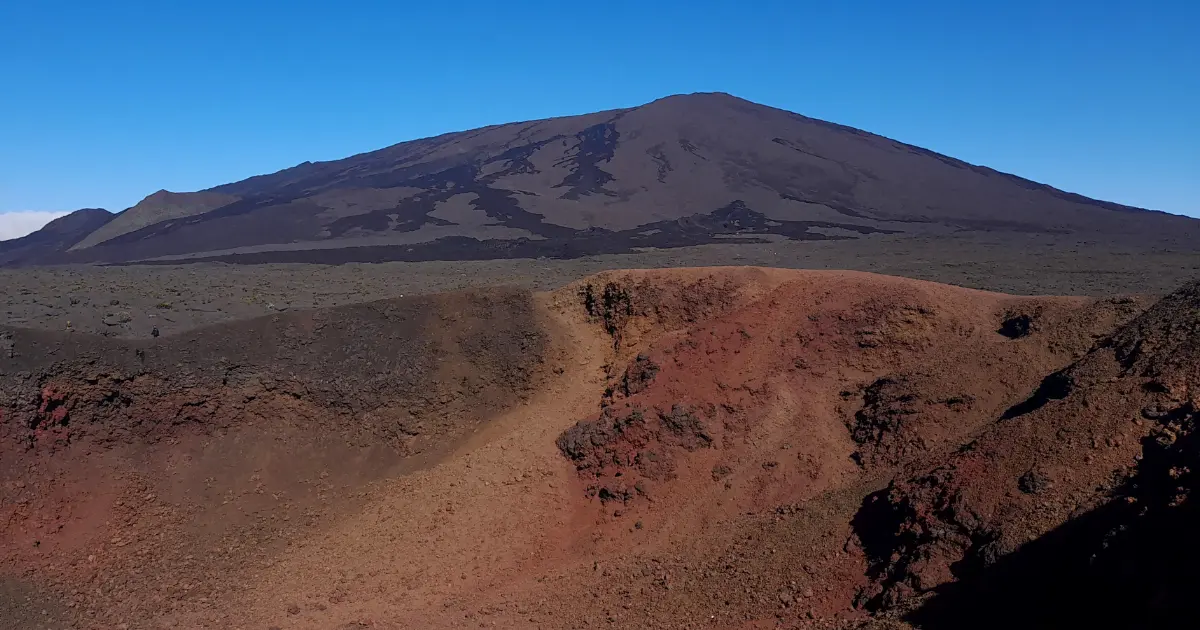
The unmissable one: down into the caldera from Pas de Bellecombe, across solidified lava to Formica Léo and on to the Dolomieu crater if conditions allow. The guide explains the geology, points out the different lava flows and keeps you safe on exposed sections. Ideal if you want to really understand one of the world's most active volcanoes.
Key takeaway: Geology explained on the spot, and safety in the caldera
Duration: 7hElevation: 650mLevel: AdvancedPrice: From €75/pers.
The sporty, offbeat option: an off-trail walk across the Plaine des Sables, a Martian landscape at 2,200m. The guide sets the route according to the weather and conditions, taking you to places you wouldn't find on your own. For anyone who has already done Formica Léo and wants to go off the beaten track.
Key takeaway: Off the official trails, a Mars-like landscape, a tailor-made route
Duration: 5h round tripElevation: 550mLevel: IntermediatePrice: From €65/pers.
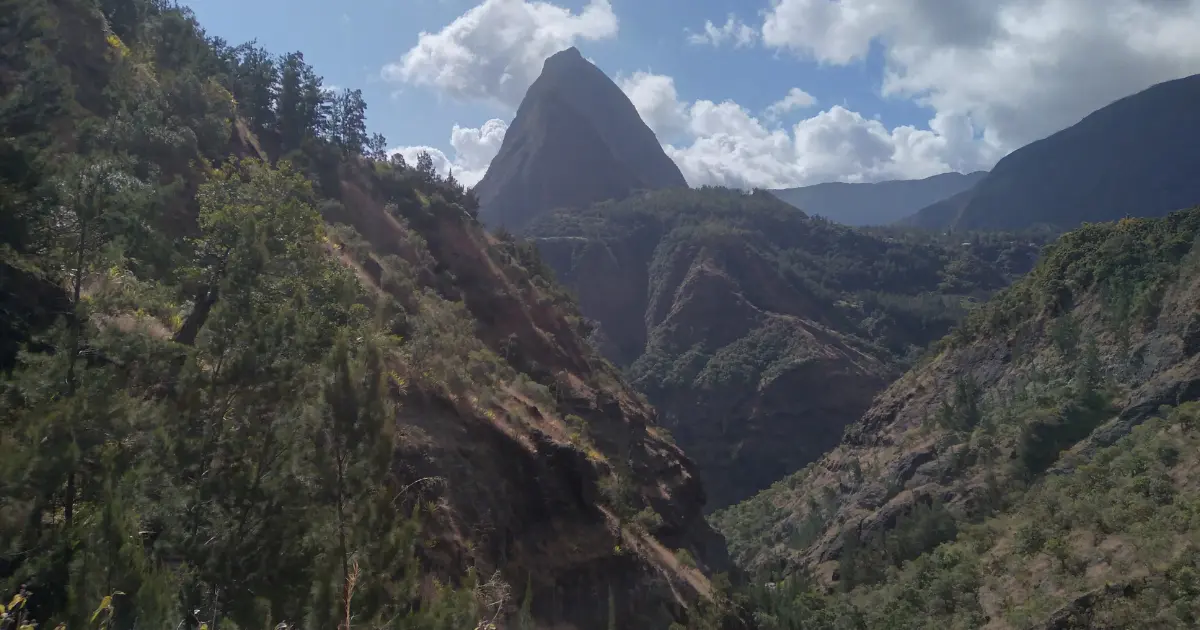
The climb to La Chapelle, a remarkable rock formation in the heart of the Cilaos cirque. The trail is exposed in places, with handrails on some sections and sweeping views of the ramparts (cirque walls). The local guide knows the best rest stops, the carved rocks and the history of Cilaos's maroons (runaway slaves). For hikers who want more than the very touristy Roche Merveilleuse.
Key takeaway: A unique rock formation steeped in maroon history
Duration: 6hElevation: 550mLevel: IntermediatePrice: From €80/pers.
Into the roadless cirque from Rivière des Galets, climbing up to Îlet Cayenne, one of Mafate's most authentic hamlets (îlets). You meet the locals and can have a Creole meal in the îlet. The guide shows you a Mafate away from the main tourist trails. For anyone who wants to discover the soul of the cirque, not just its postcard views.
Key takeaway: A quiet way into Mafate, meeting the people who live there
Duration: 5h round tripElevation: 170mLevel: Easy, family-friendlyPrice: From €55/pers.
The most accessible of the five: a forest trail through the Bébour-Bélouve primary forest to the Trou de Fer viewpoint, a 300m chasm fed by 7 waterfalls. Wooden boardwalks cross the wetlands, tree ferns everywhere: an enchanted-forest atmosphere. Ideal for families with children from age 8.
Key takeaway: Trou de Fer and primary forest, great for families
The island has hundreds of kilometres of waymarked trails you can walk on your own. So why pay for a guide? Here's what really changes.
Safety on committed terrain
The volcano's caldera, off-trail on the Plaine des Sables, exposed sections at La Chapelle de Cilaos: a state-certified guide assesses the conditions, chooses the route and gets you safely through risky sections. They carry a first-aid kit, know how to handle a medical problem and know the evacuation routes.
Places you won't find on the map
Private forest tracks, rarely visited Mafate îlets and off-trail sections of the Plaine des Sables. Local guides have the permits and contacts to take you where you couldn't go alone. If you're back on the island or want more than the big classics, this is the way in.
Learning as you walk
Volcanic geology, endemic plants and wildlife, the history of slavery and the maroons, the Creole language and Reunion Island culture. The guide tells the story of each place as you walk, which no information board ever could, and those stories transform the whole experience.
No logistics to worry about
You meet at your hotel or in the village, transport to the trailhead is included on some packages, and you're brought back at the end of the day. No GPS, no stressful driving, no risk of missing the weather window: you just walk.
A Creole meal along the way
Several guides include or offer a proper Creole meal: a picnic in a Mafate îlet, a home-cooked table d'hôtes dinner at a local's house, or a hamper with green mango and smoked pork. The hike becomes a food experience too, not just a supermarket sandwich.
Gear to bring
What to bring
The guide provides shared gear (a first-aid kit, GPS, a backup head torch). Your own gear is up to you.
Hiking boots with ankle support
Stony trails, abrasive volcanic rock and damp sections call for boots with a grippy sole and ankle support. Avoid trainers and sandals for anything over 2 hours.
Clothing suited to altitude
A breathable T-shirt, a fleece and a waterproof, windproof jacket, plus zip-off hiking trousers. In the mountains (the volcano, the cirques), bring gloves and a woolly hat in the southern winter (May to September), when nights at 1,500m are cold.
A 20-30L backpack
Water (2L minimum), energy snacks, a rain poncho, sunscreen, a head torch, a personal first-aid kit. The guide provides the group first-aid kit and certain accessories (gloves for rough terrain, poles on request).
Proper sun protection
SPF 50 sunscreen, category 3 or 4 sunglasses and a hat or cap. The tropical sun burns fast, especially at altitude where the air is thinner (2,500m at the volcano, 2,200m on the Plaine des Sables).
Where to stay by hike
4 Agoda hotels by departure area
Cilaos, Plaine des Cafres, Plaine des Palmistes, Saint-Gilles: 4 Agoda hotels close to where these guided hikes start.
Cilaos9.2/10 (122 reviews)
KOM LA KAZ
A guesthouse in the heart of Cilaos village, ideal for the guided La Chapelle hike, with a warm Creole welcome, a well-regarded home-cooked dinner and secure parking.
Guesthouse rooms in the Hauts (highlands), ideal before the guided volcano hike. 20 min from Bourg-Murat and 40 min from Pas de Bellecombe, the trailhead.
Apartments 5 minutes from Saint-Gilles marina, a good base for guided hikes from the west (Maïdo, Cilaos), with a handy kitchenette for when you get back.
Mafate, Trou de Fer, Piton de la Fournaise: the 3 most striking areas of these hikes can all be seen from a helicopter in under an hour. It's a great way to grasp the scale of the landscape, and to see waterfalls you can't reach on foot, before or after your hikes.
The Volcano on Monday, Cilaos on Wednesday, Mafate on Friday: three guided hikes in a week means moving around the island. A campervan lets you sleep close to the trailhead, start early and rest between hikes. Yescapa connects owners with travellers, with delivery at Roland-Garros airport. For anyone travelling light, the roof tents for hiking turn a regular car into a compact sleeping space.
Guided hikes in Reunion Island: your questions answered
How much does a guided hike cost in Reunion Island?
A half-day (4h): €35-50 per person depending on the operator. A full day (6-7h): €55-80 per person. Off-trail or with a night's camping: €80-120 per person. The price includes a certified guide and insurance, and sometimes a picnic.
What level is required for these hikes?
Bélouve and Trou de Fer: easy, accessible to families from age 8. Piton de la Fournaise, La Chapelle de Cilaos and Mafate via Îlet Cayenne: intermediate, so you need to be reasonably fit. Off-trail on the Plaine des Sables: advanced, with off-trail experience needed. For all of them, you should be comfortable walking for 5-7 hours.
Do you need to book long in advance?
In high season (July-August and the French and Reunion Island school holidays), book 2-4 weeks ahead. In low season (May-June, September-October), a week ahead is enough. Local guides have limited places, and some take groups of 4-8 at most.
What happens if the weather is bad?
The guide postpones the outing or suggests a less exposed alternative route. In a cyclone or red weather alert, it's always cancelled, with a full refund or a new date. In moderate rain it often goes ahead, with suitable gear (a poncho, spare clothes).
Can you hike without a guide in Reunion Island?
Yes, on the waymarked trails run by the forestry office (ONF): Roche Merveilleuse, Bélouve, the Maïdo, the classic Piton de la Fournaise route and Cap Méchant. The waymarking is good, IGN maps are available and the Randopitons app covers the network well. A guide becomes essential off the official trails, for technical climbs (to do Piton des Neiges safely) and for cultural insight.
Do the guides speak English?
All guides in Reunion Island speak fluent French, the official language, and most also speak Reunion Creole as their first language. Some speak English, so if you need an English-speaking guide, ask when you book.
What happens if you get tired or run into a problem during the hike?
The guide adjusts the pace, offers extra breaks, and in some cases shortens the route. For a serious medical problem or if the group gets stuck, they call the mountain rescue or emergency services (PGHM, SAMU) by radio or phone. All outings are covered by the guide's professional liability insurance; you need your own travel insurance for repatriation.
Can you do these hikes with children?
Bélouve and Trou de Fer: yes from age 8, an easy trail on walkways. Piton de la Fournaise and La Chapelle in Cilaos: from age 12 in practice, and they need to be reasonably fit. Mafate via Îlet Cayenne: also from age 12, with a fair amount of climbing and exposure. Off-trail on the Plaine des Sables: not recommended under 14-15.
How many people per supervised group?
4-8 people at most with independent guides who focus on quality, and 10-12 with some bigger operators. The smaller the group, the more you learn and the more flexible the route. For a more personal hike, ask for a maximum of 6 people when you book.
Do you need special insurance for a guided hike?
The guide's liability insurance covers the guiding itself. For your own medical costs and repatriation, you need travel insurance that covers hiking: check your policy (or any cover that comes with your bank card) before you go. For off-trail or high-altitude hikes, specialist trekking cover is recommended if your policy doesn't include it.
Can you combine several guided hikes in one stay?
Yes, and it's even recommended: the Volcano on Monday, Cilaos on Wednesday, Mafate on Friday for example, with recovery days in between. Many independent guides work together and can arrange several outings for you. Expect €200-400 for 3 outings over a week, spread out depending on the weather.