 hotel2 km

Wild south · Saint-Philippe
Puits Arabe, Saint-Philippe: an equipped historic site in the wild south
A 19th-century well built with Arab-Malagasy techniques, now one of the best-equipped camping sites in the wild south: toilets, shelters with BBQs, wheelchair access, a coastal trail over the lava flows.
Saint-Philippe, wild southlocationLava flows, casuarinas and oceansettingCar, on-site parkingaccessFreecost
Puits Arabe, on the south coast of Saint-Philippe, is a rarity: a site that's both historic and natural. The well takes its name from a construction technique reminiscent of the Arab navigators who once sailed the Indian Ocean. Originally called “Puits de Takamaka” until the 1970s, it's one of nine historic wells in the area, of which only three remain visible today.
This page covers everything you need to know before pitching a tent: access from the N2, the full range of facilities on site, safety near the sea, wheelchair accessibility, and nearby activities to combine it with (a lava tunnel, Pointe de la Table, a helicopter flight). If you'd rather not sleep in a tent, a campervan fits in the large car park, just steps from the shelters.
At a glance
The essentials for camping at Puits Arabe
The experience
A night by the ocean on the lava flows
Arrival. From the large car park, several short trails lead to shelters spread out under the filaos (casuarina trees). The site is one of the most welcoming in the wild south, with a level of comfort rare for the area: tables, fire spots, toilets. The contrast between the civilised facilities and the raw volcanic landscape is what gives the place its charm.
The setting. The site sits on old lava flows now colonised by filaos and pandanus. The colour contrast between the blue and white of the ocean, the black of the flows and the green of the vegetation is one of the most photographed in the south.
The historic well. You can visit the well itself, a rare testament to 19th-century hydraulic engineering in the wild south. An information plaque on site explains the context of its construction and its name.
Night. Expect the constant sound of waves breaking on the flows, and with minimal light pollution, an outstanding starry sky in clear weather. Insect repellent comes in handy early in the evening. The site stays fairly quiet on weekdays, and livelier on weekends.

The setting
Waves on the flows
The Puits Arabe coastline is volcanic and exposed: there's no beach, just lava platforms where the ocean breaks. When the swell picks up, waves surge up through the basalt cracks and burst into white columns. It's a photogenic sight, but one to watch from the safety of the shelters.
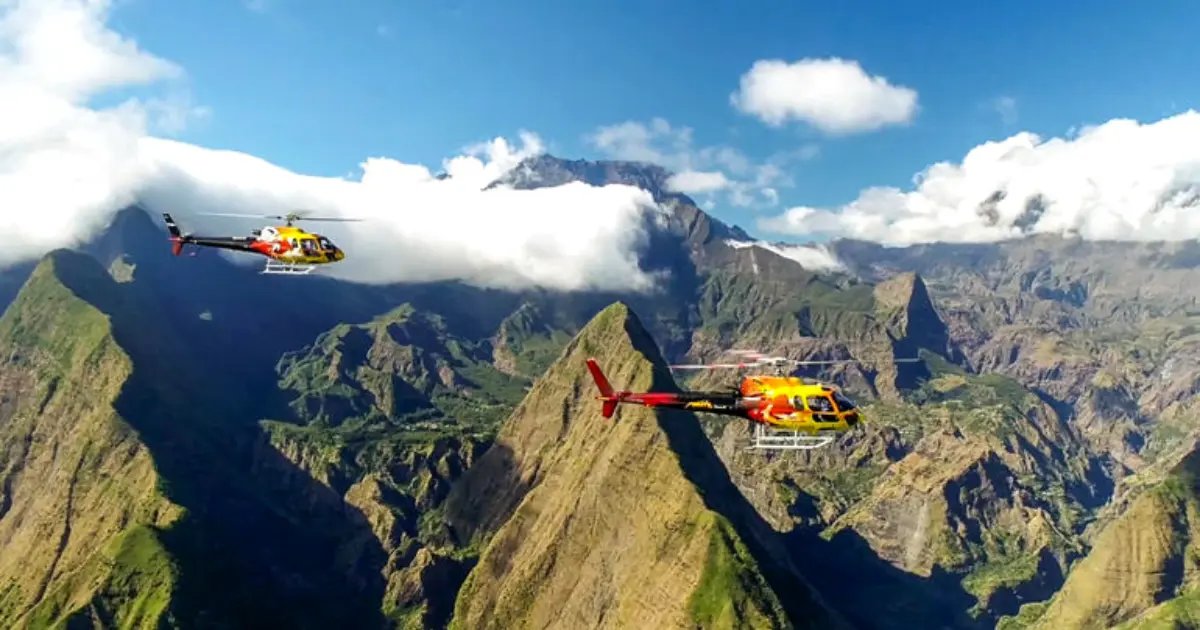
The whole area is even more striking seen from the sky. From above, you can make out the entire volcanic coastline of the south, from Saint-Philippe to Le Tremblet, and the active crater of Piton de la Fournaise beyond.
Route
How to get to Puits Arabe
From Saint-Philippe, take the N2 heading east. The site is signposted at the roadside, roughly halfway between Saint-Philippe and Le Tremblet. There's a large purpose-built car park.
The shelters are a short walk away, just a few dozen metres. The road is paved all the way and fine for any regular car. Fill up with fuel and buy supplies in Saint-Philippe, 15 minutes away.
With the car parked so close to the shelters, you can camp out of the boot: charcoal, stove and drinking water stay in the car until you need them. If you're hiring, pick a car with a big enough boot.
Backpack
What to pack for the night
- A wind-resistant tent: the south-east coast faces the trade winds constantly
- A sleeping bag rated to 12°C: nights by the sea stay mild year-round
- Rain gear: showers are possible year-round in the wild south
- Closed shoes with a grippy sole: the lava is sharp in places
- A head torch: only the car park is lit, and the camping area itself is dark
- Bottled water: the water point on site is untreated, so bring drinking water
- A portable gas stove, plus charcoal if you plan to use the BBQ shelters
- Bin bags: take everything back out with you, as the site sits in a fragile area
Read before you go
Dangerous sea, sharp lava
Swimming is dangerous at Puits Arabe: there's no beach, strong waves crash on the rocks, and currents are present. There's no designated swimming area. Stay well back from the edge when there's a swell, and watch children at all times.
The basalt edges of the flows are sharp in places: keep closed shoes on at all times, and watch your footing. Fires are only allowed in the BBQ shelters. Never light a fire near the filaos, as there's a risk of setting the pioneer vegetation alight.
To combine
Activities to do in the wild south

Piton de la Fournaise Lava Tunnel
Caving exploration through the volcano's lava flows, 15 minutes by car.
See the activity

Rafting on the Rivière des Marsouins
A raft descent of the east coast's main river, 1 hour by car.
See the activity

Bélouve and Trou de Fer Hike
A guided trail to the viewpoint over the island's tallest waterfall.
See the activity
 Also worth combining
Aerial view
Piton de la Fournaise and the Recent Lava Flows, Seen from the Sky
Puits Arabe gives you the wild south right at the level of the volcanic rocks. A helicopter flight opens up the bigger picture: it flies over the active Piton de la Fournaise and every historic lava flow that has reached the sea, from the wild south all the way to Le Tremblet.
8 routes departing from Saint-Pierre or Saint-Paul, from 15 minutes to 1 hour.
From €125 · 210 Manawa reviews · Saint-Pierre / Saint-Paul
See helicopter prices
Other spots
Other wild south camping spots
Pointe de la Table, Saint-Philippe
A neighbouring spot on the 1986 flow, wilder and with no facilities, 5 minutes by car.
See the spot
Puits des Français, Cap Méchant
A seafront spot in the wild south, another historic well in the area.
See the spot
Anse des Cascades, Sainte-Rose
Seafront camping with waterfalls and a coconut grove, 30 minutes to the north.
See the spot
Sleep nearby
Accommodation near Puits Arabe
Places to stay within 25km, in the wild south and surrounding areas.
hotel2 km hotel7 km
 auberge8 km
Frequently asked questions
FAQ: camping at Puits Arabe
Where does the name 'Puits Arabe' come from?
Puits Arabe takes its name from a construction technique reminiscent of that used by Arab navigators. Originally called 'Puits de Takamaka' until the 1970s, it's one of nine historic wells in the area, of which only three remain visible today. It's a testament to the old engineering of the wild south.
How do you get to Puits Arabe?
From Saint-Philippe, take the N2 heading east. The site is signposted at the roadside, roughly halfway between Saint-Philippe and Le Tremblet. There's a large purpose-built car park, and the shelters are just a few dozen metres away.
Is camping free here?
Yes, camping at Puits Arabe is free and open to all, with no booking and no fee. The site is public, equipped and maintained by the Saint-Philippe town council: pitch your tent late and take it down early, light fires only in the BBQ shelters, and take all your rubbish with you.
What facilities are on site?
Puits Arabe is one of the best-equipped spots in the wild south: a large car park, toilets, several shelters with barbecues, wheelchair-accessible facilities, a marked coastal trail, and a 30km electric mountain bike route. It's ideal for a first family camping trip in the wild south.
Can you swim here?
No, swimming is dangerous at Puits Arabe: there's no beach, strong waves crash on the rocks, and currents are present. Stay well back from the edge when there's a swell. The colour contrast between the black lava, the white foam and the blue ocean remains a photogenic sight from the safety of the shelters.
When's the best time to camp here?
The site is accessible year-round. The austral winter (May to October) offers the most stable conditions, with frequent clear skies and a photogenic sea. Avoid weekends and school holidays, when the shelters fill up from the morning onwards; weekdays are best for a quiet stay.
What activities go well with camping here?
The wild south sits right at the gates of Piton de la Fournaise: lava tunnel exploration 15 minutes away, the Route des Laves towards Le Tremblet, a hike to Pointe de la Table on the 1986 flow, or a helicopter flight to observe the volcano's active crater.
Is the site wheelchair accessible?
Yes, Puits Arabe has facilities adapted for reduced mobility: step-free shelters, adapted toilets, and reserved parking spaces. It's one of the few camping spots in the wild south that guarantees this level of accessibility.
Page last updated on 22 October 2026. GPS coordinates and facilities verified as of this date.