 hotel1 km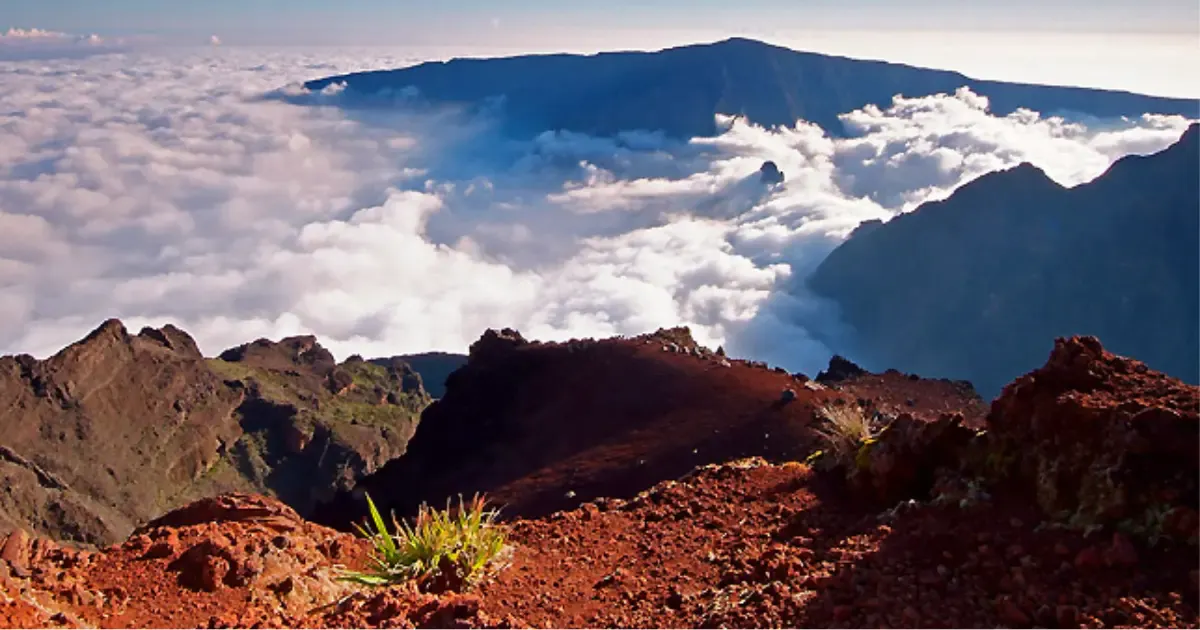
Summit 3,071m · the highest point in the Indian Ocean
Piton des Neiges: a climb, a night at the gîte and sunrise at the summit
Wild camping on the cliffs of Piton des Neiges is banned under National Park regulations. The only legal option: a night at the Caverne Dufour gîte at 2,478m, then a 4am push to the summit for sunrise over the Indian Ocean.
3,071msummit altitude4-5hclimb to the gîte+1hgîte → summit1,700melevation gain
Piton des Neiges, at 3,071m, is the highest point in the Indian Ocean. It's the island's most iconic climb, a classic among classics for Reunion Island hikers. But it's also a fragile site: National Park regulations ban wild camping on the summit's cliffs to protect the high-altitude ecosystem.
The legal and practical solution is the Caverne Dufour gîte, at 2,478m, on the climbing trail from Cilaos. You reach it after 4 to 5 hours of walking, spend the night, and set off for the summit at 4am to catch sunrise. It's one of the most spectacular experiences in Reunion Island: the sea of clouds catches fire, the volcano's silhouette appears to the south-east, and the Indian Ocean stretches out in a 360° view.
At a glance
The climb essentials
The experience
Two days to the summit
Day 1: Cilaos → Caverne Dufour. An early-morning start from Le Bloc in Cilaos, straight into the climb. The trail climbs hard through the tamarin forest before opening onto the rocky plateau of the Plaine des Tamarins. Turn around for an open view over the Cilaos cirque. If you set off at 9am, you reach the gîte around 2-3pm, tired but happy. A hot meal at the gîte in the evening, a dormitory bed, an early night.
The night at the gîte.Simple dormitories, sheets provided, a home-cooked Creole dinner. The common room empties fast: everyone's in bed by 8pm to be ready for a 4am departure. The wind blows outside, and the temperature regularly drops below freezing in the austral winter. Get your things ready the night before so you can leave quietly in the morning.
Day 2: the summit at 4am, sunrise at 5.35am. Waking up in the dark, head torch on, setting off from the gîte around 4am. The final stretch is rocky, marked out by cairns and posts. An hour of steady climbing, breath short from the altitude. Arrival at the summit around 5am, waiting in the dry cold. The first light touches the crater rim, the sea of clouds catches fire, and the sun emerges from behind the silhouette of Piton de la Fournaise. Twenty minutes of magic before heading back down to the gîte, breakfast, and the 3-4 hour return to Cilaos.
How to get there
How to reach the summit of Piton des Neiges
Main trail: from Cilaos via Le Bloc. Starting from the Le Bloc car park, on the edge of Cilaos towards Bras-Sec. A waymarked trail with sustained elevation gain, 4 to 5 hours up to the gîte. This is the option chosen by 90% of hikers.
Variant: Salazie via Bélouve. From the Bélouve gîte, crossing the Plaine des Tamarins before climbing to Piton des Neiges. Allow 6 hours, longer but with different scenery (primary forest).
Very rare: Bourg-Murat via the Pas des Cabris. Over 8 hours of walking, rarely used, for experienced hikers.
What time
Sunrise time at the summit, month by month
Indicative times (UTC+4 time zone). Leave the gîte about 1½ hours beforehand to reach the summit in time.
| Period | Indicative sunrise time |
|---|---|
| December to January | 5.35am |
| February to March | 5.50am |
| April to May | 6.15am |
| June to July | 6.50am |
| August to September | 6.25am |
| October to November | 5.50am |
December to January5.35am
February to March5.50am
April to May6.15am
June to July6.50am
August to September6.25am
October to November5.50am
Backpack
What to bring for the climb
- A 0°C-rated sleeping bag at minimum, ideally -5°C: night-time temperatures at the gîte regularly drop below freezing in the austral winter
- A thick down jacket, a hat, gloves, a fleece: at 3,071m you lose around twenty degrees compared with the coast
- A head torch is essential: the final push to the summit is done in the dark, setting off around 4am
- Grippy hiking boots with ankle support: the trail is rocky and can turn slippery when wet
- At least 2L of water per person: the gîte sells water, but only in limited quantities
- Trekking poles: 1,700m of elevation gain, plus another 600m between the gîte and the summit
- Book the Caverne Dufour gîte ahead of time: it fills up fast in high season (July-August, school holidays)
Regulations
Wild camping on the cliffs of Piton des Neiges: banned
Piton des Neiges lies within the core of Reunion Island's National Park, and its cliffs are among the zones where wild camping is explicitly banned. A night at the Caverne Dufour gîte is the only legal option.
- 'Wild camping is banned in the Mare Longue forest, at Grand Bassin, in the Rivière des Remparts, and on the cliffs of Piton des Neiges and Grand Bénare'
- 'Tents and hammocks must be pitched before sunset and taken down in the morning'
- 'Do not light campfires': only stoves and the built, designated fire spots are permitted
- 'Take all your rubbish away with you', including biodegradable waste
- 'The use of generators is prohibited'
- 'No harm may be done to wildlife or plant life'
Source: Parc national de La Réunion: Wild camping in the Park core. The ban on the cliffs of Piton des Neiges and Grand Bénare is strictly enforced, with possible checks. The only legal accommodation option in the immediate vicinity of the summit remains the Caverne Dufour gîte, at 2,478m, managed by Île de La Réunion Tourisme.
Read before you climb
Altitude, hypothermia, weather
Acute mountain sickness.At 3,071m, some hikers experience headaches, nausea, or unusual breathlessness. If symptoms persist despite resting, descend immediately towards the gîte. Stay hydrated, climb at a steady pace, and don't push too hard.
Hypothermia in the austral winter. From June to September, night-time temperatures at the gîte regularly drop below freezing, with morning frost and ice. A 0°C-rated sleeping bag at minimum, a down jacket essential. At the summit at 5am, wind makes it feel several degrees colder still. Several hypothermia cases occur every year, so speak up if you start shivering.
Unpredictable weather.Check Météo-France Réunion the evening before setting off from Cilaos. If a weather warning is issued, postpone: the trail becomes dangerous in the rain (slippery rocky terrain), and the summit gives no view at all in fog. There's no phone signal at the gîte or at the summit.
If you decide not to climb for health or weather reasons, a scenic flight over the summit gives you the same view without the effort.
Combine it with
Activities to combine with the climb
For hikers extending their stay in Cilaos, or for those after a less demanding way to experience the summit.

La Chapelle hike, Cilaos
An acclimatisation hike in the Bras Rouge valley the day before the climb, with a local guide.
Discover

Bélouve hike, Trou de Fer waterfall
An approach variant via Salazie for seasoned hikers in good shape.
Discover

Volcano hike: Pas de Bellecombe
If you're tackling both of the island's summits, the volcano is the perfect complement.
Discover
 Without the hike
The aerial option
Piton des Neiges without the 1,700m climb
Climbing Piton des Neiges takes a decent level of fitness: 4 to 5 hours up to the gîte, another hour to the summit for sunrise, then back down to Cilaos the same day. It is beyond most occasional walkers.
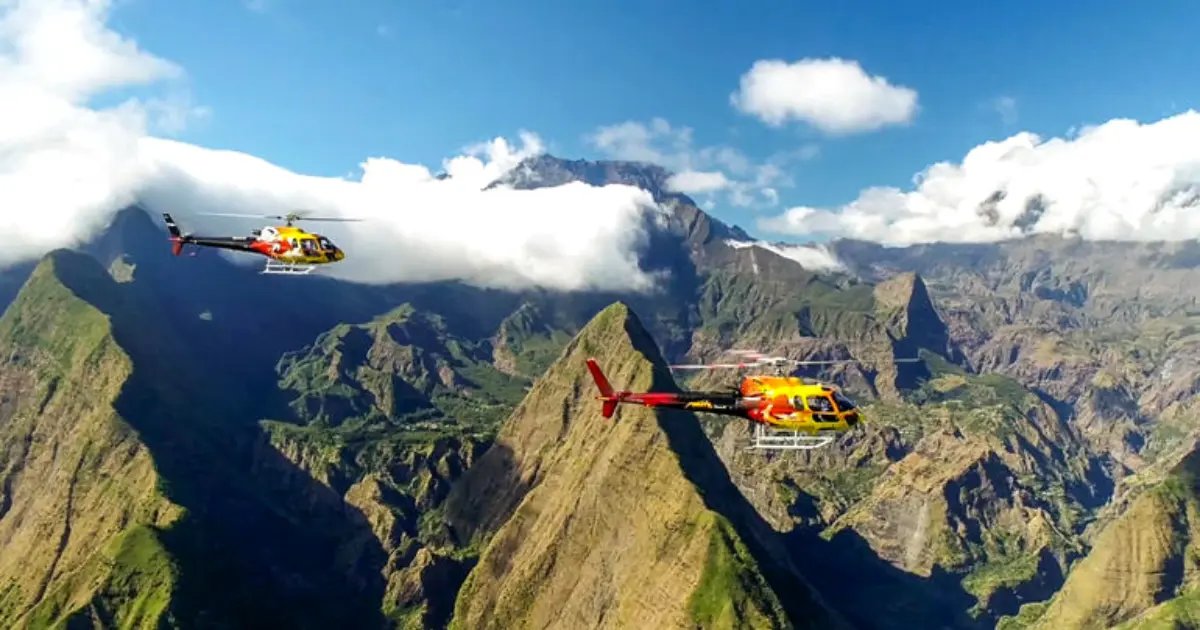
A helicopter gives you the summit from above, the crater, the sequence of the three cirques, in five to sixty minutes depending on the package. It's the option for anyone who wants to see this iconic landscape without carrying a pack.
From €125 · 210 Manawa reviews · Saint-Pierre / Saint-Paul
See helicopter rates
Stay nearby
Accommodation in Cilaos before the climb
For the night before setting off or the night after coming back down, here's accommodation in Cilaos itself, 5-15km from Le Bloc.
hotel1 km auberge1 km
 gite1 km
Other spots
Other wild-camping spots around Cilaos
Wild camping at Bras Rouge, Cilaos
A stop the night before the Piton des Neiges climb, at 1,200m. An area with a shelter and a fire spot.
See the spot
Wild camping at Îlet des Trois Salazes, Cilaos
A higher-altitude variant in the Cilaos cirque, with a wilder feel.
See the spot
Wild camping at the summit of Piton Maïdo
The western viewpoint over Mafate, reachable by car for sunrise without hiking.
See the spot
Frequently asked questions
FAQ: climbing Piton des Neiges
Can you wild camp freely at the summit of Piton des Neiges?
No. The official regulations of Reunion Island's National Park state that wild camping is banned on the cliffs of Piton des Neiges and Grand Bénare. The only legal way to spend the night at altitude is to book a bed at the Caverne Dufour gîte, at 2,478m, on the climbing trail from Cilaos. The summit (3,071m) is reached the next morning for sunrise, after another hour of walking.
How do you book the Caverne Dufour gîte?
Through the Île de La Réunion Tourisme booking service, or directly with the gîte. In high season (July-August, school holidays), book 2 to 3 months ahead. In low season, 2 weeks is often enough. The gîte offers dormitory beds plus dinner and breakfast. It's the only official accommodation close to the summit.
How long does it take to climb Piton des Neiges from Cilaos?
Allow 4 to 5 hours of walking from Le Bloc in Cilaos to the Caverne Dufour gîte, with over 1,700m of elevation gain. The trail is waymarked but demanding: very steep sections, rocky terrain, rapid altitude gain. The climb from the gîte to the summit adds another hour in the morning (600m more elevation gain). Total round trip: 8 to 10 hours of actual walking spread over 2 days.
What time should you leave the gîte for sunrise?
Allow 1 hour of walking from the gîte to the summit at a normal pace. To catch sunrise, wake up at least 1½ hours before the official time (see the table below). In December-January, sunrise is around 5.35am, so leave the gîte around 4am. In July, around 6.50am, leave around 5.20am. The climb is done by head torch, on a waymarked but rocky trail, so take care on exposed sections.
What altitude and temperatures should you expect at the summit?
The summit tops out at 3,071m, the highest point in Reunion Island and the Indian Ocean. Night-time temperatures at the gîte regularly drop below freezing in the austral winter (July-August), with frost and ice. At the summit in the morning, strong winds and sub-zero temperatures are possible year-round. A 0°C-rated sleeping bag at minimum, a down jacket, gloves and a hat are all essential.
Which trails lead to the summit?
Three possible routes. From Cilaos via Le Bloc and Cap Anglais (the busiest, 4-5 hours to the gîte). From Salazie via the Bélouve trail and the Plaine des Tamarins (a longer variant, around 6 hours). And from Bourg-Murat via the Pas des Cabris (rare, over 8 hours). 90% of hikers choose the Cilaos trail for its straightforward logistics.
Is the trail difficult?
Yes, it's one of the most demanding hikes on the island. 1,700m of elevation gain over 8km, rocky terrain, technical sections with handrails in places. No supplies available between Cilaos and the gîte. Only for hikers in good shape with experience of high-altitude walking. If you experience acute mountain sickness (headaches, nausea), descend immediately.
What's the alternative for seeing Piton des Neiges without hiking?
For those who can't or don't want to make the climb, the summit is visible from the Maïdo viewpoint (by car, sunrise on the other side), in panorama from Cilaos, and above all from the air thanks to a helicopter flyover that reveals the summit crater, the rim and the sequence of cirques in just a few minutes (from €125).
Page last updated 18 September 2026. GPS coordinates and National Park rules verified as of this date.