
Campervan or car in Reunion Island? Costs, pros and cons for 2026
The freedom of a campervan, or the comfort of a car and hotels? An honest comparison of cost, driving, where you can stop, the climate and the kind of trip you want, with 5 hotels by area, 6 places to sleep in a van and a 10-day itinerary.
Prices and basics at a glance
Choosing between a van and a car isn't really about price; it's about the kind of trip you want. For more on hiring a car, see my complete car rental guide. For the no-vehicle option, I also have a round-up of public transport and taxi alternatives.
Campervan vs car: head to head
Budget, comfort, freedom, driving, family, logistics: the 8 things that really separate the two, depending on who you are and how long you're staying.
| Criterion | Campervan | Car + hotel |
|---|---|---|
| Average budget per day | €50 to €90 (converted van or campervan) | €25 to €60 (small car or SUV) |
| Accommodation | Included: you sleep in the van | Extra (hotel, gîte, Airbnb) |
| Freedom | High: you sleep wherever you stop | Tied to your hotel bookings |
| Bed and shower | 1.3m-wide bed, sometimes an outdoor shower | Hotel: proper bed, shower, air conditioning |
| Families | Works for 2 adults + 2 children with the right layout | Better with babies and young children |
| Driving on the island | Bulky on hairpin roads (Cilaos, the volcano) | A small car is easy everywhere |
| Overnight parking | Wild camping strictly regulated (see spots below) | Secure hotel parking |
| At the airport | Delivery to Roland-Garros on request | Rental desks right in the terminal |
Typical prices on the island outside high season; double-check them on rental platforms when you book.
5 reasons to travel by van
A van isn't about comfort, it's about freedom. Here's what that means in practice over a 10-day trip.

Sleep at 2,200m without booking anything
No 6pm scramble for a gîte in Cilaos or a B&B in Hell-Bourg. Park at the Maïdo viewpoint or Pas de Bellecombe, cook dinner from the back of the van and sleep right there. In the morning, you'll have the sunrise over Mafate or the Dolomieu crater practically to yourself.
Your accommodation is included
A 10-day trip to Reunion Island with a car and mid-range hotels costs €150-200 a day for two. The same trip in a campervan costs €70-90 a day for two, hire included. Over 10 days that's a big saving, especially in high season (July-August, December-January).
Getting around is easier
Maïdo and La Saline-les-Bains are 1h30 apart by road but 2,200m apart in height. With a van, you sleep at the viewpoint, set off early before the fog rolls in, then head down to the lagoon for the day. Moving between the cirques and the coast becomes a matter of planning your route, not juggling bookings.
Cook for yourself
With a gas stove, a 12V or compressor fridge and water in jerrycans, you can cook whatever you picked up at the Saint-Paul or Saint-Pierre market. You save on eating out (€30-50 a day for two) and get a real taste of Creole produce, bought straight from the growers.
A real road-trip feeling
Touring the island at your own pace, changing your mind at 2pm and heading for the east coast, meeting other travellers at picnic spots. It's less polished than a hotel, but it's the kind of trip that makes the best memories.
Hire a campervan through Yescapa
Yescapa puts van owners in touch with travellers, with delivery to Roland-Garros airport on request. Local vans include VW T5s, Pössl Campsters and home-built Fiat Ducato conversions, with the deposit and insurance handled by the platform. To turn your hire car into a camper for the odd night, the rigid roof tents are a good option for couples who want to sleep at the Maïdo viewpoint without hiring a whole van.
Rent a Yescapa vanWhere to book your van or car in Reunion Island
Once you know whether you're leaning towards a van or a car, it's time to book. Here are my two dedicated guides, comparing rental companies, prices and the best time to book.

Car Rental in Reunion Island
Sixt, Avis, Hertz and Europcar compared with local firms (ITC Tropicar, Loca Run, Réunion Location), which are often 20-30% cheaper. 2026 prices, the best time to book and the excess, insurance and deposit traps to avoid.
See the full car guide
Van Rental in Reunion Island
My pick of checked rental companies (private owners and professionals), typical equipment, prices of €70-130 a night, delivery to Roland-Garros airport, itinerary tips and authorised spots to park overnight.
See the van rental listingWhere can you sleep in a van in Reunion Island?
Six car parks and picnic areas where you can spend the night in a van, from the Maïdo viewpoint to Cap Méchant. True wild camping is banned inside the national park, so stick to these spots to stay on the right side of the rules.
Maïdo
2,200mThe viewpoint over Mafate at 2,200m. Free car park where overnight stays are tolerated as long as you leave early. Sunrise over the cirque, and an ideal starting point for hikes to Roche Plate or Grand Bénare.
See the area →Pas de Bellecombe (the volcano)
2,311mThe Pas de Bellecombe car park, where the trail to the Dolomieu crater starts. Overnight parking is allowed except during eruptions. Just before it, the Plaine des Sables looks like Mars at sunrise.
See the area →Cap Méchant
5mA picnic area on a basalt cliff facing the ocean, with views of the pounding sea. Vans and campers are tolerated for 1 night, with Creole restaurants nearby.
See the area →Plaine des Palmistes
1,000mA cool highland plain with quiet car parks around the Domaine des Tourelles and the Maison Folio. Ideal for an early start to Bébour-Bélouve and Trou de Fer.
See the area →Étang-Salé Forest
10mBlack-sand beaches backed by state forest, with car parks shaded by casuarina trees, a family weekend feel and shade for the van all day.
See the area →Hell-Bourg
950mOne of the Most Beautiful Villages of France, with its main car park in the centre. A cool climate, a Creole market in the morning and a starting point for hiking to Piton des Neiges via the Bélouve trail.
See the area →What's tolerated varies with the season and local bylaws. Always arrive late, leave early and leave no trace. The national park regularly carries out checks in protected areas.

4 cases where a car makes more sense
For some trips, a car and hotels are unbeatable. Here are four situations where skipping the van saves time and adds comfort. If one of them sounds like your trip, compare hire cars for your dates.
You're staying in one area
If your trip is based around the west coast lagoon (Saint-Gilles, La Saline, L'Hermitage) or Cilaos, a small hire car and one hotel cost less and spare you the van logistics. You'll drive an hour a day at most, and your accommodation is sorted in advance.
You're travelling with a baby or young children
Travel cot, changing mat, bottles, fixed nap times: with very young children, a hotel or Airbnb villa is simpler than a van. Air conditioning is a real plus in the dry south, and a proper bed and bath matter more than freedom.
Your budget is very tight
A small car at €25 a day plus a hostel dorm at €25 per person comes to €50 a day in total, versus at least €70 for a van. On the tightest budgets, a car plus hostels and the odd night in a tent is the cheapest way to see the island.
You want comfort without surprises
A 1.6m double bed, a hot shower every evening, a socket to charge your phone, a bathroom door that locks. A car and hotel give you full home comforts in a climate that can get very humid in season (December-March), when a night in a van is a lot less pleasant.
5 hotels around the island
One per area if you go for a car and hotels: the west for the lagoon, the south for the wild coast, Cilaos and Salazie for the cirques, and Plaine des Palmistes for the highlands.

Le temps d'une île
A guesthouse 5 minutes' walk from the beach, beside the west coast's main lagoon. The best value in the area, with a warm Creole welcome and a tropical garden.

Les Lierres
Guesthouse rooms deep in the mountains of the Cilaos cirque. Peaceful, with views of the cirque walls, an ideal base for the Piton des Neiges hike and highly rated home-cooked dinners.

Relais Des Gouverneurs
A Creole mansion in Hell-Bourg, one of the Most Beautiful Villages of France, with historic architecture, views of the cirque walls and a fine-dining restaurant. The place to stay in the cirque for soaking up its heritage.

La Kaz Banian
A stylish guesthouse in the heart of Saint-Pierre, 5 minutes' walk from the seafront, with thoughtful décor, a pool and secure parking. Ideal for exploring the wild south and the south coast.

Hôtel Le Tuit Tuit
A highland hotel in Plaine des Palmistes, at 1,000m, with a cool climate, large gardens and quick access to the Bébour-Bélouve forest and Trou de Fer. Perfect if you want a break from the coast.
Agoda prices as of 1 November 2026 for 2 people, 1 night. For more places to stay, see my pick of 4-5 star hotels in Reunion Island.
10-day campervan itinerary: a full loop of the island
The classic loop of the island, with the right amount of time in each area. Designed for a campervan, but it works by car and hotels too with a few changes.
Pick up your vehicle at Roland-Garros and head down to the west coast's main lagoon via the Route des Tamarins. Lagoon, beach, seafront restaurants and whale watching in season (June-October).
Climb the road of 400 bends and spend two nights in the village. Hike to Bras Rouge or Roche Merveilleuse, browse the Sunday morning Creole market and try dishes made with Cilaos lentils.
Drive the Route Forestière du Volcan up to Pas de Bellecombe and walk down into the caldera as far as Formica Léo. Sunset over the Plaine des Sables, then a night in a gîte or the van.
Cap Méchant, the Langevin (Grand Galet) waterfall and Grande Anse beach. Creole restaurants in Saint-Philippe and lava fields on the island's newest land.
Hell-Bourg, one of the Most Beautiful Villages of France. The Voile de la Mariée waterfall and the Sources Pétrifiantes trail, a Saturday morning market and genuine Creole food.
The ancient Bébour-Bélouve rainforest and Trou de Fer, on foot or by helicopter. Then down to Saint-Denis, the capital: the cathedral, the Noor-e-Islam mosque and back to the airport.
For a shorter format (7 days), see my 7-day van itinerary in Reunion Island. For planning and overall budget, the complete planning guide covers the basics.
See Mafate and Trou de Fer by helicopter
Van or car, two of the island's wonders can only be reached on foot or seen from the air: the Mafate cirque and Trou de Fer. A helicopter flight from Saint-Gilles or Pierrefonds is the perfect add-on to a road trip, letting you see both without adding 2 days of hiking.
Add these to your road trip
 ★ 4.9(397)
Helicopter Flights Over Reunion Island: Prices
9 helicopter flight options over Reunion Island from €204: volcano, cirques, waterfalls. Prices, operators and honest advice.
 ★ 4.3(12)
Private Airport Transfer in Reunion Island
Private door-to-door transfer from Roland-Garros airport, from €56 per vehicle via Viator, plus the Cars Jaunes public bus for budget travellers.
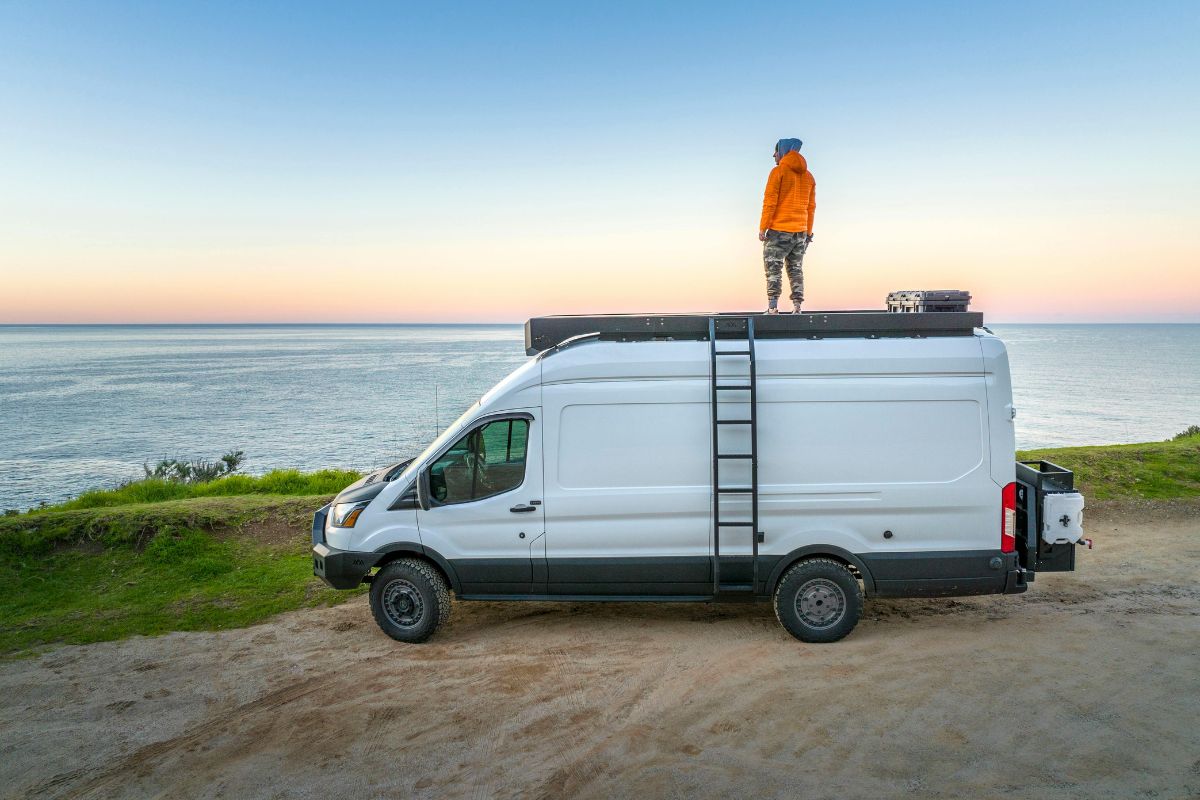 Road trip freedom
Van Rental in Reunion Island: 3 Packages
Rent a campervan peer-to-peer via Yescapa: 40+ vans from €50/day. Small van, fitted van, 4-berth pop-top van for a free-roaming road trip.
Six more reads



Van or car: your questions answered
Is a campervan or a car better in Reunion Island?
How much does campervan hire cost in Reunion Island?
How much does car hire cost in Reunion Island?
Can you sleep anywhere in a van in Reunion Island?
Can you drive a campervan on the cirque roads?
What's a good 7 to 10-day campervan itinerary?
Is Yescapa available in Reunion Island?
Do you need special insurance for a campervan in Reunion Island?
Can you combine a van and a car on the same trip?
Can you hire a motorhome instead of a van?
What hidden costs should you watch out for?
What's the best time of year for a road trip in Reunion Island?
Related pages on the site
Article updated on 1 November 2026.