Horse Riding in France: the 7 Best Regions to Ride
I spend most of my time in Reunion Island, France's Indian Ocean island, but many travellers combine it with mainland France. Here's an honest round-up of the 7 regions of France where riding is really worth it, from the volcanic slopes of the Maïdo to the sands of the Bay of Somme.
7 regions coveredFrom €25 for a first rideAge 4 on a lead reinMay-October ideal
Quick facts
Horse riding in France at a glance
Regions covered
7 (Reunion Island + 6 mainland regions)
Typical rides
1h first ride, half-day, full day, multi-day trek
Minimum age
3-4 on a lead rein, 12 for advanced rides
Starting price
€25-35 for a first ride
Full-day price
€130-180 meals included
2-7 day trek
€320 to €1,500 depending on duration
Reunion Island season
May to November (dry season)
Mainland France season
Mainly May to September
This page is an overview of riding across France. For full details of the six rides in Reunion Island (Maïdo, Grand-Étang, Bassin Bœuf, Piton de la Fournaise), see my dedicated guide to horse riding in Reunion Island. Check prices and levels with your chosen centre when booking.
Where I ride most
Reunion Island, France's most varied riding country
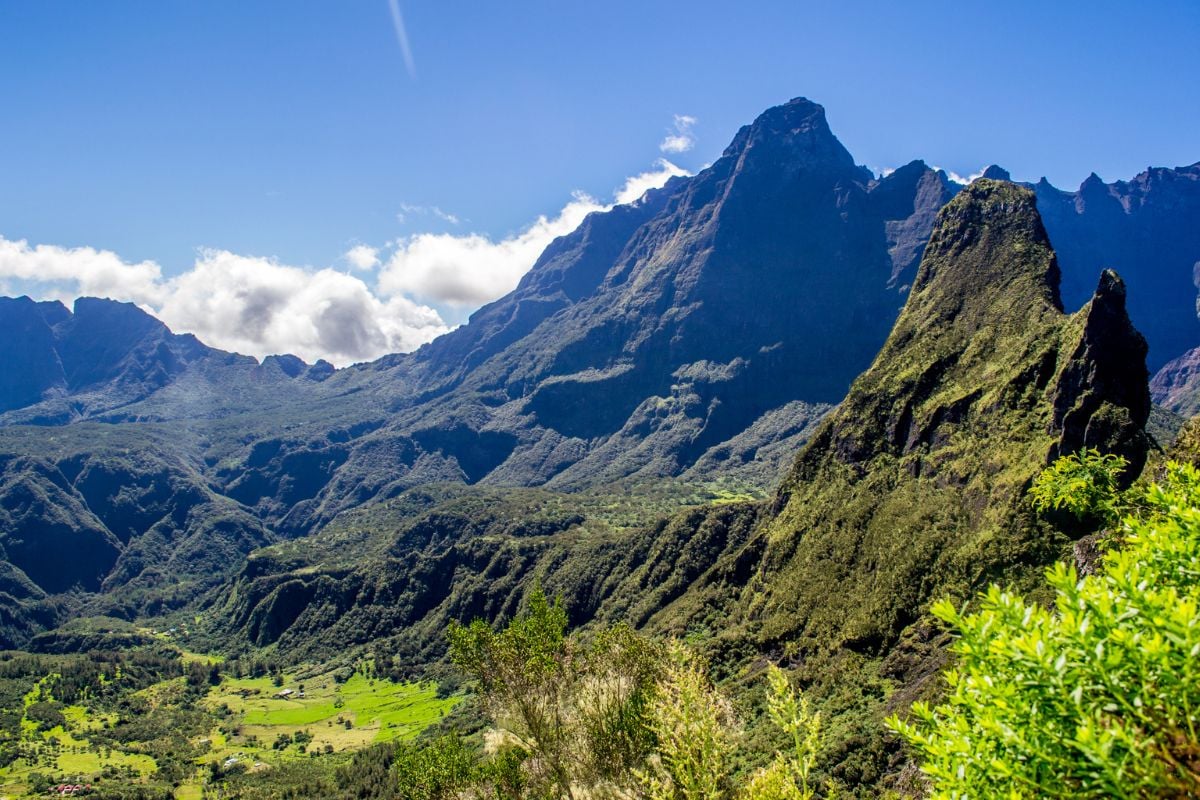
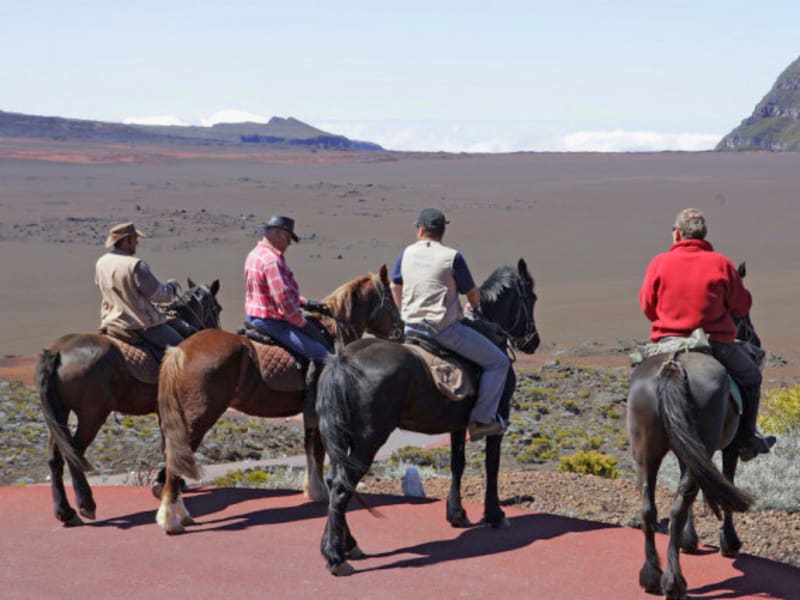
Within 70km you'll find four different worlds: cryptomeria forest at 2,200m on the Maïdo, the rainforest of Grand-Étang near Saint-Benoît, the river pools of Bassin Bœuf in Sainte-Suzanne, and the lunar landscapes of the Plaine des Sables near Piton de la Fournaise. Two riding centres run most of the rides: Les Chevaux du Maïdo and the Ferme Équestre du Grand-Étang.
Four rides I've checked, from a 1-hour first ride at €35 to a €180 day on the volcano, plus the Bassin Bleu half-day (with a swim) and a 2-3 day trek at €320. More variety in a single day than in a week in mainland France.
Seven regions, each with its own feel. For each one: the best spots, typical level, the best season, prices and what makes it special.
Region 1 · My home ground
Reunion Island
France's most varied riding country, all within 70km. The main stables are Les Chevaux du Maïdo (cryptomeria forest at 2,200m with views over Mafate) and the Ferme Équestre du Grand-Étang (in the rainforest near Saint-Benoît), which also run rides for experienced riders to Bassin Bœuf and Piton de la Fournaise. Four rides can be booked directly on the site, with prices checked on partner listings.
Piton Maïdo, cryptomeria forest at 2,200m
Grand-Étang, Saint-Benoît, humid forest
Bassin Bœuf, Sainte-Suzanne (experienced riders)
Plaine des Sables and Piton de la Fournaise (experienced riders)
Level: Beginners' first rides at the Maïdo; Bassin Bœuf and the volcano for experienced riders aged 12+Season: May to November (dry season), avoid January-MarchPrice: €35 for a first ride, €70 half-day, €150-180 full day
Key takeaway: Four different worlds (volcano, high forest, rainforest, river pools) within 90km
The other great classic: galloping along the sea. The Côte Fleurie (Cabourg, Deauville, Trouville), the D-Day beaches (Omaha, Utah, Arromanches) and hedgerow countryside inland. Many riding centres offer rides from 1 hour to a full day, and some let you gallop on the wet sand at low tide. Several stables around the bay also run guided rides out to Mont Saint-Michel.
Cabourg beach and the Pays d'Auge coastline
The D-Day beaches, the Calvados coast
Norman hedgerow country and the approach to Mont Saint-Michel
Level: From a gentle first ride to a beach gallop, depending on the centreSeason: May to September is most comfortable; off-season is possible with the right gearPrice: €35-55 an hour; check full-day prices with the centre
Key takeaway: Galloping on wet sand allowed outside the summer season
Region 3 · Emerald Coast
Brittany
Brocéliande forest for fans of Arthurian legend, the Emerald Coast (Saint-Malo, Cap Fréhel) for gallops along the open sea, and the Quiberon peninsula for rides across coastal heathland. Many centres use hardy Breton horses suited to the terrain, and there are multi-day treks in Finistère.
Brocéliande forest, Paimpont
Emerald Coast, around Saint-Malo and Cap Fréhel
Quiberon peninsula and the Gulf of Morbihan
Level: All levels: walking and trotting in the forest, with beach gallops at some centresSeason: April to October, Breton weather permittingPrice: €30-50 an hour depending on the centre
Key takeaway: Hardy Breton horses and 3-5 day treks in Finistère
Region 4 · Nature reserve
The Bay of Somme
One of the world's most beautiful bays and a major wildlife reserve (seals, migrating birds). Several riding centres around Le Crotoy and Saint-Valery run low-tide rides across the sandbanks, keeping a safe distance from the seals. The Marquenterre and Pointe du Hourdel have exceptional views. The tide rules everything: nothing is improvised, and the centre times each ride to the tides.
Sandbanks between Le Crotoy and Saint-Valery-sur-Somme
Pointe du Hourdel, mudflats
Le Crotoy state forest and the approach to the Marquenterre
Level: Short rides suit beginners; a full day is more demandingSeason: April to October, depending on the tidesPrice: €30-45 an hour, full day on request
Key takeaway: Rides timed to the tides, exceptional views at the Marquenterre
Region 5 · Maquis and beaches
Corsica
The 'Isle of Beauty' is wonderfully varied: fragrant maquis (Mediterranean scrub) inland, deserted beaches in the south (Roccapina, Sperone) and mountains to the west. Several centres operate around Porto-Vecchio, Calvi and the Balagne. Hardy Corsican horses are perfect for multi-day treks. The season is longer than in northern France, but avoid the beaches in the heat of the day in summer.
Southern beaches, Roccapina, Sperone, Palombaggia
The Balagne, Calvi, the Agriates desert
Inland maquis, around Corte
Level: From a first ride on the flat to a mountain trek for experienced ridersSeason: April to June and September-October, avoid full summer sunPrice: €35-60 an hour, 4-7 day riding holidays cost more
Key takeaway: 4-7 day treks on hardy Corsican horses
Region 6 · Marshes and the Atlantic
Vendée
One of the best areas in France for family-friendly riding centres. The beaches of Saint-Jean-de-Monts, Les Sables-d'Olonne and Bretignolles for rides along the Atlantic, the Marais Poitevin for rides through the wetlands, and Île d'Yeu for a day on the coastal paths. Children are especially well looked after, and many centres have their own pony club.
Les Sables-d'Olonne and Bretignolles beaches
Marais Poitevin, around Maillezais
Île d'Yeu, coastal paths
Level: Very accessible, ideal for families and kidsSeason: April to October; summer is still pleasant on the Atlantic coastPrice: €25-45 an hour, full-day pony club deals
Key takeaway: More family-friendly pony clubs than anywhere else
Region 7 · A train ride away
The Paris region
Easier than you'd think. Fontainebleau forest for woodland rides (25,000 hectares), the Vexin Français to the north-west for rides between pretty villages, and Rambouillet to the west with its lakes and national sheep farm. Most centres around Paris are fully booked at weekends, so book ahead. Half-day rides are by far the most common.
Fontainebleau forest (Gorges d'Apremont, Trois Pignons)
Vexin Français, plateau and villages
Rambouillet and the Étangs de Hollande
Level: All levels, many centres geared towards first-timersSeason: All year, most pleasant in spring and autumnPrice: €35-60 an hour, supervised half-days
Key takeaway: Fontainebleau is 1 hour from Paris by RER (suburban train) plus a shuttle from the centre
Practical advice
Before you book, the honest basics
Six things to know: your level, what to wear, the best season, children's ages, booking in high season and multi-day treks.
Be honest about your level
If you're a beginner, you start with a gentle ride, led or on a lead rein, full stop. No beach gallops on day one. Good centres turn away riders who overstate their level: it's about safety, for the horse as much as the rider. Better to start at a walk than end up in A&E.
Basic equipment
The centre always provides a riding hat, which is compulsory in France. Wear long trousers (jeans are fine for a first ride, jodhpurs if you ride regularly) and ankle boots or riding boots. Avoid low trainers, as your foot can slip through the stirrup. Bring water, sun cream and a cap in summer.
Season is everything
In Reunion Island, May to November is the most comfortable time: the dry season means firm ground and clear views. In mainland France, May to September suits most regions, with June and September best for mild temperatures. In summer in Corsica or Vendée, ride in the cooler hours, never at midday.
How old should a child be to ride?
On a pony on a lead rein, from age 3-4 at most riding schools. Riding a horse on their own, more like 8-10, depending on size and balance. At the Maïdo, led first rides start at age 4, with a parent walking alongside. The volcano and Bassin Bœuf rides are for experienced riders aged 12 and over only.
Booking in high season
Good centres fill up at weekends in July-August, especially in Reunion Island (school holidays) and on the coast. Book at least 1-2 weeks ahead for a full day, and longer for a multi-day trek. Most Reunion Island centres can be booked through the site's partner platform, with 24-48h cancellation.
Multi-day treks
Multi-day trips (from a 2-day weekend up to 7 days in Corsica, the Vercors, the Camargue or the Maïdo) are the most memorable way to ride. You stay in gîtes or under canvas, with meals included and 4-6h in the saddle each day. Budget from €320 for a weekend to €1,500 for a fully guided week, depending on the provider and comfort.
Stay near the stables
4 places to stay in Reunion Island for riding and the lagoon
From a €40-a-night guesthouse to a €102 gîte near the volcano: 4 places on Agoda rated 9.5/10 or higher, close to the stables at the Maïdo, Saint-Benoît and the volcano.
Boucan Canot10/10 (1 review)
Le Mascarin Boucan Canot
Hotel · west coast
A practical west coast base, within an hour's drive of Les Chevaux du Maïdo. A clean, good-value hotel, a 5-minute walk from Boucan beach. The obvious choice if you want the lagoon in the morning and a ride up in the hills in the afternoon.
Unbeatable value on the east coast, a 10-minute drive from the Ferme Équestre du Grand-Étang. Creole hospitality, parking and home-cooked evening meals depending on the season. Ideal if you're doing the Grand-Étang half-day or the Bassin Bleu day with lunch.
A gîte (rural guesthouse) in the Plaine des Cafres, close to the volcano if you're doing the full-day Piton de la Fournaise ride. Total peace, cool mountain air and an easy early start to Pas de Bellecombe, 25 minutes away.
A guesthouse in La Saline-les-Bains, rated 9.5/10 from 51 Agoda reviews. A 40-minute drive from the Maïdo stables, perfect for the Trou d'Eau lagoon in the morning and a forest ride in the afternoon. The best budget option on the west coast.
Agoda rates shown on 13 November 2026 for 2 guests, 1 night.
Round it off from the air
See the riding country from the sky
If you've ridden at the Maïdo and want to see the whole of Mafate, which you only glimpse from the rim, a helicopter tour from Le Port or Saint-Pierre completes the picture: Mafate, the volcano and the lagoon in an hour. The perfect pairing for an adventure trip.
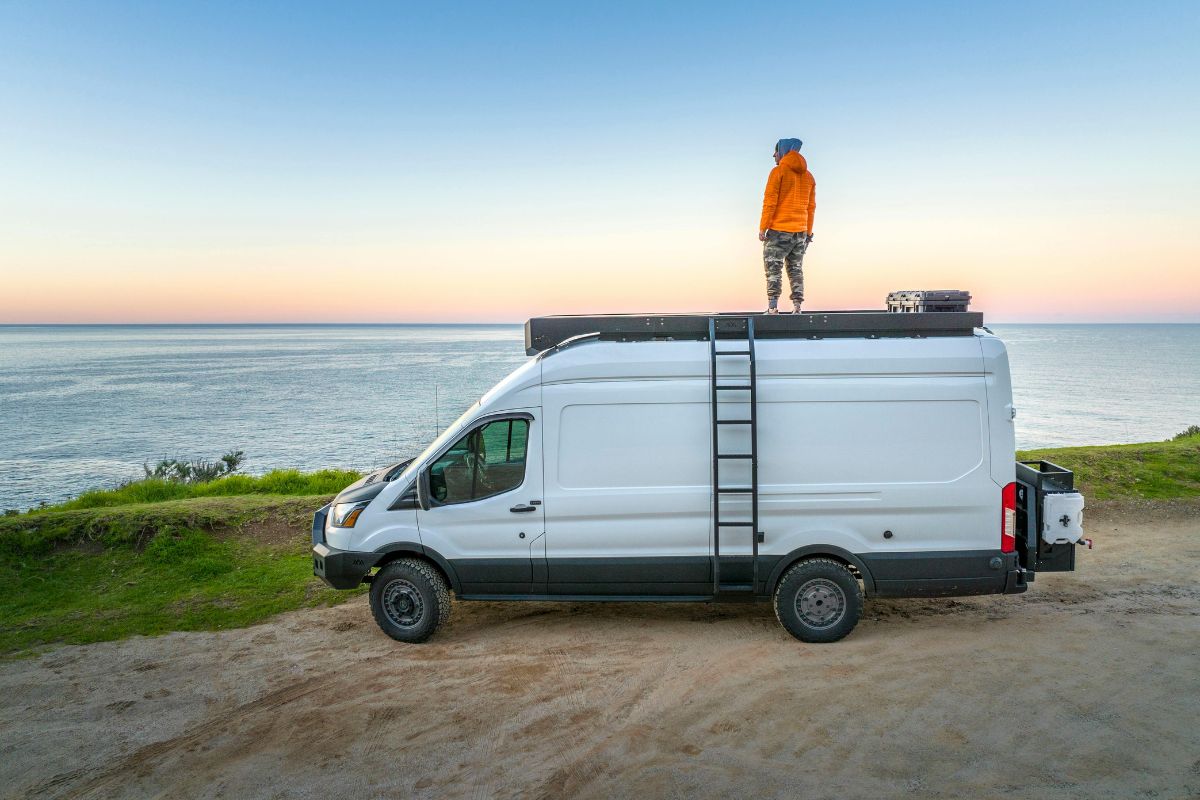
Combine the Maïdo, Grand-Étang and Bassin Bœuf in a camper van
If you want to move between stables without changing hotels every night, a camper van is the most flexible option in Reunion Island. Of the seven regions in this article, a van also works very well for riding trips in Corsica, Brittany and Vendée. Yescapa connects local owners with travellers.
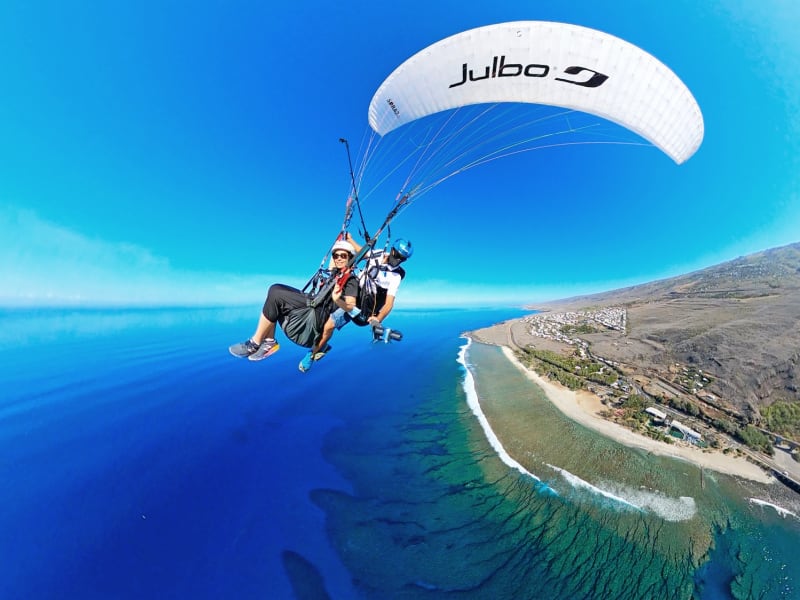
Nine partner activities in Reunion Island to book once you've chosen: the Maïdo, Grand-Étang, the volcano and Bassin Bœuf rides, plus helicopter, microlight, quad biking, paragliding and van hire.
Not for a led first ride or a walk with an instructor alongside. Yes for a half-day or full-day ride, and especially for rides aimed at experienced riders (galloping, long distances, rough terrain). Always be honest about your level when booking.
What does horse riding cost in France?
Budget €25-60 an hour depending on the region and type of ride (a little less in Vendée and Brittany, a little more around Paris or in Corsica in season). In Reunion Island: €35 for a first ride at the Maïdo, €70 for a half-day at Grand-Étang and €150-180 for a full day at Bassin Bœuf or Piton de la Fournaise.
What age can children start riding?
From 3-4 on a pony on a lead rein at most pony clubs, from 4 at the Maïdo for an accompanied first ride, from 6-8 for a 1-hour beginners' ride, and 12 and over (experienced riders only) for technical rides such as Piton de la Fournaise or Bassin Bœuf in Reunion Island.
Can you gallop on the beach in France?
Yes, on some beaches and with the centre's permission. Rules vary from town to town (local by-laws), and in summer it's generally banned in swimming areas at busy times. Out of season or early in the morning, many centres run supervised gallops on the wet sand at low tide.
How long does a multi-day trek last?
They range from 2 days (a weekend) to 7 days in Corsica, the Vercors or the Camargue, with 4-6h in the saddle a day, nights in gîtes or with local hosts, and meals included. Budget €600-1,500 for a fully guided week; check with the provider.
Which region is best for a first riding experience?
In Reunion Island, the Maïdo at €35, within an hour's drive of most of the island, is the easiest option. In mainland France, Vendée and Brittany have the most beginner-friendly pony clubs, with prices under €30 an hour and great care for children. Normandy is excellent outside the summer season for a first ride by the sea.
Do you need special insurance?
No, the centre's public liability insurance covers the ride. It's still worth checking that your travel insurance covers occasional leisure riding, which it usually does. For multi-day treks, some providers ask for an annual licence from the FFE (the French Equestrian Federation) or specific insurance.
Can you bring your own horse to Reunion Island?
Not on the National Park trails, which don't allow private horses without a guide. Local riding centres run private rides on request, with their own horses used to the terrain and a guide. Shipping a horse to the island is theoretically possible, but the regulations and cost make it impractical.