Mascarenes · 108 km² · a 200 km² lagoon

Rodrigues Island: the unspoilt Mascarene

Just 108 square kilometres and 40,000 people, surrounded by a 200 km² coral lagoon (twice the size of the island), and self-governing since 2002. 600km east of Mauritius, Rodrigues is the exact opposite of resort holidays: public beaches, family guesthouses, octopus curry and vacoa weaving.

108 km² in area200 km² of lagoon40,000 people
Quick facts

Rodrigues in 8 key numbers

Area
108 km², 18km x 8km
Population
~40,000 people
Coral lagoon
200 km², or 2x the island
Highest point
Mont Limon, 393m
Autonomy
Since 12 October 2002
Distance from Mauritius
600km east, a 2-hour flight
Languages
English (official), Creole, French
Capital
Port Mathurin, ~6,000 people
Beyond Reunion Island: this page covers a neighbouring Mascarene island (Rodrigues, an autonomous region of Mauritius). My main focus is Reunion Island, but Rodrigues shares enough history and geography with it to deserve a full guide. For Reunion Island activities and accommodation, see my dedicated hubs.
What makes Rodrigues special

How Rodrigues differs from a typical Mauritius holiday

A chance to switch off, Rodriguan Creole culture, a huge lagoon, seafood, ecotourism and self-government: six things that shape the island and draw travellers looking for something different.

Facet 1

Switch off completely

Rodrigues has turned its back on the all-inclusive resorts that define Mauritius: no international chains, hardly any hotels over 50-80 rooms, public beaches for everyone, and a pace set by fishing and market hours rather than entertainment programmes. If you want a slower trip, without constant wifi, with sunrises, walks by the sea and an evening drink chatting with locals, there are few places like it left in the Indian Ocean.

In short: The opposite of Mauritius: no resorts, public beaches, a local pace
Facet 2

A distinct Rodriguan Creole culture

Rodrigues has developed its own cultural identity, distinct from mainland Mauritius. Rodriguan Creole is the everyday language, full of expressions inherited from the Bretons, Normans and Africans who settled here from the 18th century. Rodriguan séga (different from Mauritian séga, and more about the accordion than drums) gets people dancing on Saturday nights. The signature craft is vacoa (pandanus) weaving: bags, baskets and hats handmade by local artisans and listed as UNESCO living heritage.

In short: Rodriguan Creole, accordion séga, vacoa weaving listed by UNESCO
Facet 3

Unspoilt nature and an exceptional lagoon

The Rodrigues lagoon covers 200 km², twice the island's land area. That makes it one of the largest protected lagoons in the Indian Ocean, home to remarkable marine biodiversity: eagle rays, green turtles, dolphins, more than 30 species of hard coral. Several boat-accessible islets (Île aux Cocos, Île aux Sables, Île Hermitage) serve as bird sanctuaries. Watching white-tailed tropicbirds and lesser frigatebirds here is one of the easiest birdwatching trips in the southern hemisphere.

In short: A 200 km² lagoon (2x the island), Île aux Cocos for birdwatching, coral biodiversity
Facet 4

Seafood, and octopus above all

Rodriguan cuisine revolves around seafood, first and foremost ourite (octopus), the king of local dishes. Octopus is prepared as a curry (simmered in coconut milk, ginger and local turmeric), as a salad (cooked then sliced, Creole vinaigrette), or as an achard (marinated in spices). Other favourite catches: capitaine fish, red snapper, Rodriguan lobster and limon (a local lagoon oyster). Family-run restaurants in Port Mathurin, Pointe Coton and Anse Quitor serve home cooking for €10-20 a meal, in a genuinely Creole atmosphere with nothing put on for tourists.

In short: Ourite (octopus) as curry, salad, achard. Capitaine, red snapper, lobster, limon
Facet 5

Ecotourism and conservation

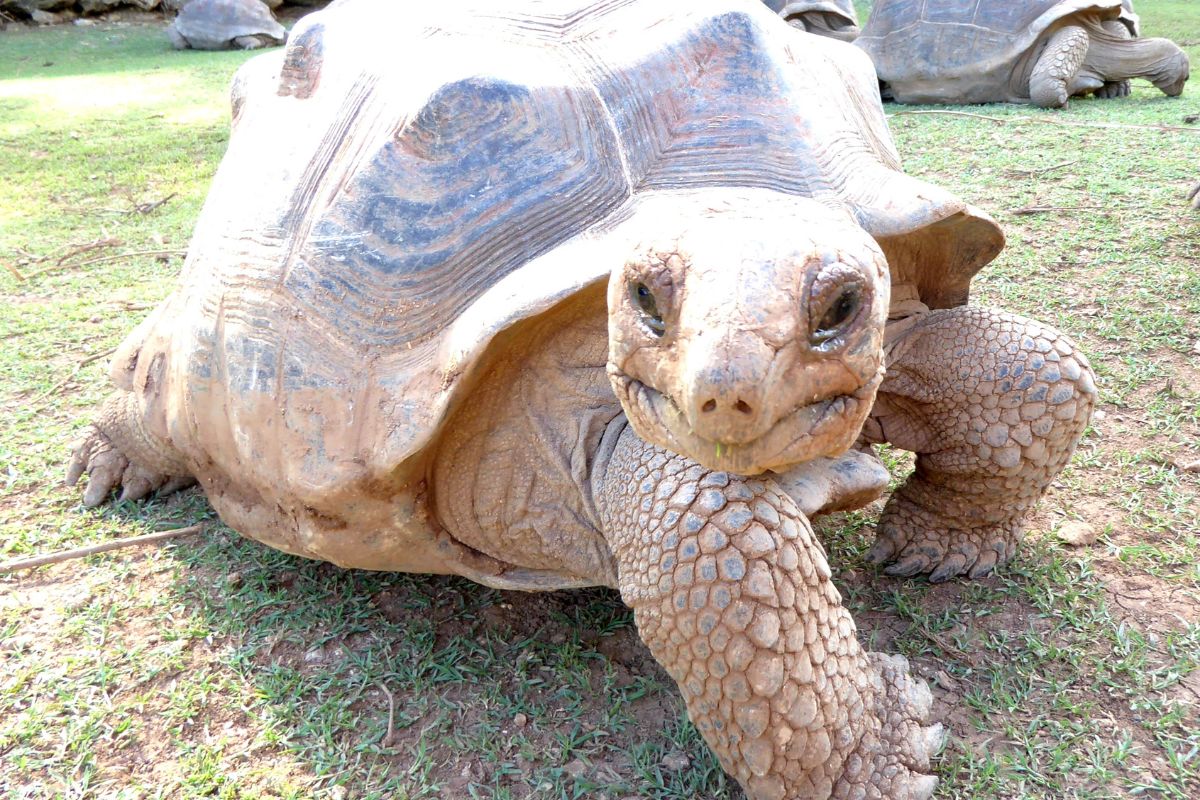
The François-Leguat Reserve, created in 2007 at Anse Quitor, runs the Indian Ocean's largest reforestation and endemic-species reintroduction programme. 200,000 trees have been replanted, more than 1,200 giant Aldabra tortoises roam semi-free, and endemic plants have been saved from extinction. A 1h30 guided visit costs €6 for adults, and visitor fees fund the whole project. It's the most successful island conservation project in the Mascarenes, on a par with Mauritius's Île aux Aigrettes.

In short: The François-Leguat Reserve, 200,000 trees, 1,200 Aldabra tortoises, a €6 visit
Facet 6

Self-governing within Mauritius

Rodrigues became an autonomous region within the Republic of Mauritius on 12 October 2002, through a constitutional amendment that granted it an 18-member Regional Assembly and a Chief Commissioner elected by indirect suffrage. This autonomy recognises the island's distinct culture, economy and geography, while defence, foreign affairs and currency stay with Port Louis. It's unusual in the Indian Ocean, and it also shapes the island's own approach to tourism.

In short: Self-governing since 2002, with its own Regional Assembly
6 major sites

Beaches, lagoons and heritage to put on the itinerary

From the iconic Trou d'Argent in the south-east to the bird-sanctuary Île aux Cocos in the north-east, from the Saint-Gabriel cave to the sunset beach at Anse Ally: 6 places for a relaxed 5- to 7-day stay, leaving a couple of days free for whatever comes up.

Trou d'Argent, Rodrigues's postcard beach

South-east, access from Saint-François

The island's most famous beach: fine white sand, a turquoise lagoon and black cliffs behind. You get there along a coastal path from Saint-François (a 45-minute walk) or by boat taxi from Port-Sud-Est. No facilities, no restaurant, just the beach and the silence; being hard to reach has kept it off the usual circuits.

Saint-François, the inhabited south-east beach

South-east, main road

A 1km public beach you can drive right up to, with local restaurants and ice-cream stands on the seafront. Ideal for a quiet swim in a sheltered lagoon, and the starting point for the walk to Trou d'Argent. Rodrigues's busiest beach, which still means no crowds.

Pointe Coton, the north-east lagoon

North-east, departure point for Île aux Cocos trips

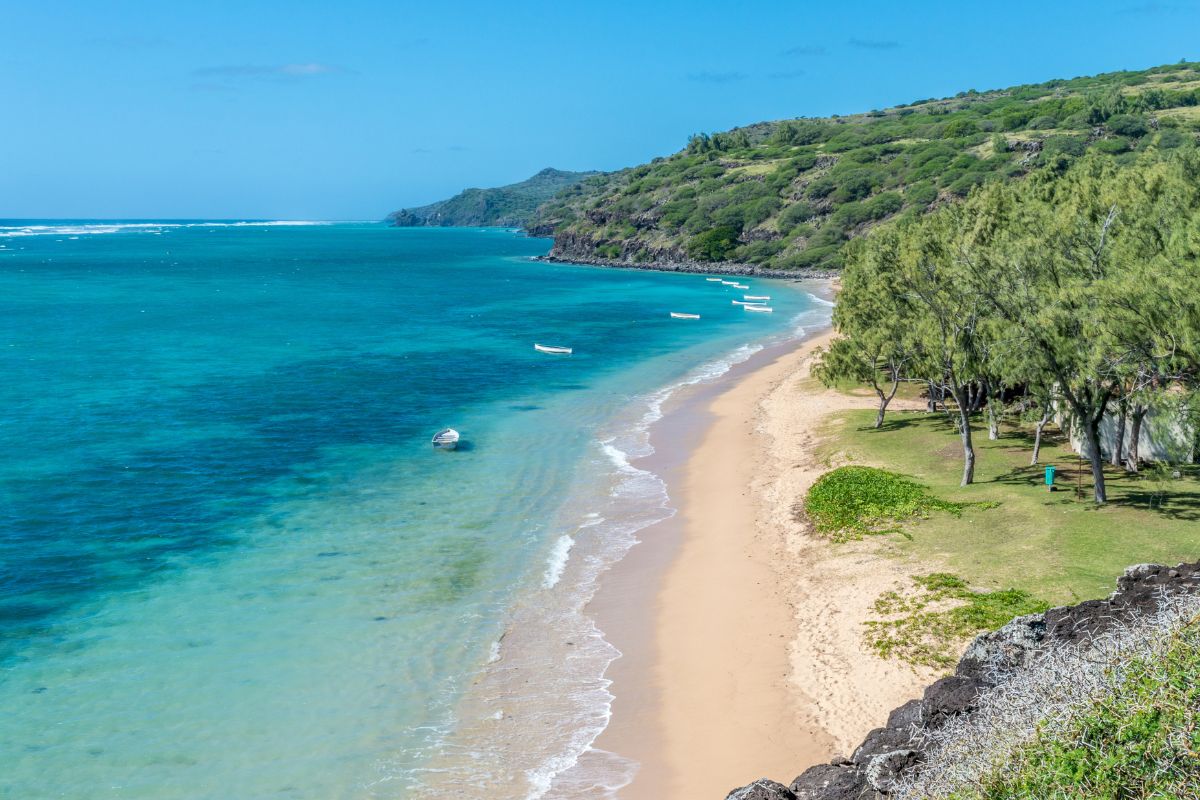
A long golden-sand beach lined with filao trees, with a view of Île aux Cocos offshore. It's where boat trips to the northern islets leave from (7.30am to 4.30pm), with a lovely trip back in the evening light. Fishermen come at sunrise, and it stays quiet at midday.

Anse Ally, the sunset beach

North-west, airport road

A quiet public beach 10 minutes from Port Mathurin, facing west, so it's the place for sunsets: golden sand, palm trees and a sheltered lagoon. There are several family guesthouses nearby at €35-60 a night, ideal for escaping Port Mathurin's (modest) bustle.

Île aux Cocos, the boat-trip bird sanctuary

North-east, a 30-minute crossing from Pointe Coton

An uninhabited 14-hectare islet listed as a nature reserve for its populations of white-tailed tropicbirds, sooty terns and frigatebirds. You can only visit on a guided boat trip (about €25 for adults, 4 hours on the island), with a picnic on the spotless white beach. Nesting areas are off-limits, and a ranger must accompany visitors.

Saint-Gabriel church and the Patate caves

South-west, Saint-Gabriel valley

Away from the beaches, Rodrigues has the Saint-Gabriel church (a 19th-century limestone basilica open to visitors) and the Patate caves in the south, vast caverns full of stalactites. A guided visit costs €3-5 for adults, a good alternative to the lagoon on a rainy day.

Practical

Planning your trip to Rodrigues

The only way in is an Air Mauritius domestic flight from SSR airport in Mauritius, about 1h30 in the air, with return fares of €200-350 depending on the season. Whatever your starting point, you'll connect in Mauritius (there are no direct flights from Reunion Island or mainland France). From Reunion Island, allow a full day each way.

Once there, you'll stay in family guesthouses rather than resorts. Expect €35-60 a night for two people on a simple bed-and-breakfast basis, €60-90 on full board. Guidebooks list several, including (Pointe Vénus, Coco Villa, Mourouk Ebony, Cotton Bay). For more standard comfort, there are larger hotels (50-80 rooms) at Mourouk and Pointe Coton.

A hire car is essential for exploring beyond Port Mathurin, unless you're planning to stay put at a seaside guesthouse. Expect €25-40 a day from local hire companies. Driving is on the left (a British legacy), a standard licence is enough, and the roads are narrow but in good condition.

The climate is tropical but slightly milder than in Mauritius (with stronger trade winds). The dry season from May to November is best; avoid the cyclone season from December to March for a short trip. Pack reef-safe sunscreen (lagoon regulations), a hat, UV sunglasses, and a light jumper for cooler evenings up at Mont Limon.

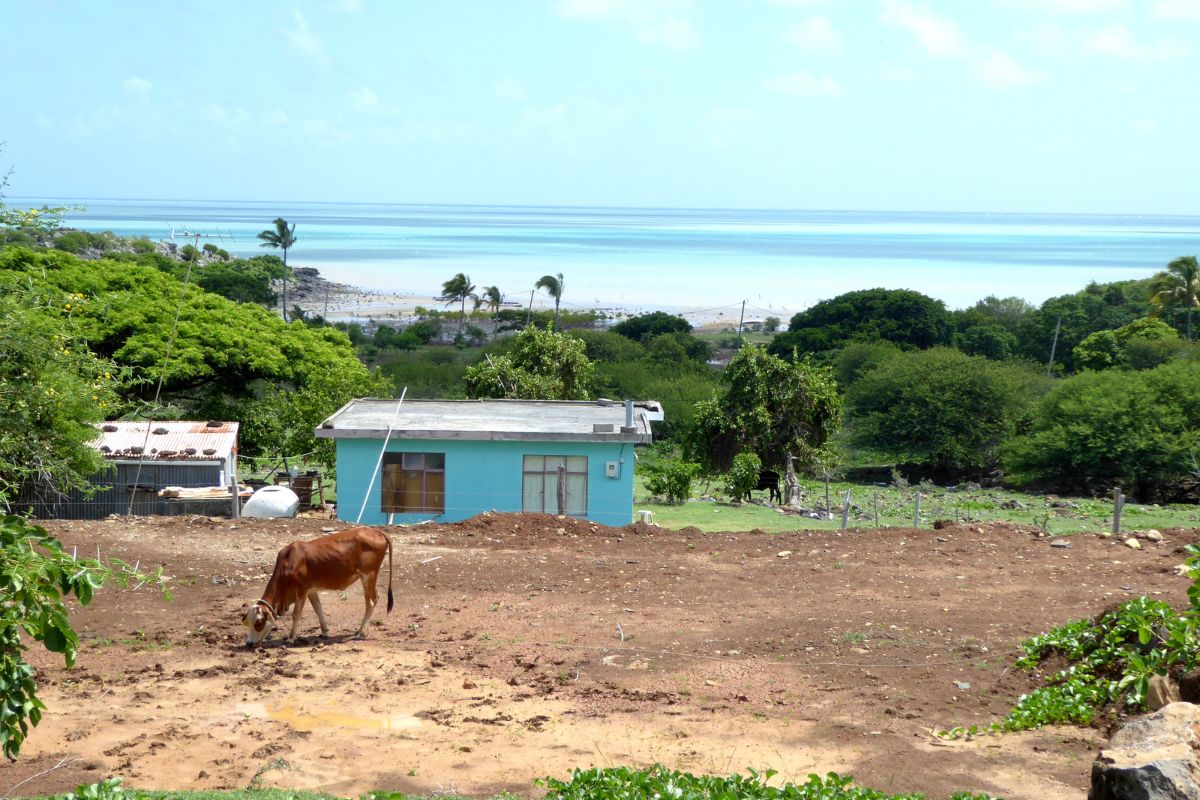
A blue Creole house with a cow grazing in front, in the Rodrigues Island countryside, the lagoon visible in the background
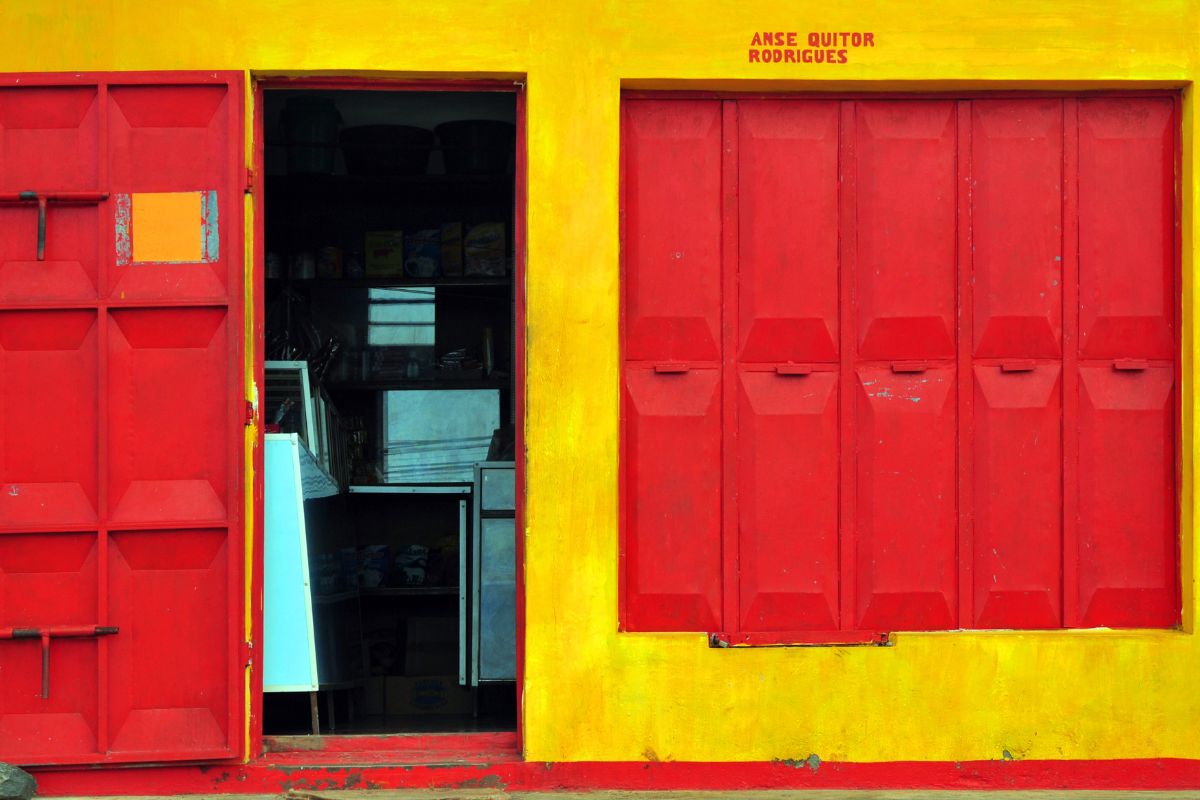
A colourful yellow and red shopfront in Anse Quitor, Rodrigues Island, vernacular Creole architecture
FAQ

Rodrigues Island: your questions answered

12 questions on getting there, the weather, politics, budget, activities, food, and why a Reunion Island site covers it.

Where is Rodrigues Island located?+

600 kilometres east of Mauritius, in the Indian Ocean, part of the Mascarene archipelago (with Mauritius and Reunion Island). Its remote position far out at sea largely explains why it's so unspoilt and so far removed from mass tourism in Mauritius. It's the easternmost of the Mascarene Islands.

How do you get to Rodrigues Island?+

By Air Mauritius domestic flight from SSR airport in Mauritius: about 1h30 in the air, with several flights a day and return fares of €200-350 depending on the season and how far ahead you book. You have to go via Mauritius (there are no direct flights from Reunion Island or mainland France), and there's no regular passenger ferry for tourists.

What's the best season to visit Rodrigues?+

The dry season from May to November offers the best conditions: air temperatures of 20-25°C, sea at 24-26°C, clear skies, moderate wind. July-August are the coolest months, perfect for hiking. December to March is cyclone season, with frequent tropical rain, so avoid it for a short trip. The climate is slightly milder than in Mauritius itself, with stronger trade winds.

What language is spoken in Rodrigues?+

Three languages. English is the official language (government, courts, signs), so English speakers will get by. Rodriguan Creole is what everyone speaks day to day, and French is widely understood and used in tourism and business.

What's Rodrigues's political status?+

An autonomous region of the Republic of Mauritius since 12 October 2002. Rodrigues has an 18-member Regional Assembly elected by direct universal suffrage, and a Chief Commissioner who heads the local executive. Sovereign matters (defence, foreign affairs, currency, police) remain managed by Port Louis. It's a unique arrangement in the Indian Ocean.

How much does a trip to Rodrigues cost?+

It's much cheaper than Mauritius itself: around €60-100 per person per day for a guesthouse, family restaurants and local outings. Budget €200-350 for the return flight from Mauritius, €35-60 a night at a guesthouse, €10-20 a meal at a family restaurant, €6 entry to the François-Leguat Reserve, €25 for the Île aux Cocos trip. For a week, budget around €600-900 per person, excluding flights.

What activities can you do in Rodrigues?+

Quiet beaches (Trou d'Argent, Saint-François, Pointe Coton, Anse Ally), hiking (Mont Limon, south-east coastal trails), lagoon outings (Île aux Cocos, Île aux Sables, snorkelling), a visit to the François-Leguat Reserve, scuba diving with the island's few local centres, plus markets and family restaurants. Life is slow here: 7 to 10 days is enough to see it all.

Should you rent a car in Rodrigues?+

Yes, if you want to explore beyond Port Mathurin. Local hire companies offer small cars for €25-40 a day, and a standard licence is enough. Driving is on the left (a legacy of British rule), and the roads are good but narrow, with a 60km/h limit. On a tighter budget, local buses link the main villages for €0.50-1 a ride: slow but authentic.

Is Rodrigues suited to families with children?+

Yes, especially with children from about 6-8: calm beaches in a sheltered lagoon, few dangerous currents, welcoming restaurants with kids' menus and a relaxed atmosphere with no crowds. Younger children may find the tropical climate and slow pace harder to adjust to. Several family guesthouses happily welcome children.

What local specialities should you try in Rodrigues?+

Ourite (octopus) as a curry, salad or achard is the signature dish, worth trying at any family restaurant. Grilled capitaine fish, red snapper, Rodriguan lobster and limon (a local oyster) complete the seafood line-up. Also try rougail brèdes mouroum (moringa leaves), local samosas and Mont Limon eucalyptus honey. Expect €10-20 for a full meal.

What should you bring back from Rodrigues?+

Vacoa (pandanus) weaving is the classic souvenir: baskets, bags, hats and placemats hand-woven by artisans from the Anse Quitor cooperative. Budget €15-50 depending on size and finish. Mont Limon honey, candied chillies, Rodriguan vanilla and papaya or tamarind jam are the edible ones. The Port Mathurin central market on Saturday morning has the best prices.

Why is there a Rodrigues guide on a Reunion Island site?+

My main focus is Reunion Island, but people planning a trip there are often curious about the neighbouring Mascarene islands. Rodrigues, the third Mascarene after Mauritius and Reunion, shares a lot with Reunion Island (Creole heritage, endemic wildlife, food) while keeping a strong identity of its own (its size, its self-government and its huge lagoon). This page is a factual guide for anyone looking beyond the classic Mauritius and Reunion pairing.
You're on Sous Les Étoiles 974

An independent guide to activities, places to stay and destinations across the Indian Ocean. My main focus is Reunion Island, alongside Mauritius and now Rodrigues, for travellers looking for a more authentic side of the Mascarenes.

Page updated on 8 November 2026.