Reunion Island rum: history, 5 distilleries and the types to try
From the first sugarcane in the 17th century to today's great distilleries (Isautier, founded 1845, Savanna, Rivière du Mât, Saint-Aubin): four centuries of an industry woven into the island's identity, plus distillery tours, the types of rum and how to taste them.
5 major distilleries1845 Isautier, the oldestTraditional + agricole
17th-21st century
From sugarcane to today's Reunion Island rum
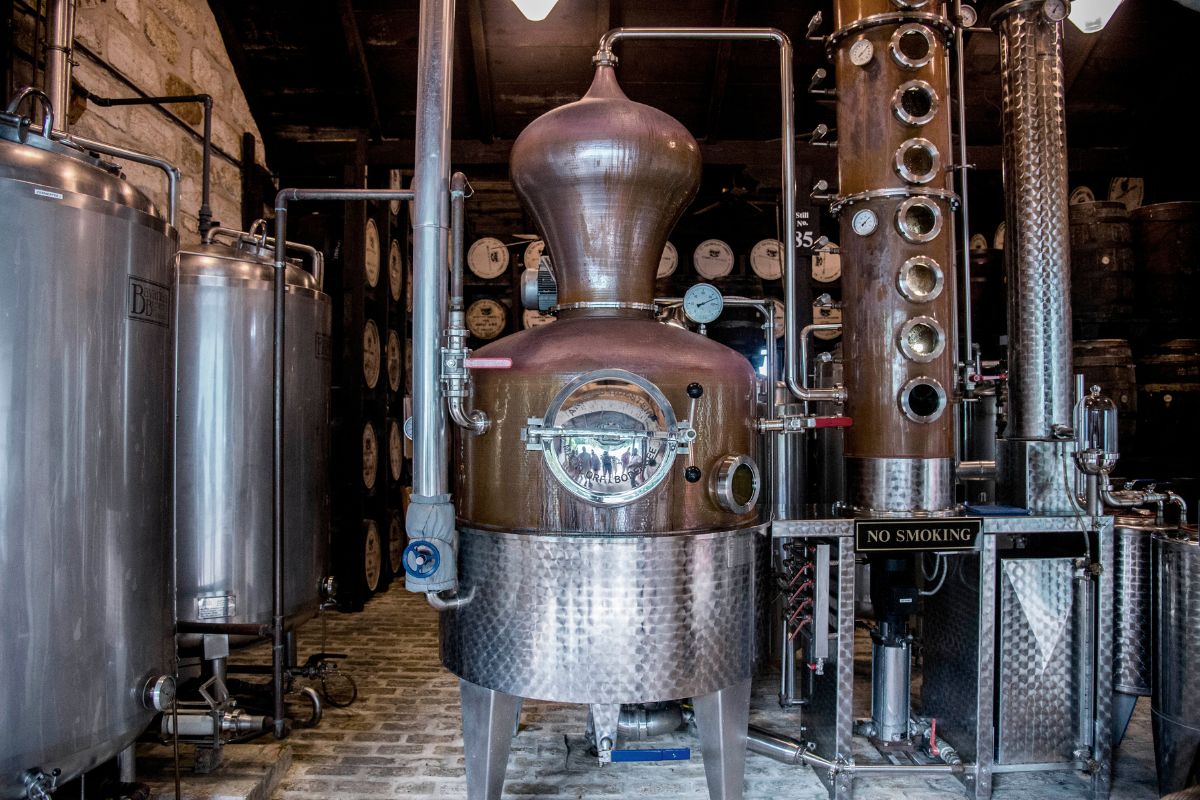
The first French settlers brought sugarcane to Reunion Island (then called Île Bourbon) at the end of the 17th century. But the industry really took off in the 19th century, as sugar production was industrialised under France's Second Empire. Isautier, founded in Saint-Pierre in 1845, is the island's oldest distillery still in operation. Today, five major distilleries make almost all the island's rum, alongside a few artisan producers of rhum arrangé (infused rum).
On this page: a timeline of the island's rum history, the five main distilleries with their founding dates and the rums they make, the six main types of rum (traditional, agricole, high-ester HERR, aged, infused and young white agricole), the tours you can do and a detailed FAQ.
For a full overview of the island's rums, bottle by bottle, see the specialist site Rhum Distillerie (in French), which covers rums from around the world and has a section on Reunion Island.
Five major distilleries
The great houses of Reunion Island rum
Five distilleries that shape the industry, from the oldest (Isautier, 1845) to a modern artisan producer. Four offer tours with tastings.
Distillery
Location
Founded
Types produced
Tour
Isautier
Saint-Pierre
1845
Traditional, agricole and infused (arrangé)
Yes, exhibition + tasting, ≈ €8
Savanna
Saint-André
1992 (sugar mill 1948)
Traditional and high-ester (HERR)
By appointment, technical tour
Rivière du Mât
Saint-Benoît
1898
Traditional, aged and molasses XO
By appointment for groups
Domaine de Saint-Aubin
Saint-Pierre
Long-established sugar estate
Agricole rum (AOC application under way)
Estate tour + tasting on site
Domaine du Cœur de Chauffe
Saint-Paul
Recent artisan producer
Premium infused (arrangé) rums, traditional
Shop + tasting
History
Four centuries in a timeline
From the first sugarcane to today's revival in quality: ten key moments.
Late 17th century
Sugarcane is introduced to Reunion Island (then Île Bourbon) by the first French settlers.
18th century
Small-scale rum distilling for local use and for sailors. Sugar is still the main product.
1815-1880
Sugar production is industrialised, notably under France's Second Empire, and the industry organises itself around large sugar mills (Vue Belle, Bois-Rouge, Quartier Français).
1845
Isautier is founded in Saint-Pierre: the oldest distillery on the island still in operation, run by seven generations of the same family.
1898
Rivière du Mât is founded in Saint-Benoît; it will become the largest distillery by volume.
1940s-1960s
A global sugar crisis forces a brutal shake-up of the industry. Many small sugar mills close, and rum becomes a way to diversify.
1948
The Bois-Rouge sugar mill (the future Savanna site) opens in Saint-André.
1990s
A revival in quality: Savanna specialises in high-ester rums (HERR), Isautier modernises its range and Rivière du Mât develops its aged rums.
2010s-2020s
International recognition for Reunion Island rums (medals at world competitions), the rise of artisan infused rums and a project for an AOC (protected origin label) for agricole rums.
Today
Five major distilleries and several artisan producers make a wide range: traditional (molasses), agricole (cane juice), aged and infused rums. A major part of the island's heritage and tourism.
Types of rum
The six main types of rum
From young white agricole to aged XO, and from high-ester HERR to home-made Creole infused rum: each has its own character, its fans and its best use.
01
Traditional rum (from molasses)
The vast majority of Reunion Island rum (Rivière du Mât, Savanna, Isautier's traditional range), distilled from molasses, a by-product of sugar making. Styles range from neutral white rums to complex aged ones, matured in oak barrels (ex-bourbon, ex-cognac and so on) for aged and XO expressions.
02
Agricole rum (from cane juice)
Distilled straight from freshly pressed cane juice (vesou), giving a fresher, grassier, more expressive rum. Reunion Island's agricole rums include Isautier Agricole and Saint-Aubin, with an AOC project under way to organise the sector (following Martinique's example).
03
High-ester rum (HERR)
A Savanna speciality known worldwide: long fermentation develops intense esters (fruity, almost perfumed notes). Prized by bartenders around the world for creative cocktails, and by connoisseurs for sipping neat.
04
Aged rum (V.O., V.S.O.P., XO)
Aged for at least 3 years (V.O.), 5 years (V.S.O.P.) or 8-10 years (XO). The tropical climate speeds up ageing (the “angel's share” is far higher than in France's Cognac region: 8-10% lost each year against 2-3%). Expect an amber colour, vanilla, woody and spicy notes and a long finish.
05
Rhum arrangé (Creole infused rum)
A Creole family tradition: fruit, spices and local plants steeped in white rum for at least 4 to 6 months. Classic flavours: lychee, Bourbon vanilla, Victoria pineapple, fresh ginger, combava (kaffir lime), faham (a local orchid) and Bourbon coffee. You'll find commercial versions (Isautier, Domaine du Cœur de Chauffe) and artisan or home-made ones, served chilled before or after a meal.
06
Young agricole white rum
Unaged, or aged a few months at most, and clear. The traditional base for Creole cocktails (ti'punch, planteur, fresh-cane drinks). Usually 50-55% ABV, stronger than aged rums (40-45%). Drink it neat or in a cocktail.
Tropical ageing
The “angel's share”: fast-track tropical ageing
The tropical climate speeds up the ageing of rum in oak barrels considerably. The “angel's share”, the annual evaporation of rum through the barrel staves, reaches 8 to 10% a year in Reunion Island, against 2 to 3% in France's temperate Cognac region. The result: a 5-year-old Reunion Island rum has the aromatic intensity of a 15-20-year-old cognac.
That's why aged Reunion Island rums (Savanna XO, Rivière du Mât 12-year-old, Isautier Louis et Charles) are so intensely aromatic. But it also makes them expensive to produce: for one litre of 10-year-old XO, distilleries have to lay down 3 to 4 litres in barrels.
The barrels generally come from elsewhere: American ex-bourbon, French ex-cognac and Spanish ex-sherry casks, each adding its own notes (vanilla, prune, hazelnut).
Frequently asked questions
Your questions answered
Which distilleries can you visit in Reunion Island?
Five main ones welcome visitors: Isautier in Saint-Pierre (the oldest, with an exhibition and tasting, about €8), Savanna in Saint-André (technical tour, by appointment), Rivière du Mât in Saint-Benoît (groups, by appointment), Saint-Aubin in the south (estate tour and tasting) and Domaine du Cœur de Chauffe in Saint-Paul (shop and tasting). Several small artisan producers, mainly in the east and south, also offer tastings on site. For a full overview of Reunion Island rums, see the Rhum Distillerie website (in French).
What's the difference between traditional and agricole rum in Reunion Island?
Traditional rum (most of the island's production, including Rivière du Mât and Savanna) is distilled from cane molasses, a by-product of sugar making. Agricole rum (the Isautier Agricole and Saint-Aubin ranges) is distilled straight from freshly pressed cane juice (vesou), giving a fresher, grassier, more expressive rum. Reunion Island is one of the few places to make both styles on a large scale, unlike Martinique (mostly AOC agricole) or Jamaica (mostly traditional).
How long has rum been made in Reunion Island?
The first French settlers brought sugarcane to Reunion Island (then called Île Bourbon) at the end of the 17th century. Rum was distilled on a small scale in the 18th century, then took off in the 19th century as sugar production was industrialised under Napoleon III. Isautier, founded in 1845, is the island's oldest distillery still in operation (seven generations of the same family), followed by Rivière du Mât in 1898. In the 20th century the industry consolidated around a handful of big distilleries, which make almost all the island's rum today, alongside a few artisan producers of infused rums.
What is rhum arrangé?
Rhum arrangé (literally 'arranged rum') is a Creole tradition of steeping fruit, spices and local plants in white rum for at least 4 to 6 months (up to 2 years for premium versions). Classic flavours: lychee, Bourbon vanilla, Victoria pineapple, fresh ginger, combava (kaffir lime), faham (an endemic orchid), Bourbon coffee, mango and flambéed banana. Every family has its own recipe, handed down the generations. You'll find commercial bottles (Isautier, Domaine du Cœur de Chauffe, Métiss) and home-made versions, usually served chilled before a meal or after a cari (Creole curry). Typically 28-35% ABV.
Can you take rum home from Reunion Island?
Yes. If you're flying to mainland France, there are no particular restrictions, as Reunion Island is a French department and it counts as a domestic flight; you're only limited by your airline's checked-baggage allowance (usually 23kg in economy). If you're heading to another country, the usual customs allowances for alcohol apply, so check your home country's limits before you pack. Wrap bottles in clothing or use a bottle protector (€10-30 in gift shops). Reunion Island rum is hard to find abroad outside specialist shops, so it makes a great souvenir: go for artisan infused rums or an aged Savanna or Rivière du Mât.
How do you taste an aged Reunion Island rum?
Like a cognac: in a tulip glass (a thin-walled tasting glass), at room temperature (18-20°C), in a small measure (2cl). First, smell it without swirling to catch the lighter notes (fresh fruit, flowers). Then swirl gently to release the deeper notes (vanilla, oak, spice). In the mouth, let it roll over your tongue before swallowing and let the aromas rise. A great aged Savanna XO or a 12-year-old Rivière du Mât reveals 30-40 different aromas if you take your time. Don't mix it with cola or juice: this is one to sip slowly.
Which Reunion Island rums are internationally recognised?
Several have won medals at international competitions. Savanna stands out for its HERR (high-ester rums), sought after by top bartenders worldwide. Rivière du Mât's 12-year-old, XO and single cask rums regularly win medals. Isautier has a highly rated premium range, “Louis et Charles Isautier”, and Domaine du Cœur de Chauffe has put its premium infused rums on the international map. More broadly, Reunion Island is recognised as a major “rum island”, alongside Jamaica and Martinique.
Is rum a major economic industry in Reunion Island?
Yes, it's one of the island's flagship food and drink industries. The sugar and rum sector as a whole turns over an estimated several hundred million euros a year, with several hundred direct jobs in the distilleries and several thousand more indirectly (cane growers, transport, distribution, tourism). Sugarcane still covers more than 22,000 hectares (around 60% of the island's farmland), with EU support, and rum is a prized export.
Is there an AOC for Reunion Island rums?
Not yet at the time of writing, but producers and the authorities are working on an AOC (Appellation d'Origine Contrôlée, a protected designation of origin) for the island's agricole rums, following Martinique, which obtained its AOC in 1996. The aim is to protect the origin, guarantee the terroir (cane varieties, distillation method, growing area) and add value for export. Traditional molasses rums are already protected by the “Rhum de La Réunion” geographical indication, which covers all the island's rum.
Keep reading
Continue reading
→ Cilaos Wine: Reunion Island's other drinks heritage.