Ocean Activities and Water Sports in Reunion Island: Diving, Whales, Snorkelling
Diving, snorkelling, whales, clear kayaking, catamaran, surfing, big-game fishing: 80 km of coastline to explore from Saint-Pierre to Le Port.
The top-rated listings in this category
Sorted by weighted rating and number of reviews. Click a listing to see full package details, prices and operators.
Whales and Dolphins in Saint-Gilles: 4 Packages
Prices for whale and dolphin watching trips from Saint-Gilles. 4 boat packages from €37 with Manawa partners. Humpback whales from July to October, dolphins year-round.
from €37 / person★ 4.9(154)First Dive in Reunion Island
A first scuba dive in Reunion Island from €85 across 4 spots (Saint-Leu, Saint-Gilles, Le Port, Étang-Salé). 4.9/5 from 145 Manawa reviews in Saint-Leu.
from €85 / person★ 4.9(183)Clear Kayak Tour, Trou d'Eau Lagoon
A clear kayak outing on the Trou d'Eau lagoon in La Saline-les-Bains from €50. 2 hours on the lagoon with Lagon Réunion, 4.9/5 from 90 reviews.
from €50 / person★ 5.0(90)Snorkelling in Reunion Island: 5 Packages, Prices
4 guided excursions from €40 in Saint-Gilles, Saint-Leu, Le Port and Étang-Salé: coral reef, dolphins, humpback whales in season.
from €40 / person★ 4.8(91)Catamaran Cruises in Reunion Island: 3 Packages
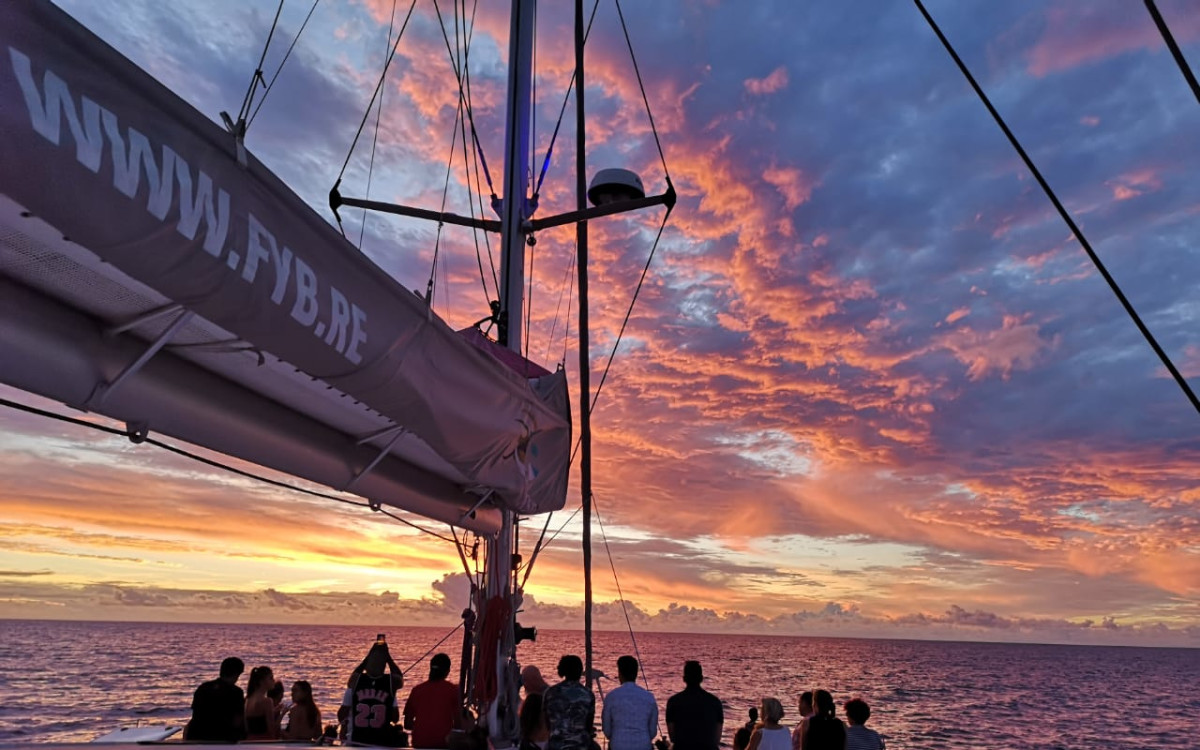
3 catamaran packages from €35, departing from Le Port: sunset sail, whale and dolphin watching, night cruise with an astronomy guide.
from €35 / person★ 4.8(65)Big Game Fishing Saint-Gilles: Booking, Price
Big game fishing trip in Saint-Gilles from €130, half-day 5-6 hours. Marlin, yellowfin tuna, mahi-mahi, wahoo. 6 providers compared.
from €130 / person★ 4.7(60)



Ocean Water Sports in Reunion Island: what to know
Ocean activities in Reunion Island draw on a west coast sheltered by 30 km of coral reef, the lagoon running from Saint-Paul to Étang-Salé, and a south-west coast with drop-offs down to 40 metres right offshore. Three ecosystems coexist: the shallow coral lagoon (snorkelling, kayaking, paddleboarding), the drop-offs for scuba diving, and the open sea for whale watching and big-game fishing.
The west coast's must-dos. A discovery dive at Saint-Leu or Saint-Gilles, supervised by well-established clubs, descending to 5-8 metres with guaranteed encounters with butterflyfish, clownfish and, sometimes, green turtles. Snorkelling in the Hermitage lagoon or Trou d'Eau, suitable for everyone, mask and snorkel provided, ideal for families. Humpback whale watching from July to October, departing Saint-Gilles by boat, in line with the local observation charter. Clear kayaking in the Trou d'Eau lagoon lets you watch the coral through the kayak's bottom.
For thrill-seekers: surfing at Saint-Leu (the left-hander, ranked among the world's best), big-game fishing departing Le Port with a local captain, sunset catamaran trips from Saint-Gilles, outrigger canoeing at Saint-Gilles to try Polynesian paddling. Shark safety is closely managed: swimming outside the lagoon is regulated, and every boat trip operates from supervised zones with lookouts. Prices range from €30 (a supervised snorkelling trip) to €200+ (a big-game fishing trip).
Everything you need to know before booking
Season, who it suits, budget, safety, booking: the essential points to plan your ocean outing with confidence.
Season and water temperature
Water at 23-28°C year-round. Dry season (May-October): cooler water but the best visibility. Southern summer (December-March): warmer water, sometimes more particles. Humpback whales: July to October, peak in August-September. Cyclone period (January-March): boat trips sometimes cancelled.
Who it suits, skill levels
Hermitage snorkelling, clear kayaking: from age 4-5. Whale watching, sunset catamaran: suitable for everyone, not recommended for pregnant women. A discovery dive: from age 8 with some clubs (PADI Bubblemaker), generally 10. Swimming with dolphins: confident swimmers, from age 12. Big-game fishing: sea legs required.
Budget
Self-guided snorkelling (gear rental): €5-10. Supervised snorkelling: €30-50. Clear kayaking, paddleboarding: €30-50. Outrigger canoeing: €30-50. A discovery dive: €60-90. A whale-watching trip: €50-90. A half-day catamaran cruise: €60-100. A full-day big-game fishing trip: €150-300.
Shark safety and swimming
Swimming outside the lagoon is regulated in Reunion Island. The lagoon, protected by 30 km of coral reef (Saint-Paul to Étang-Salé), is entirely safe. Boat trips (whales, catamaran, fishing, diving) operate offshore under supervised conditions. Surfing is only practised in zones watched over by lookouts. Every listing on this page follows local regulations.
Whale-watching charter
Whale-watching trips follow a strict approach charter: a minimum distance of 100 m, limited observation time, no systematic entry into the water. The operators listed here follow these rules. Boats with electric motors or low noise levels are preferred. Sightings aren't guaranteed, but the success rate reaches 80-90% in peak season.
Booking and gear
Book 5-10 days ahead in peak season for whale watching, a discovery dive or a catamaran cruise. Gear (mask, snorkel, fins, wetsuit, life jacket) is provided by operators except for self-guided snorkelling. Underwater photos are often an optional extra (€10-30). Free cancellation 24-48 hours ahead. Trips are rescheduled if the sea is rough.
The island's key areas
The main areas for ocean activities. Click an area to filter the search tool by that location.
Saint-Gilles-les-Bains
The historic hub for ocean activities: catamaran departures, whale watching, discovery dives and kayaking. A marina and well-equipped beaches make it the natural base on the west coast.
See activities in this areaSaint-Leu
The go-to spot for scuba diving (spectacular drop-offs), coral snorkelling and surfing (a world-renowned left-hander). Whale-watching trips depart from the fishing harbour.
See activities in this areaThe Hermitage / Trou d'Eau
The most sheltered and fish-rich lagoon. Family snorkelling, clear kayaking, paddleboarding. Shallow waters ideal for children. Direct access from the beach.
See activities in this areaLe Port
The main base for big-game fishing and some whale-watching trips. Fast semi-rigid boats or catamarans reach the tuna and marlin fishing grounds.
See activities in this areaSaint-Pierre
A marina, with some whale-watching trips heading south (less busy than Saint-Gilles). Diving is also practised here. Direct access from the south of the island.
See activities in this areaYour questions about ocean activities in Reunion Island
Where can you do a discovery dive in Reunion Island?
When can you see whales in Reunion Island?
Is snorkelling at the Hermitage suitable for children?
Is it safe to swim outside the lagoon in Reunion Island?
Clear kayaking or paddleboarding: which to choose?
What's the difference between free and guided snorkelling?
Wetsuit or just swimwear for diving in Reunion Island?
Catamaran cruise or a fishing trip: which to choose?
When can you see turtles and rays in Reunion Island?
A local Reunion Island guide to plan your stay
An independent site based in Reunion Island. Every listing compares packages from several partner platforms (Manawa, Funbooker) at the operator's official price, with no extra cost to you. Activities, accommodation and travel advice to build your itinerary.