 hotel2 km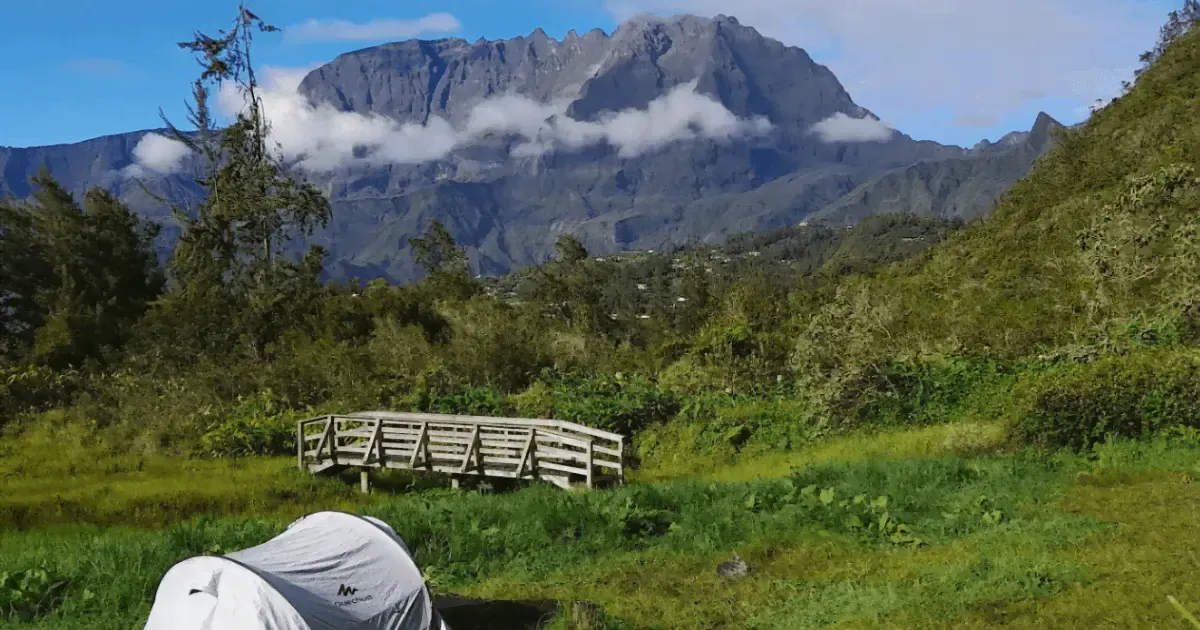
Grand Îlet, Salazie · facing Roche Écrite
Wild camping at Ravine Blanche: a night in the meadow facing the Roche Écrite massif
The most popular camping area in the Salazie cirque: several shelters, taps, barbecues and an open view of the Roche Écrite massif. The perfect base for setting off on the Roche Écrite hike at first light.
1,200 maltitudeSeveralsheltersCardirect accessFreeno booking
The Ravine Blanche area is probably the best-known wild-camping spot in the Salazie cirque. On the edge of Grand Îlet, in the heart of the cirque, it looks straight across at the Roche Écrite massif and the cirque's inner peaks, with a striking contrast between the meadow in the foreground and the sheer cliffs behind.
The area is well equipped: several shelters with picnic tables, fixed barbecues and several taps around the site. For campervans, the access road is wide and flat, and overnight parking on the verge is tolerated.
At a glance
The Ravine Blanche camping essentials
The experience
A night in the meadow at the foot of the cliffs
Arrival. The road from Salazie passes through Hell-Bourg and then climbs towards Grand Îlet. On the edge of the village, just past a small bridge, the area appears on the right: an open meadow dotted with wooden shelters, and the Roche Écrite massif right in front of you.
Sunset. Golden light hits the cliffs around 5.30pm in the southern winter, up to 6.30pm in summer. The afternoon clouds often clear at this point, the perfect moment for photos. Papangues (endemic Reunion harriers) sometimes circle above the cirque.
Night. Salazie is damper than the other cirques, so pitch your flysheet taut. Nights drop to 5°C in winter. The soundscape is dominated by the stream in the ravine and crickets: no light pollution, a clear starry sky whenever the cloud cover lifts.
Morning.If you're doing the Roche Écrite trail, set off at 5am. It's a tough hike: allow 8 to 10 hours there and back, with a big climb. If you're taking it easy, the short 30-minute Fartlek loop is perfect for a gentle wake-up.
How to get there
How to reach the area by car
From Saint-André, take the D48 towards Salazie. Go through Salazie towards Hell-Bourg and take the turn-off for Grand Îlet at the junction. On the edge of Grand Îlet heading towards Mare à Vieille Place, the area is on the right, just past a bridge crossing the ravine. Allow 1 hour from Saint-André, 1 hr 45 from Saint-Denis.
An ordinary car is fine: the road is tarmacked but winding. Free parking along the road. Fill up with fuel in Salazie (there's a petrol station in the village centre). The D48 bends are easier in something small, so compact hire cars are the ones to look at if you're still choosing.
Backpack
What to bring for a night at Ravine Blanche
- A 3-season tent and a 0°C sleeping bag: at 1,200 m, nights drop below 5°C in the southern winter
- A fleece and a hat: the Salazie cirque is known for its damp, and it gets cold quickly
- A head torch: there's no lighting on the edge of Grand Îlet
- 1 L of water per person: there are several taps on site, but treat the water to be safe
- A gas stove: fires are banned except in the barbecues provided
- Bin bags: take all your rubbish home, even biodegradable waste
- Waterproofs: the Salazie cirque gets frequent rain as clouds pile up against the mountains
Regulations
Wild camping in the National Park: the rules
The Ravine Blanche area lies within the core of Reunion Island's National Park. Wild camping is allowed there, with conditions. Here are the official rules, word for word.
- 'Tents and hammocks must be pitched before sunset and taken down in the morning'
- 'Do not light campfires': only stoves and the designated fire pits are permitted
- 'Take all your rubbish away with you', including biodegradable waste
- 'The use of generators is prohibited'
- 'No harm may be done to wildlife or plant life'
- 'Leave the site as you found it'
Source: Parc national de La Réunion: Wild camping in the Park core. Wild camping is banned on the cliffs of Piton des Neiges, but the Ravine Blanche area is far from there and remains open access.
Read before heading up
Salazie, the wettest of the cirques
Frequent rain. Salazie is known for the rain that builds up against its mountains: the cirque gets an average of 4 to 5 metres a year, the wettest spot on the island. Afternoons are often overcast, sometimes with showers, so hike and take photos in the morning.
A slippery Roche Écrite trail.In the rain, the trail becomes dangerous, and there have been several accidents. Check the Météo-France Réunion forecast the evening before, and postpone if there's an alert in effect. If in any doubt, a scenic flight gives you the same perspective without the risk.
Fires only in the barbecues provided. No fires anywhere else, and no cigarette ends. The forest is dense, and the smallest spark could spread fast.
Combine it with
Things to do near Ravine Blanche
Make the most of being in the Salazie cirque with a guided activity. All of these start less than 45 minutes from the area.
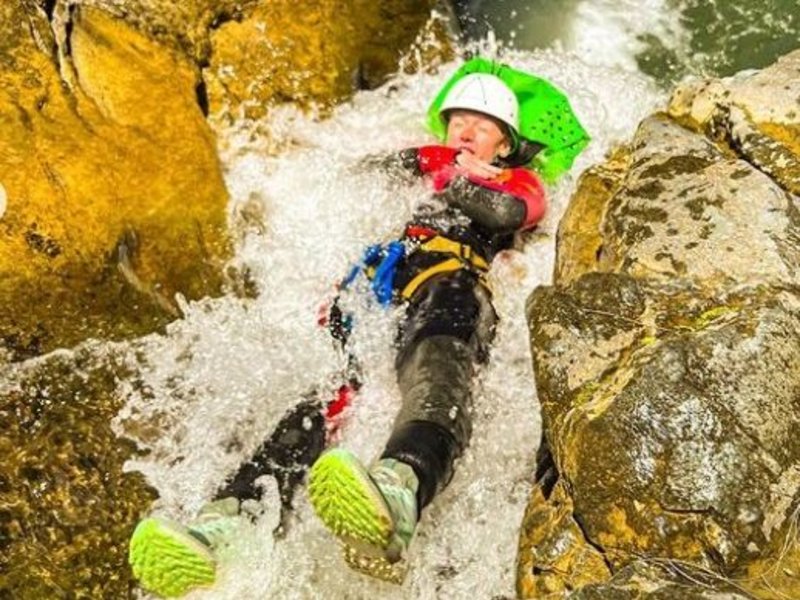
Trou Blanc canyoning, Hell-Bourg
One of Salazie's best-known canyons, with natural jumps and slides and an instructor.
See the activity

Bélouve hike, Trou de Fer waterfall
The Bélouve primary forest with a local guide, and a dizzying waterfall plunging into the gorge.
See the activity

Horse riding at Grand Étang
A ride through the Grand Étang forest, an hour's drive from Salazie.
See the activity
 Also worth combining
Aerial view
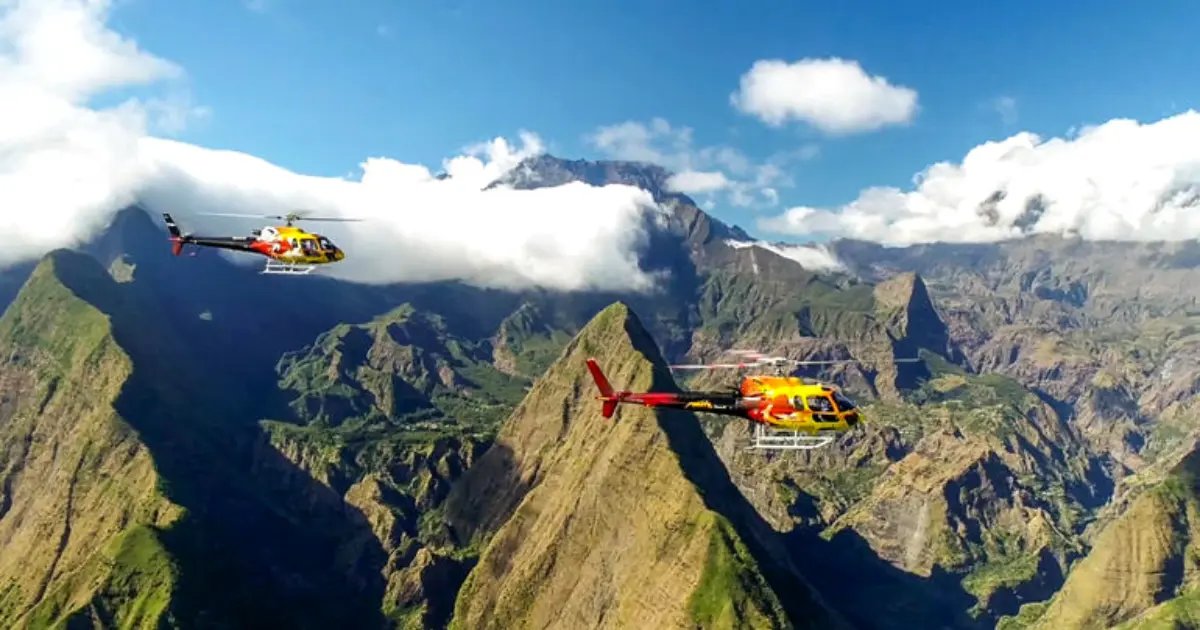
Salazie from above, the wettest cirque in five minutes
From your tent in Grand Îlet, you see Roche Écrite across the meadow. A helicopter shows you the whole cirque in five minutes: the Voile de la Mariée waterfall, Mare à Poule d'Eau, and how Salazie, Mafate and Cilaos fit together, which you can only guess at from the ground.
The perfect follow-up to a night's camping: you recognise what you've glimpsed, and discover places no trail reaches. Flights from Saint-Pierre or Saint-Paul.
From €125 · 210 Manawa reviews · Saint-Pierre / Saint-Paul
See helicopter rates
Stay nearby
Accommodation near Ravine Blanche
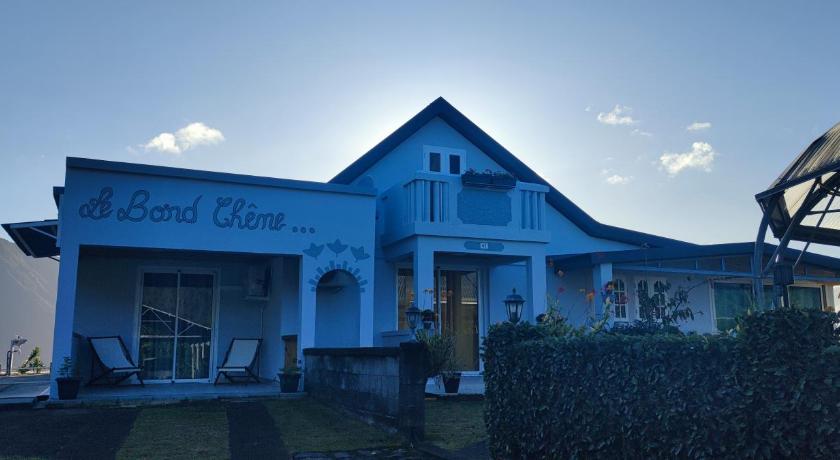
For the night before you go up or after you come down, here are places to stay within 20 km, in the Salazie cirque.
hotel2 km hotel2 km
 hotel2 km
Other spots
Other wild-camping spots near the Salazie cirque
Wild camping at Mare à Poule d'Eau, Salazie
The cirque's other favourite spot, by a pond in the heart of Salazie, very easy to reach.
See the spot
Wild camping in Aurère, in the heart of Mafate
If you're heading into Mafate, the hamlet of Aurère is a natural stop.
See the spot
Béthléem in Saint-Benoît, the Marsouins river
Down towards the east coast, a former pilgrimage site with a riverside camping area.
See the spot
Frequently asked questions
Wild camping at Ravine Blanche: your questions answered
How do I get to Ravine Blanche by car?
From Saint-André, take the D48 to Salazie, then towards Hell-Bourg. At the Grand Îlet junction, follow signs for Mare à Vieille Place. The Ravine Blanche area is on the edge of Grand Îlet, on the right, by a bridge over the ravine. Fine in an ordinary car, with free parking along the road.
What facilities are there at the area?
Several shelters with picnic tables, fixed barbecues, several taps around the site and toilets (cleanliness varies, so come self-sufficient). A short 30-minute loop walk (the 'Fartlek') starts from the area, good for stretching your legs in the morning.
Do I need a permit to camp in Salazie?
No, camping is free with no booking in the core of the National Park, which includes Ravine Blanche. The basic rules: pitch your tent in the evening and take it down in the morning, no fires except in the designated spots, and take all your rubbish with you. Wild camping is banned on the cliffs of Piton des Neiges, but Grand Îlet isn't affected.
Why camp at Ravine Blanche?
Three reasons: the open view of the Roche Écrite massif and the cirque's inner peaks from the meadow; the start of the Roche Écrite hike right next door (tough, but fine for experienced walkers); and Grand Îlet itself, one of the best-preserved villages in the cirque, a stone's throw away for supplies and a morning coffee.
What is the weather like in Salazie?
Salazie is the wettest of the three cirques, with frequent rain, especially in the afternoon. The dry season, May to November, is the time to go. Check Météo-France Réunion the evening before and postpone if there's a weather alert: the Roche Écrite trail becomes slippery and dangerous in the rain.
How else can I explore Salazie without camping?
A day in Hell-Bourg (one of the Most Beautiful Villages of France) shows you the best of it: Creole houses, an old spa spring, gardens. Trou Blanc canyoning is the classic water activity. And for the most spectacular view, the aerial view of the cirque of Salazie in just a few minutes of flight.
Page updated on 20 September 2026. GPS coordinates and National Park rules verified as of this date.