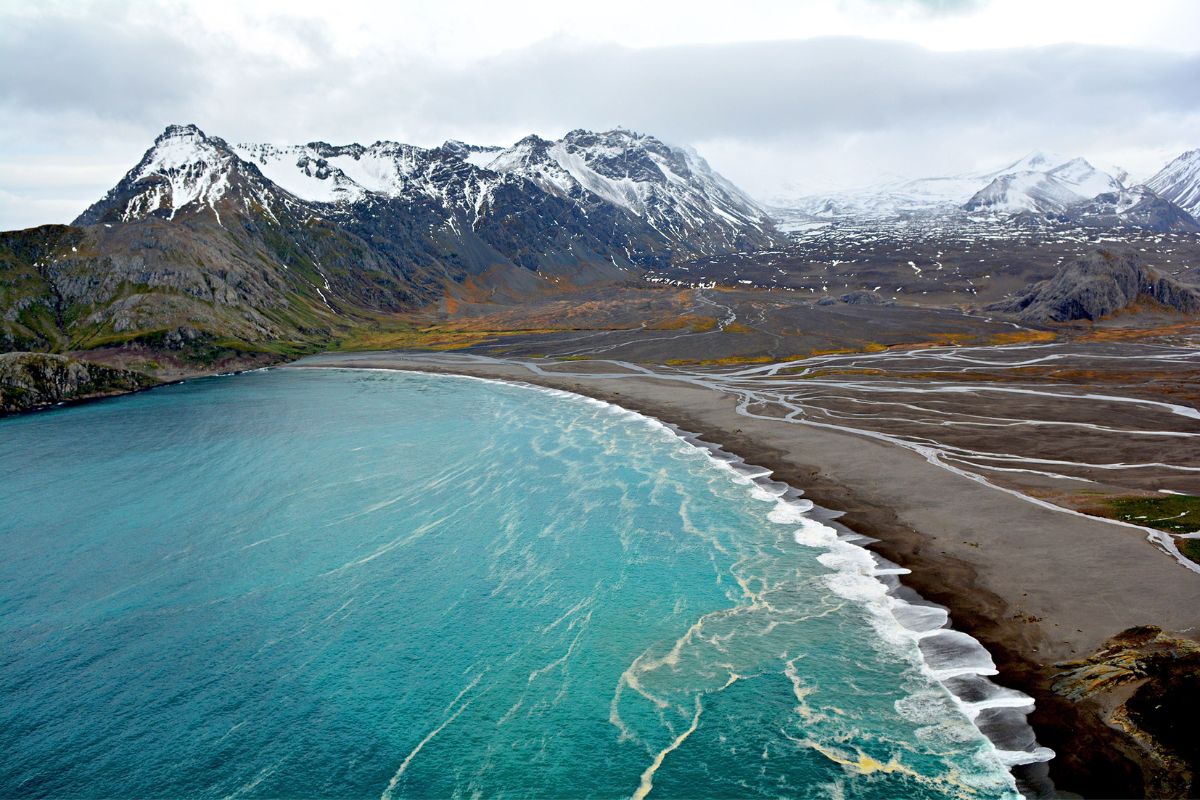
Kerguelen Islands: history, climate, wildlife and how to get there
Discovered in 1772 by Yves de Kerguelen, this remote French archipelago deep in the Southern Ocean is still linked to Reunion Island by a single ship, the Marion Dufresne. Here's the story of its brutal climate, unique wildlife (king penguins, elephant seals, wandering albatrosses) and the Port-aux-Français research base.
1772: the "Southern France" that never was
On 12 February 1772, the Breton navigator Yves Joseph de Kerguelen-Trémarec sighted these uninhabited islands in the southern Indian Ocean, on an expedition commissioned by Louis XV. He named them "France Australe" (Southern France), convinced he had found a promising land to colonise, and made the king some ill-founded promises: rich land, a temperate climate and people to "civilise".
Reality soon set in. The second voyage in 1773-1774 confirmed that the climate was extreme, that the lack of trees ruled out any permanent settlement, and that the wildlife, mostly elephant seals and penguins, would only interest sealers. James Cook, who passed by in 1776, more bluntly called them the "Desolation Islands" in his log, a name that stuck in English for a long time.
In the 19th and early 20th centuries, American, British and Norwegian whalers and sealers hunted intensively here (elephant seals for oil, fur seals for their pelts). Several attempts at permanent settlement failed. A lasting French presence only began after 1949 with scientific missions, followed by the founding of the Port-aux-Français base in 1951.
The Kerguelen Islands are today part of the French Southern and Antarctic Lands (TAAF), run from Saint-Pierre in Reunion Island. The only people here live at Port-aux-Français, a research base with around fifty people on average, rising to 120 in the southern summer.
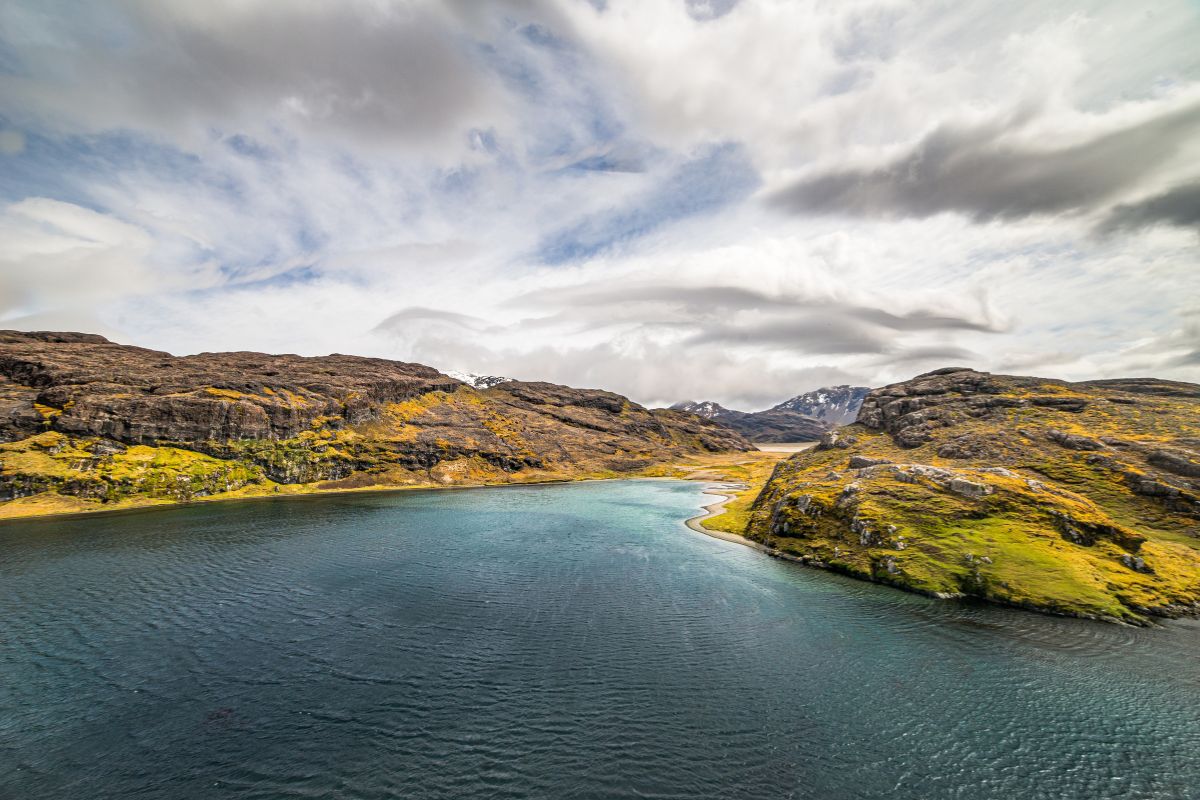
The Kerguelen Islands at a glance
- Discovery12 February 1772
- DiscovererYves Joseph de Kerguelen-Trémarec
- Total area≈ 7,215km²
- Main islandGrande Terre (6,675km²)
- Highest pointMont Ross (1,850m)
- Population45-120 people (seasonal)
- Scientific basePort-aux-Français
- StatusOne of the 5 TAAF districts
Endless wind, fog and low light
The Kerguelen Islands sit in the "Roaring Forties" on the edge of the "Furious Fifties", the stormy latitudes of the Southern Ocean. Westerly winds blow constantly: monthly averages of 100km/h aren't unusual, and 200km/h gusts are regularly recorded.
The average annual temperature is around 4-5°C, with little seasonal variation: 8°C in the southern summer (December-February) and 2°C in the southern winter (June-August). The surrounding ocean softens the extremes but keeps the air permanently damp. Rainfall is 700-850mm a year, with grey skies more than 300 days a year. In winter, snow falls at every altitude, and it lies all year on the peaks and ice caps (notably the Cook Glacier).
The result: no native trees at all, a striking contrast with Reunion Island's lush tropical forest. The landscape is tundra, moss, lichen and grasses adapted to cold and wind. Days are very long in the southern summer (up to 18 hours of daylight in December) and very short in winter (6 hours in June), with the low, raking light typical of high latitudes.
700,000 penguins, 200,000 elephant seals
The Kerguelen Islands are a haven for subantarctic wildlife. Here are seven notable animal and plant groups studied by scientists.
| Species | Numbers | Note |
|---|---|---|
| Southern elephant seals | ≈ 200,000 individuals | Males up to 4 tonnes and 6m. The world's largest population is found in the Kerguelen Islands. |
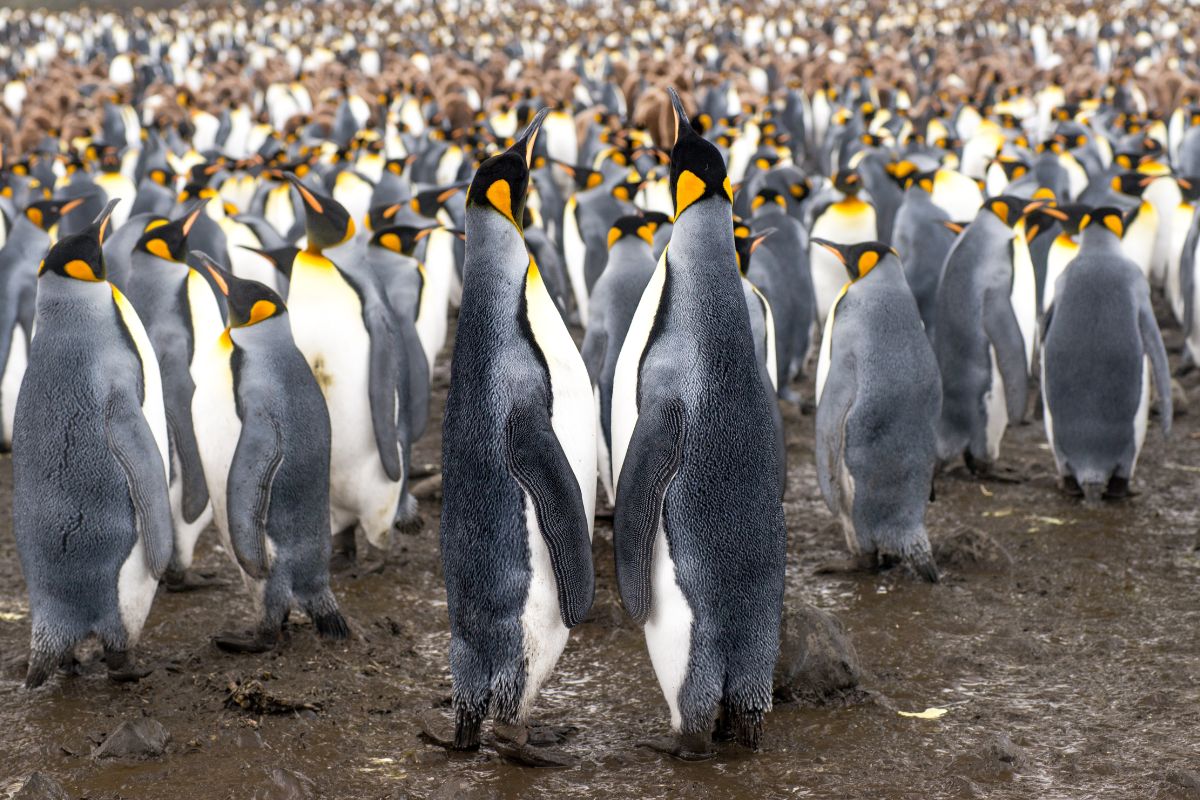
| King penguins | ≈ 700,000 breeding pairs | The second-largest penguin species (95cm), in spectacular colonies of tens of thousands of birds. |
| Gentoo penguins | Several thousand pairs | Less conspicuous, nesting in small colonies along the coast. |
| Subantarctic fur seals | Several thousand | Recovering after being overhunted in the 19th century. |
| Albatrosses and petrels | Several species (wandering, sooty) | Wandering albatross: wingspan up to 3.50m, one of the largest seabirds in the world. |
| Reindeer and rabbit (introduced) | Population under control | Brought in by 19th- and 20th-century sailors as a food source. Now controlled to limit their impact on the ecosystem. |
| Kerguelen cabbage | An endemic plant of the subantarctic islands | Pringlea antiscorbutica, rich in vitamin C, eaten by 19th-century sailors to ward off scurvy. Picking it is now regulated. |
Six major scientific programmes
The Kerguelen Islands are an open-air laboratory. Climate, glaciers, marine and land biology, geology and sustainable fishing: six main areas of research keep scientists and technicians busy all year at Port-aux-Français.
| Field | Focus | Partners |
|---|---|---|
| Climate and atmosphere | CO₂ and ozone measurements, atmospheric chemistry, testing global climate models | CNRS, Météo-France, IPSL |
| Glaciology | Monitoring the retreat of the Cook Glacier (-1.3km since 1963), mass balance, polar archives | IGE Grenoble, IPEV |
| Marine biology | Using elephant seals as living ocean sensors (10,000km travelled a year), sustainable fisheries | CEBC-CNRS, Ifremer |
| Ornithology | Populations of king penguins, albatrosses and petrels; the impact of climate change on breeding | CEBC-CNRS, Antarctic Zone Atelier programmes |
| Geosciences | Mont Ross volcanism, undersea seismic surveys, fish stocks | BRGM, IPGP |
| Toothfish fishery | Quotas and sustainability certification for Patagonian toothfish (Dissostichus eleginoides), the flagship catch | Reunion Island and mainland French shipowners, MSC |
The Marion Dufresne: Reunion Island's lifeline to the far south
At 120m long, the Marion Dufresne II(in service since 1995) is both a supply ship and an oceanographic research vessel. Chartered by the TAAF and operated by CMA CGM, it sails from Port Réunion (Le Port).
Four voyages a year (OP1 to OP4) serve the subantarctic districts: Crozet, Kerguelen and Saint-Paul-and-Amsterdam. Each lasts 28 to 35 days. The ship carries up to 110 passengers (scientists, military personnel, technicians and around a dozen paying tourists per voyage), plus freight (scientific equipment, supplies, fuel, mail), and carries out oceanographic surveys along the way.
In Reunion Island,the Marion Dufresne is a familiar sight in the harbour, and its departures and returns draw families and onlookers to Port Réunion. It's also a local employer: most of the crew are from Reunion Island, and shipping and logistics services are contracted to island companies.
On top of that, the TAAF employ around a hundred people at their Saint-Pierre headquarters, making them a significant public employer in the south of Reunion Island.
Your questions answered
Where are the Kerguelen Islands located?
How do you get to the Kerguelen Islands?
What's the climate like in the Kerguelen Islands?
Why are the Kerguelen Islands linked to Reunion Island?
What wildlife lives in the Kerguelen Islands?
What is the Kerguelen cabbage?
Does anyone live in the Kerguelen Islands?
What are the TAAF and what do they do?
Can tourists visit the Kerguelen Islands?
What is the Patagonian toothfish, and why does it matter to Reunion Island?
Keep reading
- → The most active volcano in France: Piton de la Fournaise.
- → All news articles about Reunion Island.